

YOUSUF MUSTAPHA
MELBOURNE
Many people merely live through time; a rare few rise above it and create history. M. Abdul Majeed was one of those rare souls.”
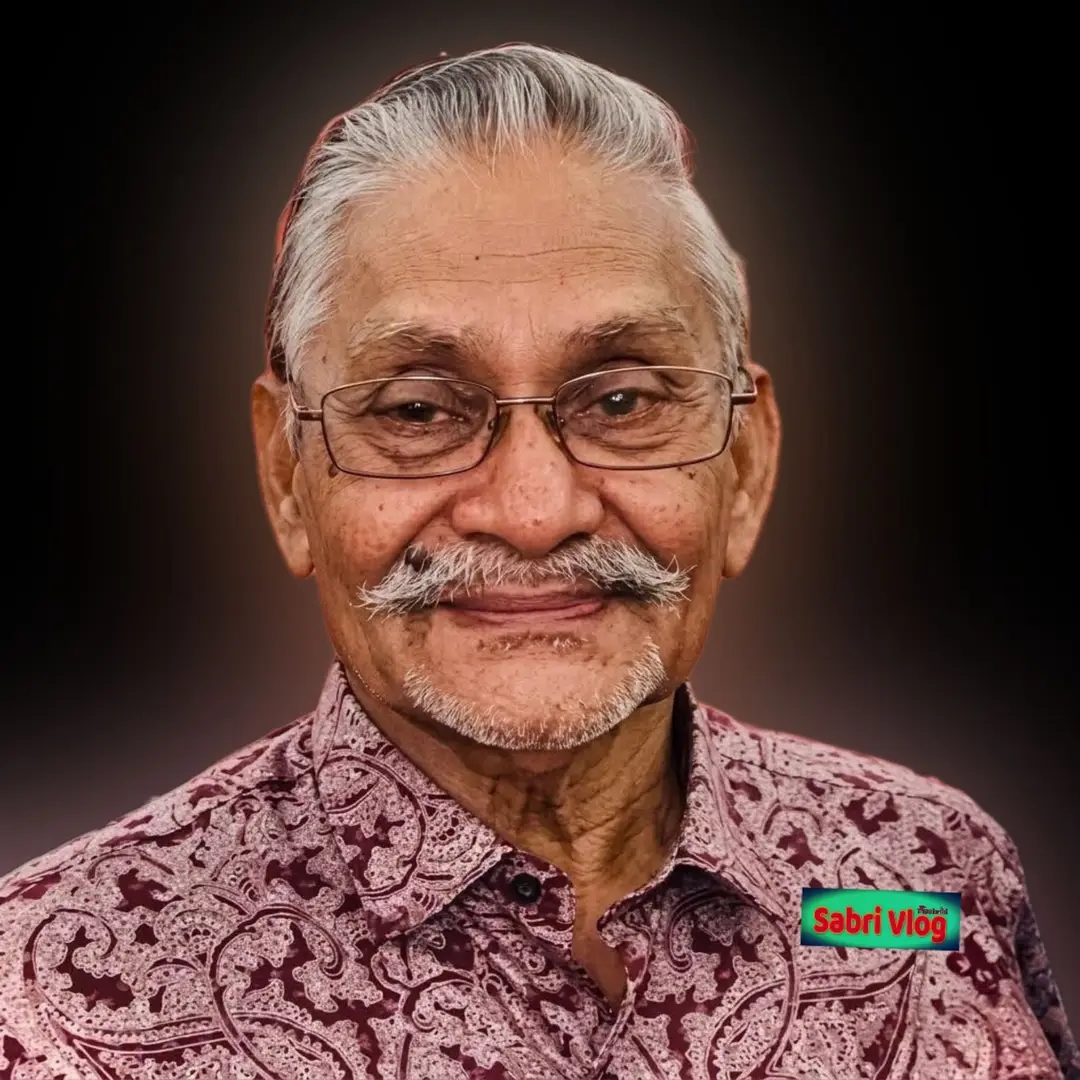
It is with profound sorrow that we announce the peaceful passing of Mr. M. Abdul Majeed Tuesday, June 30 in Colombo.
On Wednesday, July 1, his funeral will took place in his beloved hometown of Pottuvil, where family, friends, admirers, and the wider community will gather to pay their final respects to a remarkable son of the soil.
M. Abdul Majeed, affectionately known throughout Sri Lankan sporting circles as “The Flying Gazelle,” was a legendary rugby player, distinguished police officer, diplomat, respected politician, and above all, a compassionate human being who devoted his life to serving others.
Born in Pottuvil, he was the son of I. L. Meerasahibu Podiyaar, popularly known as Rasapodiyaar, former Chairman of the Pottuvil Village Council, and Juwairiyathumma, daughter of the respected Arachchi Podiyaar family. He was raised in a large family of twelve children, where values of discipline, service, and community leadership were deeply rooted.
His early education began at Methodist Mission School, Pottuvil, followed by Muslim Boys’ School and Central College, Pottuvil. A brilliant student from childhood, he excelled in academics and won the Grade Five Scholarship Examination. He later pursued studies at St. Michael’s College, Batticaloa, where his exceptional sporting talent began to flourish under the guidance of Rev. Fr. Harold John Weber. In 1958, he entered Zahira College, Colombo, where his athletic brilliance reached extraordinary heights.
At Zahira, Majeed excelled in athletics, soccer, and rugby. His speed, agility, and fearless attacking play made him a standout sportsman. It was on the rugby field, however, that he became a legend. His electrifying runs and unmatched speed earned him the immortal nickname “The Flying Gazelle.”
He represented CR & FC and later the Sri Lanka Police Rugby Team, where he rose to become one of the finest wingers of his era. Under his captaincy, the Police Rugby Team achieved historic success, including sharing the prestigious Clifford Cup, a landmark achievement in Sri Lankan rugby.
His excellence took him to the national stage when he represented Sri Lanka in rugby from the mid-1960s to the early 1970s. He had the rare distinction of becoming the first policeman to captain the Sri Lankan national rugby team, leading the country against top international opposition, including the All England team. His speed on the wing, courage in attack, and sportsmanship earned admiration from teammates and rivals alike.
Beyond sports, Majeed served the nation with distinction in the Sri Lanka Police, rising from Probationary Sub Inspector to Senior Superintendent of Police (SSP). He served in the Northern, Eastern, and Western Provinces in several senior positions, including Officer-in-Charge, Assistant Superintendent, and Superintendent of Police. His outstanding service led to his appointment as Deputy Director of the National Intelligence Bureau, and later as Security Coordinating Officer in the Eastern Province during one of the most challenging periods in Sri Lanka’s history.
His distinguished service extended beyond Sri Lanka when he served as First Secretary to the Deputy High Commissioner of Sri Lanka in Chennai, India, further enhancing his reputation as a capable administrator and diplomat.
Majeed later entered politics at the request of national leaders including Ranasinghe Premadasa and A. C. S. Hameed, continuing his service to the nation in another capacity. He served as a Member of Parliament of Sri Lanka and later as a Member of the Eastern Provincial Council, where he remained committed to the welfare of the people.
Beyond sports, policing, and politics, Majeed possessed a sharp legal mind and a deep interest in law and justice. Reflecting his intellectual curiosity and lifelong pursuit of knowledge, he enrolled as a registered law student at the University of London. Though he did not complete the programme due to the demands of public life, this pursuit reflected his commitment to learning and justice.
Majeed possessed a commanding yet graceful presence. He was a dynamic personality with natural charisma and a magnetic ability to connect with people from all walks of life—whether statesmen, sportsmen, colleagues, or ordinary villagers. His sharp intellect, confident bearing, eloquence, and sense of humour made him unforgettable to all who encountered him.
Yet titles and achievements alone do not define the greatness of a man.
Those who knew Majeed remember him as a man of generosity, humility, courage, and compassion. He was deeply committed to helping people, especially the poor, the vulnerable, and those who sought his assistance. Many lives were touched by his kindness, often through quiet acts of service known only to those he helped.
Majeed was a devoted husband and proud family man. He married Ummu Salma, daughter of Y. M. Mustapha, former Chairman of the Pottuvil Village Council and former Quazi (Judge) of Panama Pattu. Y. M. Mustapha was widely respected for his integrity, wisdom, philanthropy, and lifelong service to the community.
My late father, Y. M. Mustapha, recognized Majeed’s exceptional leadership qualities at a young age. Foreseeing his potential to become a future leader of Pottuvil, he was deeply committed to bringing him into our family as a son-in-law. My father strongly believed that Majeed possessed the character, intelligence, and public spirit needed to continue a legacy of service to the community, and he wished to see him remain closely connected to Pottuvil and its people.
Together, Majeed and his beloved wife, Ummu Salma, built a family grounded in love, discipline, faith, and educational excellence. Their three children reflect the values they instilled through lifelong dedication and sacrifice.
His two sons, Jahanghir, an engineer, and Dr. Jamshed, a medical doctor, are distinguished old boys of Royal College and are currently based in Australia. His daughter, Jahana Mumtaj, is a proud alumna of St. Bridget’s Convent and currently resides in United Kingdom.
He is lovingly survived by his beloved wife, Ummu Salma; his sons, Jahanghir and Dr. Jamshed; his daughter, Jahana Mumtaj; his son-in-law, Dr. Naushad Khan; his daughters-in-law, Shireen Jahanghir and Haleemunisa Jamshed; and his cherished grandchildren, Awaadh Majid Naushad Khan, Afrin Minusha Naushad Khan, Afdhal Naushad Khan, Tabish Majeed, Aahil Majeed, Taliya Majeed, and Rohail Majeed.
He took immense pride in the accomplishments of his children and found great joy in the love and laughter of his grandchildren, in whom he saw the continuation of his family’s legacy.
On a personal note, my relationship with Majeed was far deeper than that of a conventional brother-in-law. Our families were united by two marriages: he married my beloved sister, Ummu Salma, while I had the privilege of marrying his sister, Salma Ummah. This rare and beautiful bond made our relationship exceptionally close over many decades and strengthened the ties of love, trust, and mutual respect between our families.
As his brother-in-law, I remember him not merely as a public figure of great stature, but as a warm, dignified, and deeply caring human being whose presence brought strength and reassurance to those around him.
His passing marks the end of an era.
But legends do not truly die.
They live on in memory, in institutions they strengthened, in lives they touched, and in history they created.
Some people pass through history. Rare souls shape it. M. Abdul Majeed belonged to the latter.
May Almighty Allah forgive his shortcomings, shower His mercy upon him, grant him eternal peace, and admit him into Jannathul Firdaus.
Inna lillahi wa inna ilayhi raji’un
(Indeed, we belong to Allah, and indeed to Him we return.)