

DUE TRUONG
As the summer monsoon winds sweep across the island of Sri Lanka, local markets and tropical gardens come alive with the vibrant colors of seasonal fruits. For many Sri Lankans, the bright red rambutan has long been a familiar symbol of summer. Yet few may realize that thousands of kilometers to the east, Viet Nam is also entering the harvest season of a fruit that bears a striking resemblance to rambutan but carries a unique story and flavor of its own. That fruit is the lychee, one of the most iconic fruits of the Vietnamese summer.
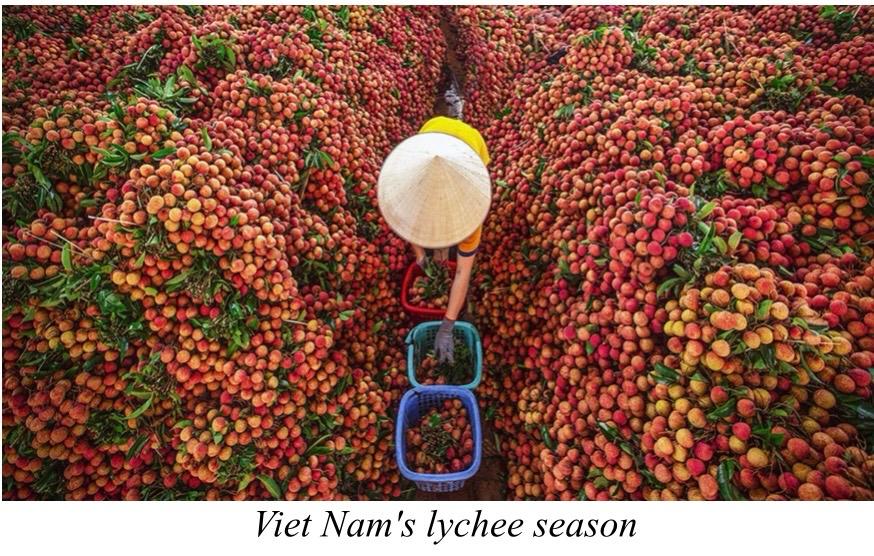
Viet Nam’s lychee season
According to studies on fruit cultivation, the lychee has a history of more than 2,000 years and is believed to have originated in Southeast Asia. Ancient records describe it as a rare and precious fruit that was once selected as a tribute for royal courts because of its exceptional taste. Famous varieties, such as the Thanh Ha lychee village, have become symbols of Viet Nam’s long-standing agricultural heritage. Even today, centuries-old lychee trees can still be found in traditional growing regions, standing as living witnesses to a rich farming tradition.
The appeal of the lychee lies not only in its long history but also in its natural beauty. The fruit is usually round or slightly oval, measuring about three to four centimeters in diameter. When ripe, its skin turns a brilliant shade of pinkish red, protecting a crystal-white flesh that is crisp, juicy, and delicately aromatic. Beyond its delightful flavor, the lychee is also valued for its health benefits. Rich in vitamin C, antioxidants, and natural minerals, it can be enjoyed fresh or processed into a wide range of products, including dried lychees, juices, teas, jams, syrups, and desserts. It is also an example of how Viet Nam successfully combines traditional agriculture with modern food-processing technologies.
Lychee is rich in vitamin C and beneficial compounds that support human health.
If lychee remains relatively uncommon in Sri Lanka, it has become an integral part of Vietnam’s cultural and economic life. Every year, from late May to July, the country’s major lychee-growing regions, including Bac Ninh and Hai Phong, enter their peak harvest season. Millions of lychee trees ripen simultaneously, creating spectacular crimson orchards and bustling summer markets. For many Vietnamese people, the lychee season is not merely a harvest period but also a season of family reunions, homecoming journeys, and the joy of sharing the fruits of hard work.
Behind every sweet lychee lies the story of thousands of farming families. Lychee cultivation provides stable incomes and supports a wide range of related industries, including food processing, transportation, trade, and agricultural tourism. In recent years, many localities have developed orchard-tourism models that allow visitors to harvest the fruit themselves and experience the traditions of rural Viet Nam. As a result, lychee has evolved from a simple agricultural product into a tourism asset that helps promote the image of Viet Nam and its people.
Today, Vietnamese lychees have successfully entered many of the world’s largest and most demanding markets, including the United States, Japan, Korea, Australia…, thanks to increasingly strict production standards and quality control measures. This achievement has strengthened the reputation, safety, and quality of Vietnamese agricultural products while laying the groundwork for expanding export markets in the future, including opportunities in Sri Lanka.
Viet Nam and Sri Lanka share many similarities. Both possess long agricultural traditions, tropical and subtropical climates, and extensive experience in cultivating specialty crops. Sri Lanka is internationally renowned for its tea, spices, and large agricultural estates, while Viet Nam has developed strong expertise in tropical fruits and agricultural processing. These complementary strengths provide an excellent foundation for greater cooperation in seed development, cultivation techniques, post-harvest preservation, advanced food processing, and sustainable agricultural value chains.
As Viet Nam and Sri Lanka have recently elevated their relationship to a Comprehensive Partnership, agricultural cooperation between the two countries is entering a promising new stage. Both nations are working toward the goal of increasing bilateral trade to USD 1 billion by 2030, with agriculture and value-added products expected to become important drivers of future growth. Expanding trade in agricultural products will not only create new opportunities for businesses but also improve farmers’ incomes, encourage innovation in agriculture, and strengthen connections between local communities in both countries.
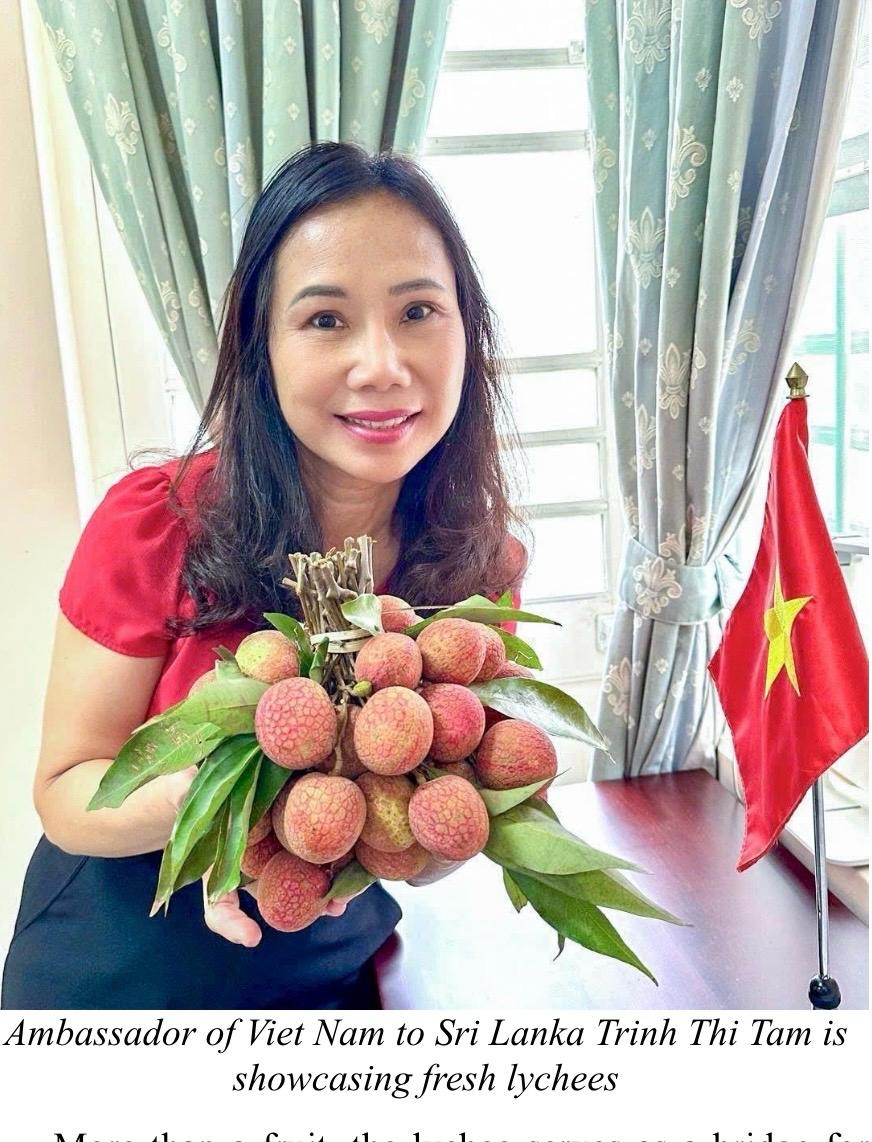
Ambassador of Viet Nam to Sri Lanka Trinh Thi Tam is showcasing fresh lychees
More than a fruit, the lychee serves as a bridge for cultural exchange and friendship. In many Vietnamese families, baskets of fresh lychees are given to relatives, friends, and business partners as symbols of good health and prosperity. For the Vietnamese community in Sri Lanka, the lychee season is an opportunity to reconnect with memories of home and introduce a cherished aspect of Vietnamese culture to Sri Lankan friends. For the people of Sri Lanka, discovering the flavor of lychee also offers a chance to learn more about a Southeast Asian nation rich in tradition, dynamic in development, and increasingly engaged with the world.
At present, Viet Nam is in the heart of its lychee season, with vast orchards covered in brilliant red clusters of fruit. Sri Lankan visitors are warmly invited to experience this unique harvest and discover one of the most delightful flavors of the Vietnamese summer.