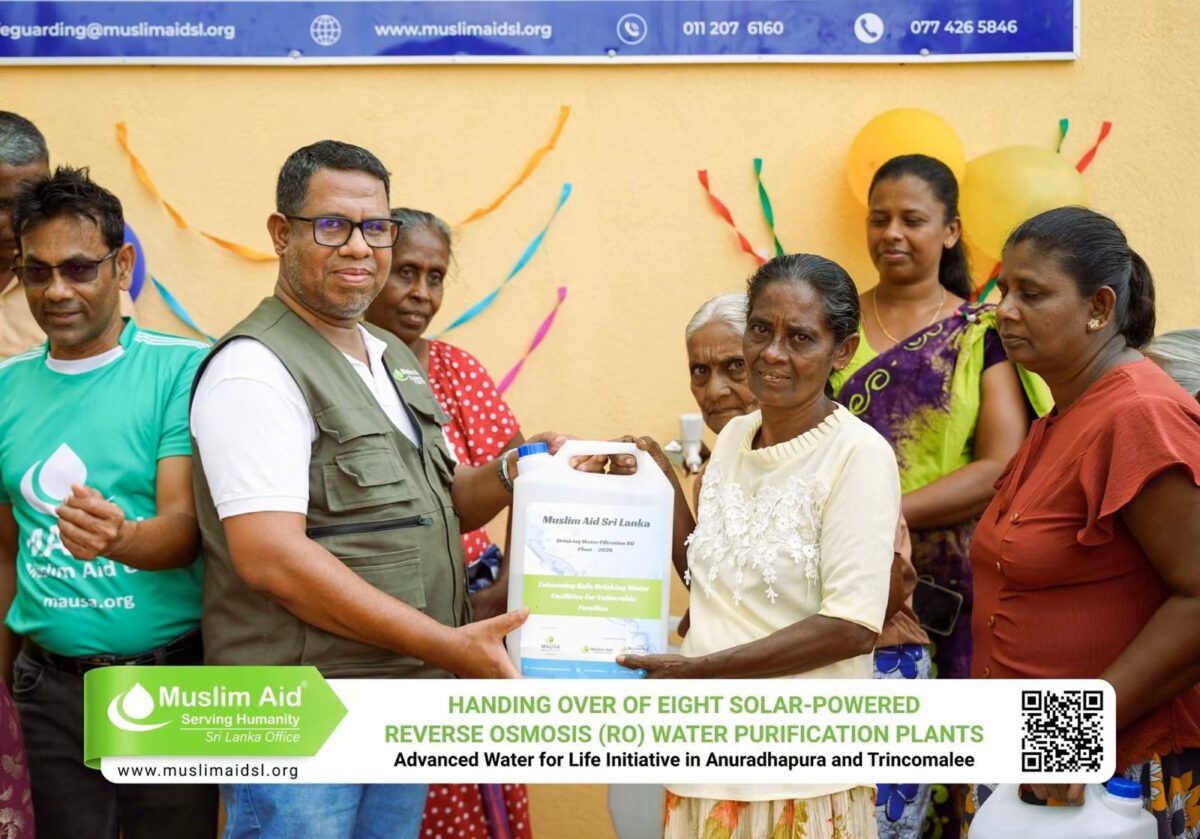


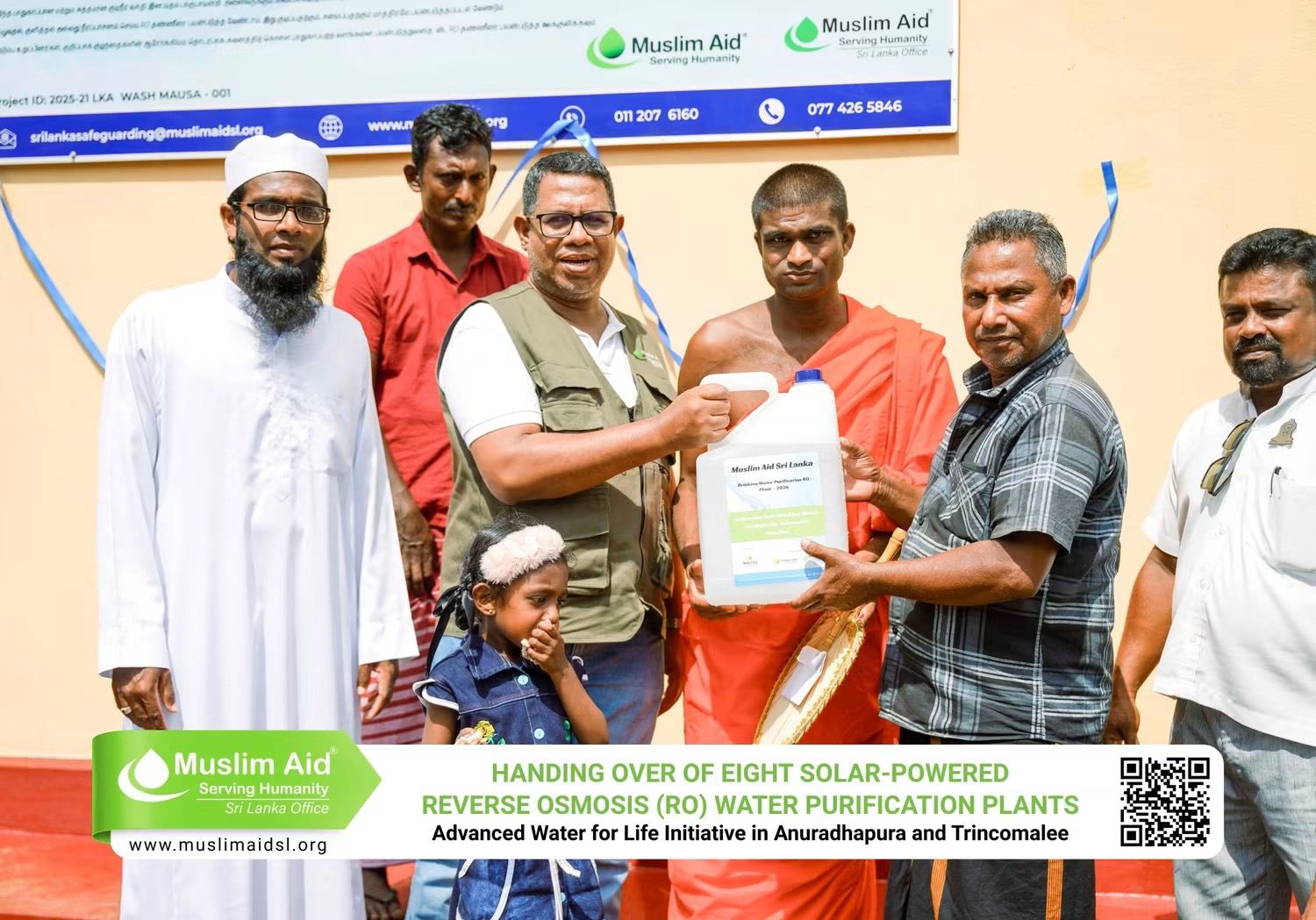
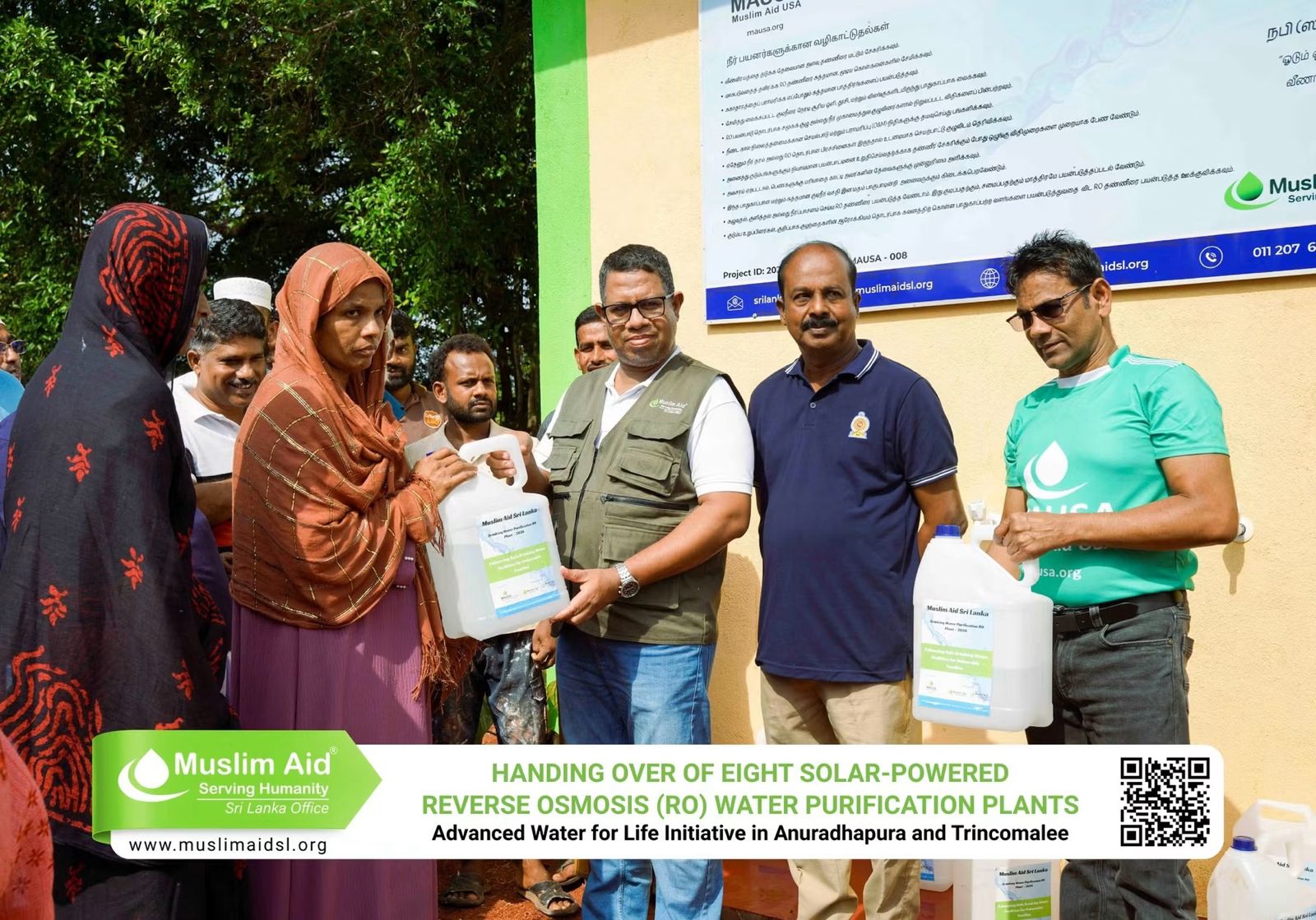
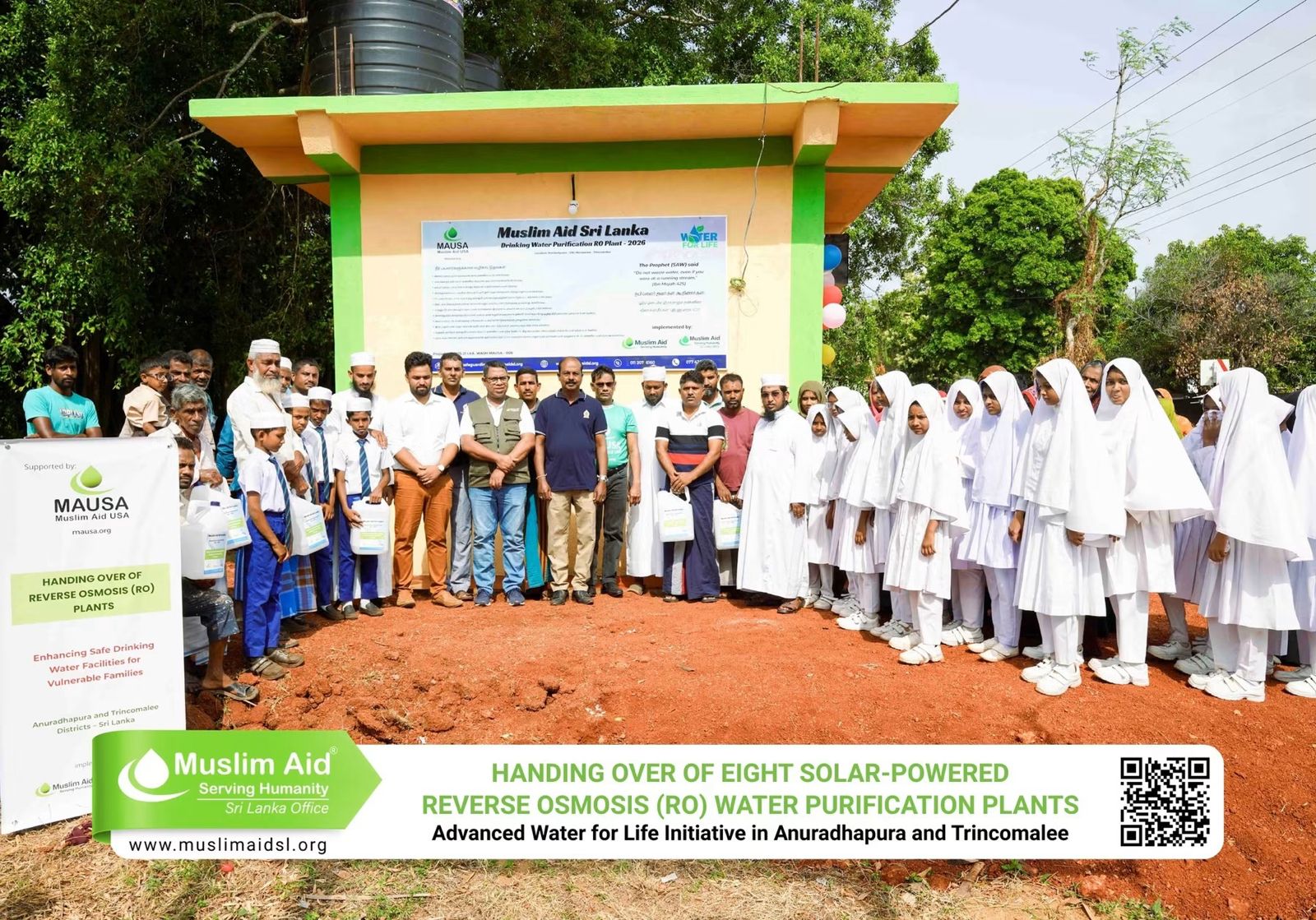
COLOMBO : Muslim Aid Sri Lanka, with the generous support of Muslim Aid USA, has officially handed over eight solar-powered RO water purification plants to underserved communities in the Anuradhapura and Trincomalee districts.
Representing a total investment of LKR 39.3 million, the initiative directly benefits approximately 4,918 individuals and reinforces the organisation’s commitment to advancing Sustainable Development Goal #SDG6 Clean Water and Sanitation.
Designed to provide long-term access to safe and reliable drinking water, the project combines water purification technology with renewable energy solutions. Each RO plant is equipped with a 5-kilowatt solar power system, ensuring environmentally sustainable operation while reducing energy costs. Through a net-metering mechanism, excess electricity generated by the solar installations is fed back into the national grid, creating a supplementary income stream that supports the ongoing operation and maintenance of the facilities.
The purification plants were established in the villages of Muslim Ataweerawewa, Gonahaddenawa, Getalawa, Aluth Divulwewa, Gomarankalla, Mihintale, Olambawa, and Rottawewa. The initiative serves communities that have long faced challenges related to water quality and limited access to safe drinking water, helping to improve health outcomes and overall quality of life.
The project is particularly significant in the North Central Province, where Chronic Kidney Disease of uncertain etiology (CKDu) continues to pose a major public health concern. Anuradhapura remains one of the most affected districts in Sri Lanka, with a considerable number of families living in areas vulnerable to water-related health risks. By providing access to purified and contaminant-free drinking water, the project contributes to efforts aimed at reducing exposure to potential health hazards associated with unsafe water sources.
The official handing-over ceremonies were attended by the Country Director of Muslim Aid Sri Lanka, Divisional Secretaries, representatives from the Department of Rural Water Supply, community leaders, religious leaders, and beneficiary community members. The events highlighted the strong collaboration between local authorities, community stakeholders, and development partners in delivering sustainable solutions to pressing community needs.
Speaking during the ceremonies, stakeholders emphasized the importance of community ownership and collective responsibility in ensuring the effective management and long-term sustainability of the facilities. They also commended the partnership between Muslim Aid Sri Lanka, government institutions, and local communities in implementing a project that delivers both social and environmental benefits.
Through its innovative integration of clean water access, renewable energy, and community-led sustainability mechanisms, the initiative serves as a model for resilient rural development and sustainable resource management.
Muslim Aid Sri Lanka remains committed to working alongside local authorities, community leaders, and international partners to implement impactful humanitarian and development initiatives that improve the lives of vulnerable communities and contribute to a more sustainable future for Sri Lanka.