
COLOMBO : The release of the G.C.E. Ordinary Level Examination 2025 results once again highlights a matter that deserves serious attention. While many students have performed exceptionally well in most subjects, a number of them have unfortunately failed to qualify as successful candidates because they did not obtain a pass in Sinhala or Tamil (their first language), and in some instances, Mathematics.
For many English medium students, the greatest challenge is not Science, Commerce or other academic subjects, but achieving the required standard in the first language -Sinhala. As a result, years of hard work and excellent performances in several subjects are overshadowed by failure in one compulsory subject.
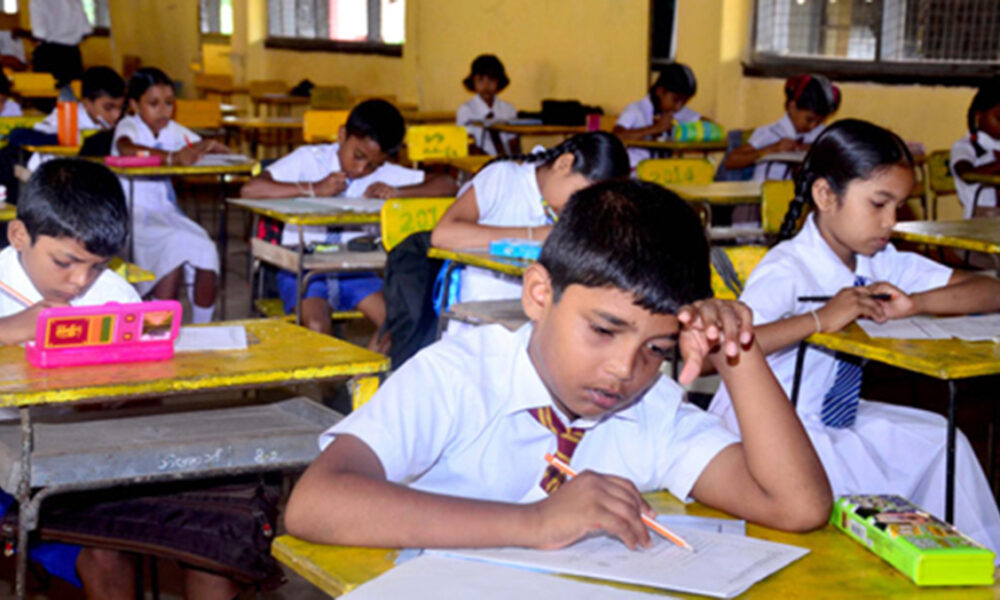
To address this issue at an early stage, I wish to propose that all English medium students be encouraged to sit the Year 5 Scholarship Examination. The objective need not necessarily be the awarding of scholarships, but rather to provide an early academic assessment.
Such an initiative would offer several important benefits. Firstly, it would give English medium students valuable experience in facing a national public examination, similar to their Sinhala and Tamil medium counterparts. Secondly, it would enable parents, teachers and education authorities to assess the students’ proficiency in Sinhala while there is still sufficient time to provide remedial support. Early identification of weaknesses is always more effective than attempting to rectify them just before the G.C.E. Ordinary Level Examination.
If there are concerns about placing young children under unnecessary examination pressure, an alternative could be considered. English medium students could either sit the Scholarship Examination solely for assessment purposes, without competing for scholarships. Or they could answer only the language component of the examination to be conducted by the school at their convenience. This would provide schools with valuable diagnostic information while minimising stress on the students.
The Ministry of Educationand/or the schools could also use the findings to introduce targeted language support programmes, supplementary classes and teacher interventions for students who require additional assistance. Such early intervention would help bridge language gaps, improve overall academic performance and reduce the number of students failing the G.C.E. Ordinary Level Examination solely because they could not secure a pass in the compulsory first language.
The Year 5 Scholarship Examination should not be viewed merely as a competitive examination. It can also serve as an effective educational tool to identify learning gaps at an early stage and ensure that every child receives the support needed to succeed.
I sincerely hope the Ministry of Education/ the schools will give due consideration to this proposal in the interest of strengthening language competency among English medium students and preventing avoidable failures at the G.C.E. Ordinary Level Examination.
Let’s Strengthen Sinhala Early; Prevent O/L Failure Later!
Mohamed Zahran
Colombo