

A.M.M.Muzammil
For over a century, Tamil cinema has entertained audiences with stories spanning romance, action, politics, and social issues. Yet, despite its rich legacy, it has rarely offered a comprehensive and authentic portrayal of the Tamil Muslim community—their values, traditions, religious practices, cultural heritage, and long-standing tradition of peaceful coexistence with other communities.
In this context, Habeebi stands out as a landmark achievement, filling a significant gap in Tamil cinema with remarkable sincerity and artistic integrity.
For decades, particularly since the 1980s, mainstream Tamil cinema has often relied on stereotypical portrayals of Muslims. Characters were frequently reduced to one-dimensional figures—a terrorist with a flowing beard, a butcher wielding a knife, or a mystic fakir carrying an incense burner. Such repetitive depictions not only misrepresented an entire community but also reinforced damaging misconceptions among audiences.
Several acclaimed filmmakers, despite their cinematic brilliance, have contributed to these stereotypes. Films such as Roja, directed by Mani Ratnam, Vishwaroopam, starring Kamal Haasan, and Thuppakki, featuring Vijay, portrayed Muslims predominantly through the lens of terrorism and extremism. While these films may have addressed broader geopolitical narratives, their representations inadvertently strengthened negative perceptions of the Muslim community.
Equally concerning has been the role of sections of the mainstream media, both in South and North India, which have often amplified narratives that associate Islam with extremism. Such portrayals have, intentionally or otherwise, fostered prejudice and contributed to the growth of Islamophobia, creating an environment where stereotypical representations in cinema have become normalized.
Against this backdrop, director Meera Kathiravan alias Abul Hassan deserves immense appreciation for breaking away from this long-established pattern. Much like the late Bharathiraja transformed Tamil cinema by bringing rural life to the forefront with authenticity, Meera Kathiravan introduces an entirely new dimension by presenting the lives of Tamil Muslims with honesty, warmth, and remarkable cultural sensitivity.
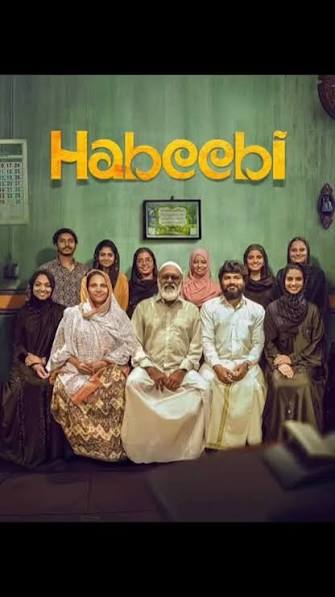
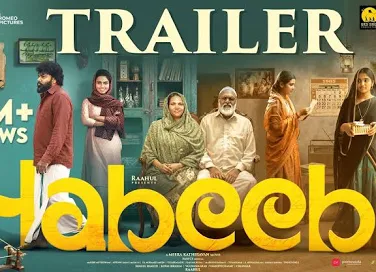
Habeebi is a poignant period romantic drama set in a picturesque Muslim weaving town in southern Tamil Nadu. The film chronicles the enduring love story of Abu Tahir and Niloufer, whose relationship unfolds over several decades. Their journey is one of unwavering devotion, sacrifice, and resilience, shaped by the inevitable challenges of time, family obligations, and changing social realities.
Beyond its central love story, the film beautifully captures the socio-economic realities of the Tamil Muslim community. It explores family values, the dignity of labour, the decline of the traditional handloom weaving industry, economic hardship, migration, and the gradual transformation of a once close-knit society. Equally noteworthy is its respectful portrayal of Muslim women, highlighting their strength, dignity, and important role within both the family and the community.
The greatest strength of Habeebi lies in its authenticity. Rather than relying on stereotypes or sensationalism, Meera Kathiravan presents everyday Muslim life with meticulous attention to detail. Religious customs, social interactions, cultural celebrations, family relationships, and community values are woven naturally into the narrative, allowing audiences to experience a world that has long remained absent from mainstream Tamil cinema.
Visually, the film is equally compelling. The serene landscapes of southern Tamil Nadu, the vibrant atmosphere of the weaving community, and the emotional depth of the performances combine to create an immersive cinematic experience. Every frame reflects the director’s commitment to realism and emotional honesty.
Since its release in Chennai, Habeebi has received widespread critical acclaim and has generated considerable discussion within the Tamil film fraternity. Renowned directors including T. Rajendar, Mysskin, Ram, Cheran, Pandiraj, Ameer, and Vetrimaaran, along with numerous writers, critics, and cinema enthusiasts, have praised the film as a trendsetter.
Many have openly acknowledged that Tamil cinema has historically failed to represent Muslims fairly and that Habeebi offers a long-overdue corrective by presenting a balanced, humane, and authentic narrative.
The film also showcases Meera Kathiravan’s confidence as a filmmaker. Instead of depending on established stars, he courageously casts several fresh faces whose natural performances enhance the film’s realism. Veteran filmmaker and lyricist Kasthuri Raja, father of actor Dhanush, delivers a memorable performance as Yusuf Bhai, lending further emotional depth and credibility to the story.
Habeebi is more than a beautifully crafted love story; it is an important cultural document. It preserves the heritage of Tamil Muslims while reminding audiences that cinema has the power not only to entertain but also to educate, bridge communities, and challenge long-held prejudices. It demonstrates that authentic storytelling rooted in humanity can be far more powerful than narratives driven by stereotypes and sensationalism.
Meera Kathiravan’s Habeebi deserves to be regarded as one of the most significant contributions to contemporary Tamil cinema. It is a film that celebrates love, family, tradition, cultural identity, and communal harmony while correcting decades of misrepresentation.
One hopes that its success will inspire future filmmakers to portray every community with fairness, authenticity, and respect, creating cinema that strengthens social harmony rather than reinforcing division.