
A.M.M.Muzammil
COLOMBO : In times of political vulnerability, leaders often deflect attention from domestic crises through external conflict. Netanyahu and Trump are portrayed as closely aligned amid controversy, with Netanyahu facing corruption allegations and Trump facing scrutiny over alleged ties to the Epstein scandal. Both are described as working together to reshape public narratives.
The American administration has often been portrayed as a master of deception. A striking example is the claim that Saddam Hussein possessed weapons of mass destruction (WMDs), which served as the central justification for the 2003 invasion of Iraq. This claim, strongly promoted by George W. Bush and his administration, was later proven false, misleading the international community and leading to the Iraq War.
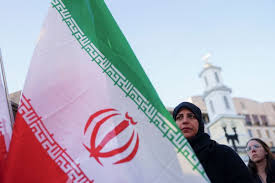
This time, under the guise of “regime change,” war-mongering Netanyahu and Donald Trump allegedly initiated a bombing campaign and an invasion of Iran on 28 February 2026—an action widely viewed as a calculated attempt to deflect attention from their respective domestic predicaments.
A unilateral attempt to pursue regime change in Iran lacks both legitimate mandate and sound legal foundation. It is further alleged that Trump ordered strikes on Iran on two separate occasions—in June 2025 and February 2026—even while his envoys were engaged in negotiations with Iranian representatives. He has also repeatedly stated that regime change remains his objective.
With no effective air force or navy, Iran has nevertheless been able to damage over 27 American bases in the Gulf and strike Israel’s capital, Tel Aviv, as well as the port of Haifa, using locally made missiles and drones, while effectively halting any plans for a ground invasion. It is an unprecedented situation in the history of modern warfare.
Trump has fundamentally miscalculated and dangerously underestimated Iran’s military capabilities and resilience. History demonstrates the risks of such misjudgments. Prior to World War II, the United States similarly underestimated Japanese air and naval power—an error that proved catastrophic when Japan launched a surprise attack on the U.S. Pacific Fleet at Pearl Harbor on December 7, 1941.
Underestimating an adversary’s resolve and capability invites catastrophic miscalculation. Reports of Iranian missile strikes downing American F-35 and F-15E aircraft have been cited as evidence of Iran’s military capability and technological advancement. Trump’s expectation—that a decapitation strike against Khamenei and his generals would trigger an immediate collapse, potentially aided by alleged Mossad-linked defectors—proved to be yet another serious miscalculation.
What Donald Trump failed to grasp is that the name of Ali Khamenei cannot simply be erased. His legacy is deeply embedded in the political consciousness and collective memory of Iran, shaped over decades of ideological influence. Rather than precipitating collapse, the shock of his death hardened the nation’s resolve. Khamenei’s martyrdom solidified public resolve, uniting disparate factions in shared defiance.
A key miscalculation by Trump and the Pentagon was underestimating Iran’s “Mosaic Defense,” a decentralized system designed to ensure resilience. By dispersing authority across semi-autonomous regional units, Iran can continue fighting—even if central command is disrupted—by shifting into sustained insurgency.
Strategically, Trump’s February 2026 war against Iran proved to be his Waterloo, shattering the long-held myth of American military superiority and invincibility. Adding fuel to the fire, Trump’s widely publicized ultimatums—and his threats to “wipe out a civilization”—were seen as intimidation that exposed moral bankruptcy and the belief that Iran would surrender under pressure.
Iran, far from being subdued, has emerged emboldened as a formidable regional power, exercising de facto control over the Strait of Hormuz—a narrow corridor barely 34 kilometers wide, yet of immense global consequence. This vital passage, linking the Gulf to the Indian Ocean, carries roughly a fifth of the world’s oil supply, along with other critical commodities such as fertilizers, making its influence both strategic and far-reaching.
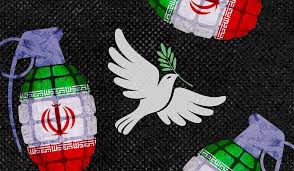
Now, emboldened by its strengthened position, Iran has proposed levying a transit fee on oil tankers passing through the Strait of Hormuz as part of its ten-point plan to end the war. If nations such as Egypt and Panama lawfully impose charges for passage through the Suez Canal and the Panama Canal, respectively, why should Iran be denied a similar prerogative—particularly under the shadow of war reparations and years of U.S. sanctions that have strained its economy? Is such a proposition truly unreasonable?
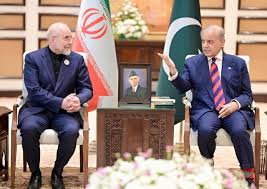
There is a pithy Sinhala saying: a woodpecker may peck at many trees, but only when it strikes the banana tree does it realize it cannot free itself. In much the same way, Donald Trump, having provoked Iran, now finds himself ensnared and unable to extricate himself. To salvage his position, he appears to be seeking a face-saving peace deal through intermediaries—a calculated move to restore his diminished stature.
Does not David, the humble shepherd, overcome the towering giant Goliath in that timeless clash of audacity against arrogance? So too has Trump’s swollen ego—once so certain of its own indestructible force—been swallowed by the rising, inexorable tide of Iranian heroism.
Where he imagined himself a colossus, he has become but a vanishing ripple, dissolving into the very depths he dared to defy.