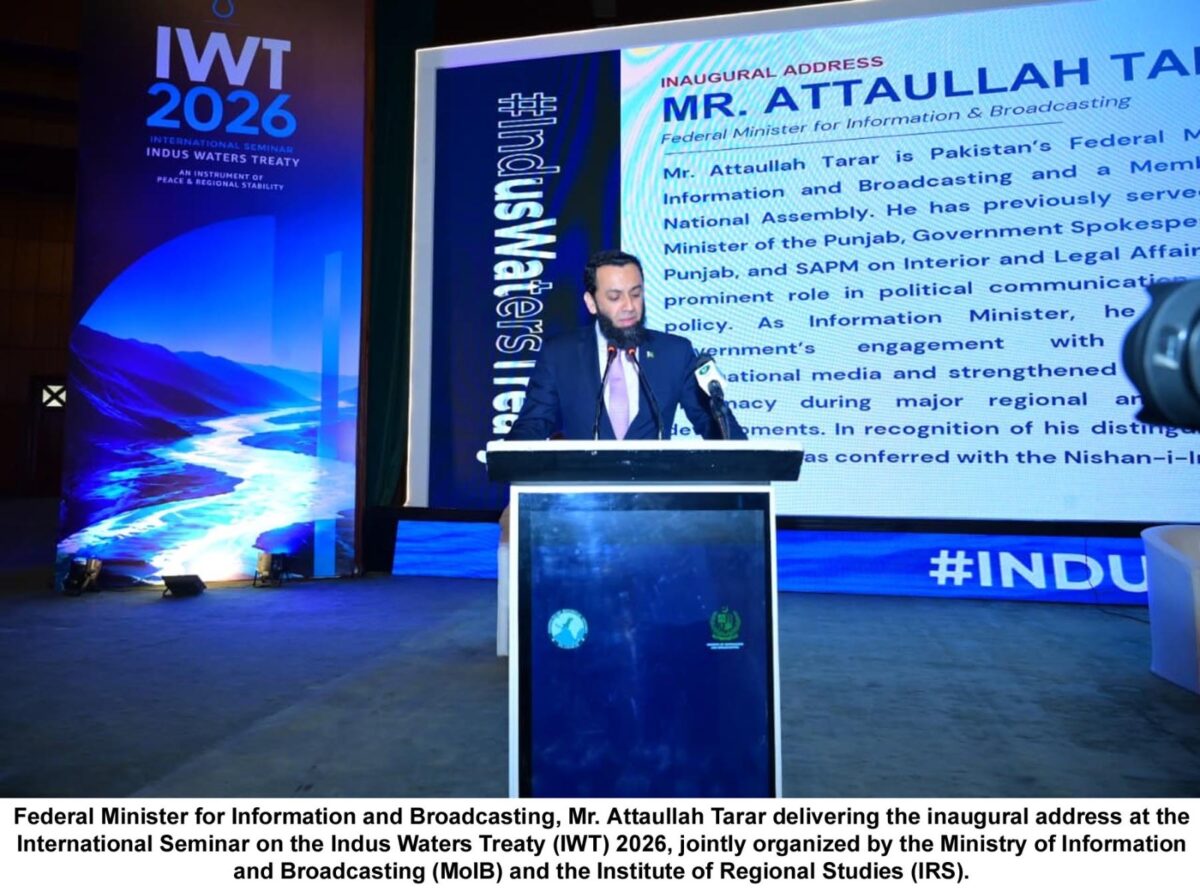


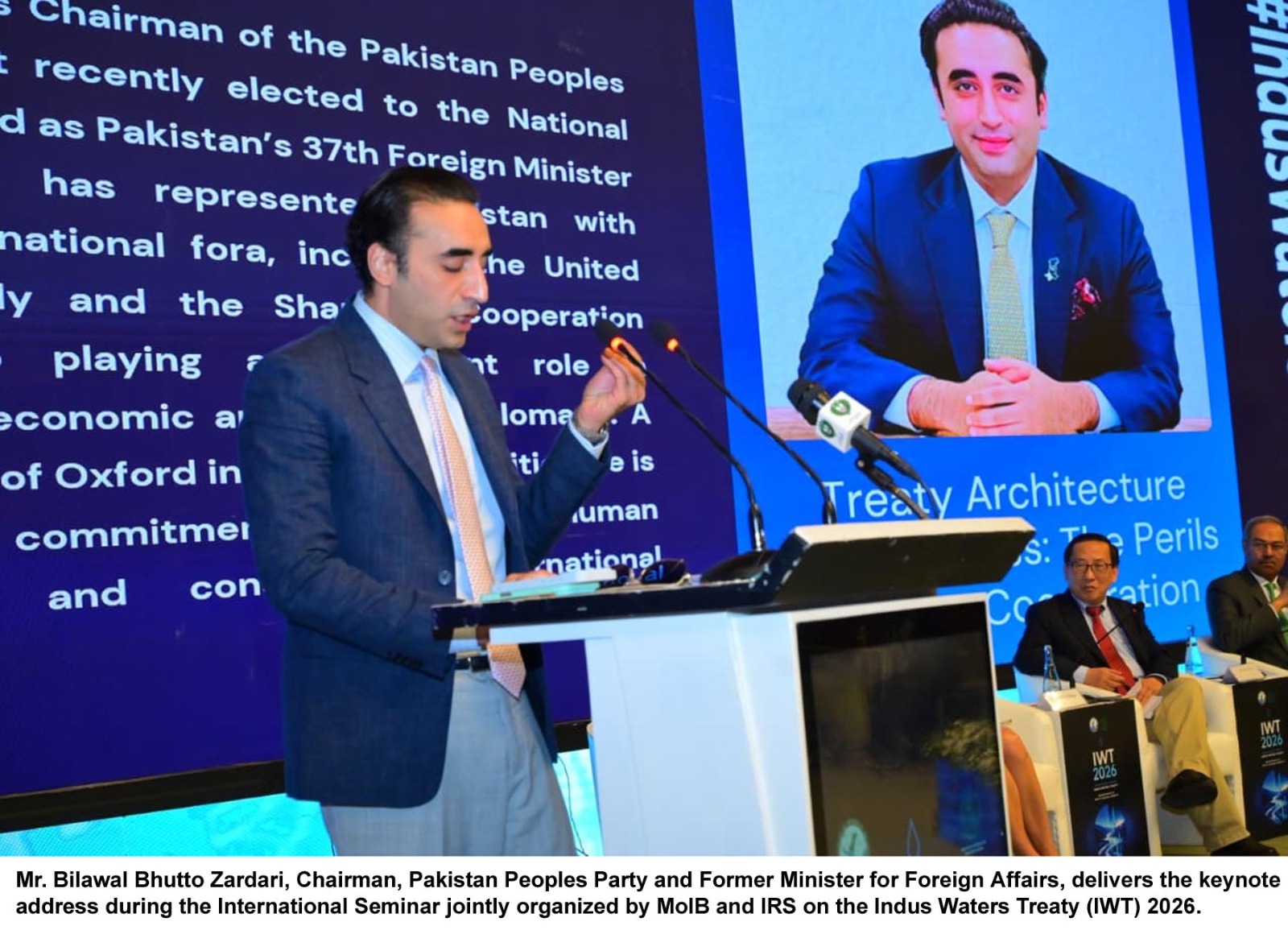
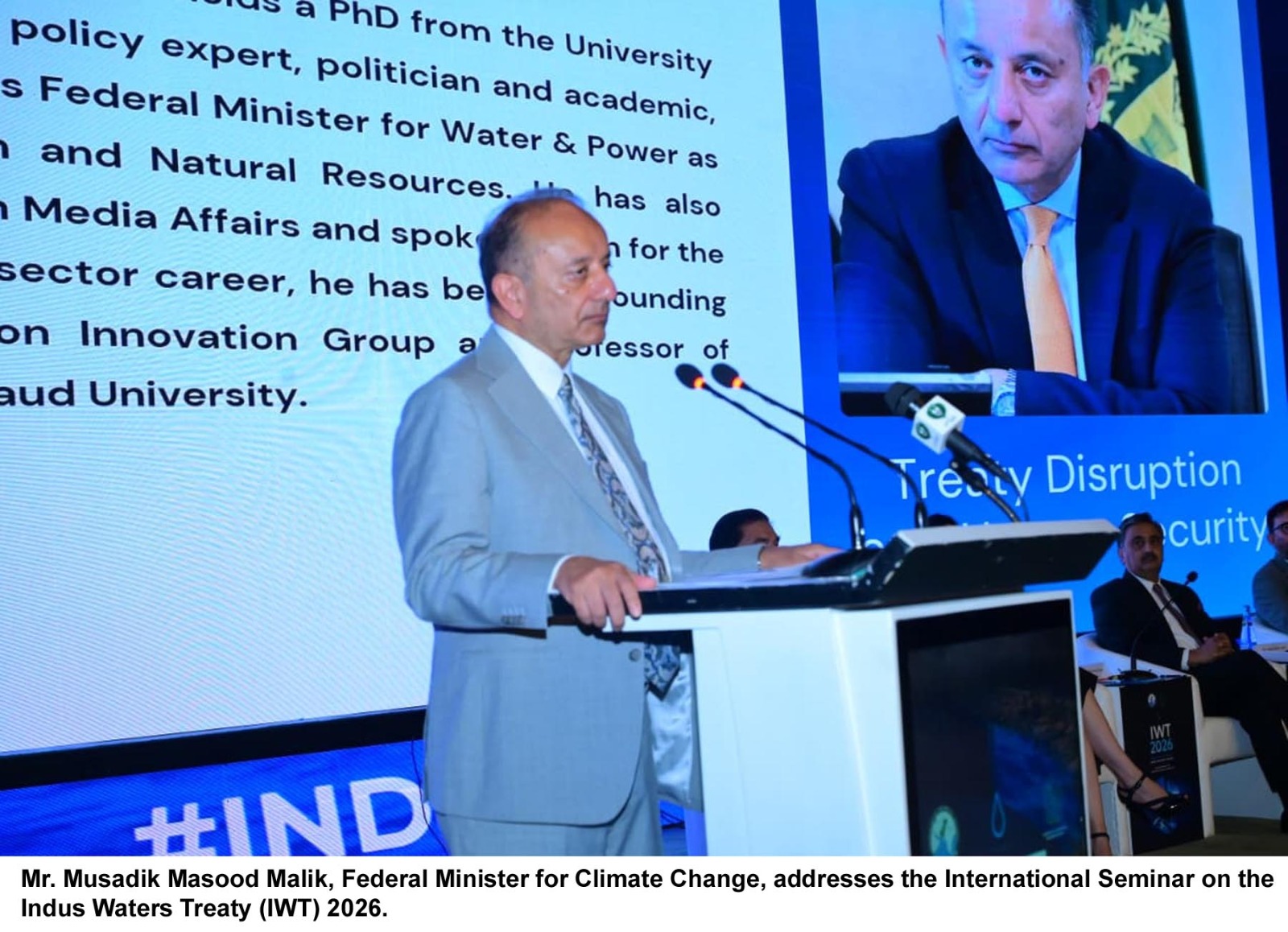
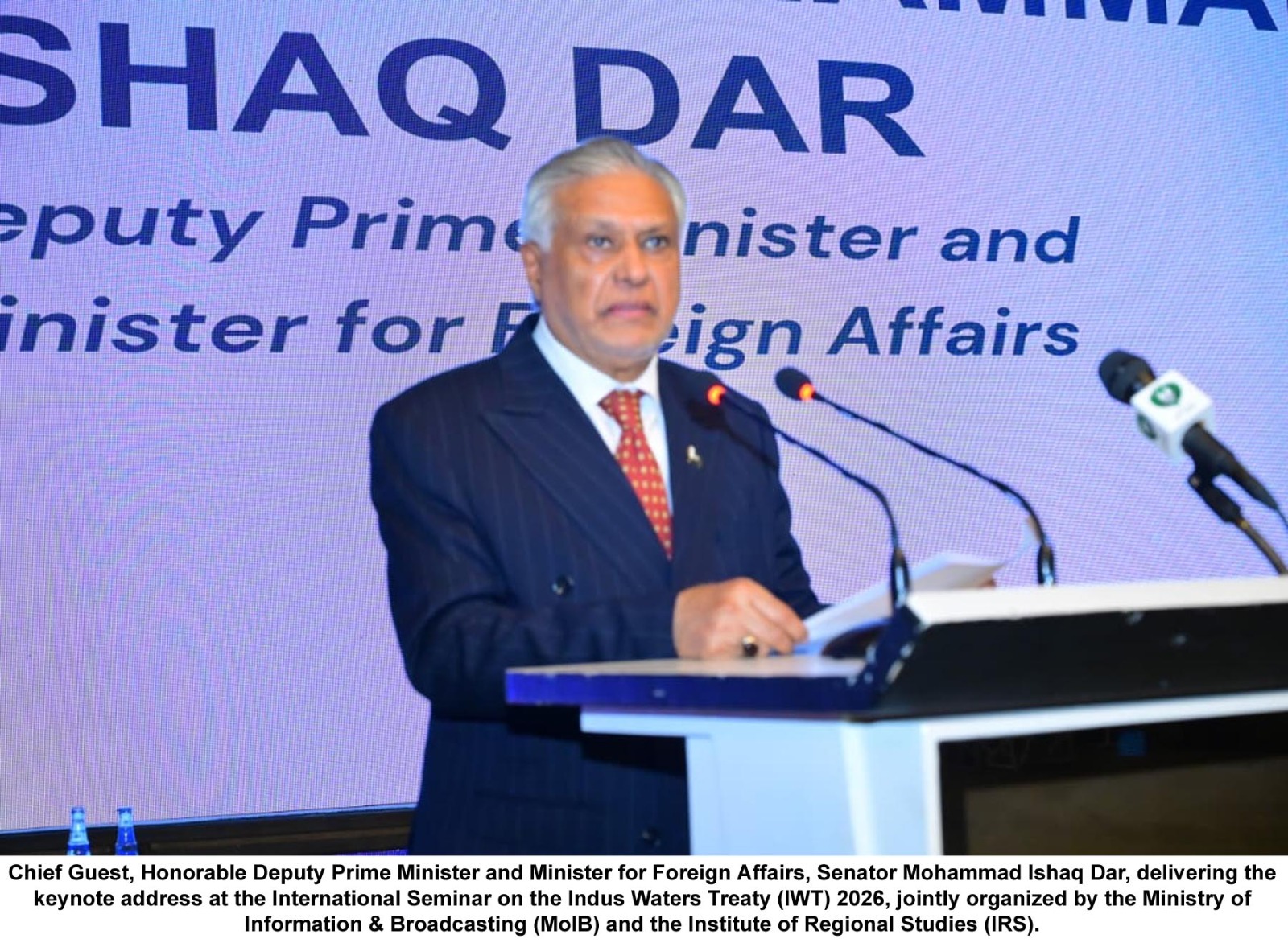
COLOMBO, – Pakistan hosted a historic, first-of-its-kind daylong international conference on the Indus Waters Treaty (IWT) in Islamabad yesterday, bringing together global legal luminaries, transboundary water experts, and senior policymakers to deliberate on the critical dimensions of water diplomacy, international law, and regional stability.
Addressing the landmark seminar, titled “The Indus Waters Treaty: A Key Instrument for Peace and Regional Stability,” Deputy Prime Minister and Foreign Minister Senator Ishaq Dar emphasized that the 1960 treaty is not a favor, but a binding settlement and a foundational cornerstone of peace in South Asia. He stated that responsible states must act within established legal frameworks, warning that any unilateral attempts to alter, suspend, or hold the treaty in abeyance lack legal legitimacy and undermine the broader rules-based international order.
Federal Minister for Information and Broadcasting Attaullah Tarar and Minister for Climate Change Dr. Musadik Malik reaffirmed the government’s unwavering stance, declaring that the Indus River sustains the lives and livelihoods of over 240 million Pakistanis. They asserted that water security is Pakistan’s ultimate lifeline and an uncompromisable “red line,” making it clear that any attempt to weaponize water or block its flow would be met with firm state resistance.
Key highlights and outcomes from the global forum included:
Inviolability of International Law: International legal experts at the conference strongly endorsed Pakistan’s stance, affirming that the World Bank-brokered treaty cannot be unilaterally revoked, suspended, or altered by any single state.
Validation of Legal Defenses: The Pakistan Commissioner for Indus Waters highlighted recent key awards from the Court of Arbitration, confirming that the court retains full competence over the treaty regardless of any state’s non-appearance or claims of putting the accord in abeyance.
Global Call Against Water Weaponization: Leadership from across Pakistan’s political spectrum, including Pakistan Peoples Party (PPP) Chairman Bilawal Bhutto Zardari, proposed a new international convention against the “weaponization of waterways,” arguing that international law should explicitly prohibit upstream states from exploiting civilian dependence on shared rivers for political leverage.
Consensus on National Water Strategy: The forum underscored the critical need for an immediate nationwide political consensus on building advanced reservoirs, barrages, and dams to regulate storage capacities, directly protecting the country’s agricultural sector from climate vulnerabilities.
The High Commission of Pakistan in Colombo notes that this pivotal international conference underscores Islamabad’s proactive diplomacy in defending its sovereign water rights under the IWT framework, ensuring long-term ecological balance and sustainable development across South Asia.