

ONELI NONIS
COLOMBO
Human Rights Day is more than a date marked on the calendar; it is a reminder that dignity is not a privilege but a birthright. Every year on 10 December, the world pauses to honour the adoption of the Universal Declaration of Human Rights (UDHR) in 1948—a document that promised freedom, equality, and justice to every person. But promises mean little if they do not speak to the lived realities of women and girls whose daily lives are shaped by gendered inequalities. For half the world’s population, human rights are not abstract principles; they are deeply personal demands for safety, autonomy, and recognition. When a girl is denied education, when a woman is silenced in parliament, when a survivor is blamed instead of believed—human rights are violated.
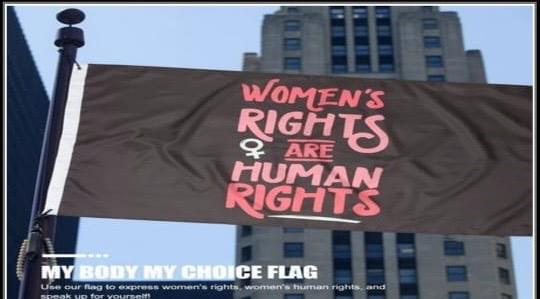
Today, as we commemorate Human Rights Day, it is impossible to separate the struggle for universal rights from the continuous fight for women’s rights. They are not parallel movements—they are the same journey. Women and girls have always been at the frontline of resistance, healing, advocacy, and rebuilding. Their stories carry the emotional weight of injustice, but also the quiet strength of resilience. Through the successes, the failures, the progress and the regression, one truth remains: a world that fails its women fails humanity. This article reflects on that truth—exploring how human rights and women’s rights intersect, how violence and inequality persist, and how the global community, including Sri Lanka, can move toward meaningful change. Through case studies, lived narratives, and global lessons, we reaffirm that defending women’s rights is defending human rights at their core.
The concept of human rights often appears universal, yet the experience of rights is profoundly shaped by gender. While the UDHR declares that “all human beings are born free and equal in dignity and rights,” women and girls continue to navigate systems that deny them equality from birth. Human rights, therefore, cannot be theorised without acknowledging how gender determines access to freedom, safety, and opportunity. For many women, these violations begin early: a girl told to stay home while her brother goes to school, a teenager who learns that her body is policed more harshly than her male peers, or a young woman whose ambitions are dismissed as unrealistic in patriarchal cultures. These everyday acts—silent, normalised, unnoticed—form the foundation of gender inequality.
Globally, we see powerful case studies of how denying women’s rights shapes entire societies. Malala Yousafzai’s story remains one of the most profound examples: a young girl shot simply for wanting to attend school. Her act of resistance was not grandiose—it was the radical act of imagining herself in a classroom. Her recovery and advocacy forced the world to confront the simple truth that the right to education, though fundamental, is still contested for many girls. Similarly, the Iranian women-led movement “Woman, Life, Freedom”, sparked by the death of Mahsa Amini, showed how women’s demands for bodily autonomy and freedom can transform into nationwide resistance. Their courage redefined the meaning of human rights advocacy—standing unarmed, facing bullets and surveillance, driven by the belief that their lives mattered.
In Sri Lanka, too, the lived experience of women underscores how human rights are gendered. Consider the case of Sandya Eknaligoda, whose fight for justice after her journalist husband’s disappearance highlights not only the struggle for truth but also the emotional labour women bear in conflicts. For years, Sandya stood outside courts, faced intimidation, and defied political pressure—not because she chose activism, but because it was thrust upon her. Her story reveals how women often become accidental human rights defenders, carrying grief and resilience simultaneously. Similarly, women in Sri Lanka’s plantation communities, who work long hours for low wages, historically fought for decent living conditions and citizenship rights. Their struggle was not merely economic—it was a fight for humanity in systems that undervalued their existence. These narratives remind us that human rights are not broken in dramatic moments; they are chipped away slowly through everyday discrimination.
To understand women’s rights within the human rights framework, we must confront the systemic nature of gendered violence and inequality. Human rights violations against women are rarely isolated incidents; they are products of entrenched cultural, economic, and political structures that have normalised discrimination. One of the most pervasive forms of violation is gender-based violence (GBV)—a pandemic that pre-dates COVID-19 and affects women across age, class, ethnicity, and nation. Violence exists in many forms—physical, emotional, sexual, digital, economic—and each reflects a deeper imbalance of power.
Global case studies expose the severity of these violations. The #MeToo movement, originating in the United States but resonating globally, revealed how deeply systemic sexual harassment is within workplaces, industries, and public institutions. It showed that even the most privileged women were not exempt from abuse, and that the burden of silence had been carried for generations. In India, the 2012 Nirbhaya case forced a reckoning with sexual violence after the brutal gangrape and murder of a young woman in Delhi. The case sparked mass protests, legal reforms, and social debates, but even then, the persistence of similar cases shows the deep-rooted nature of patriarchy. In Afghanistan, the Taliban’s attacks on women’s freedoms—from banning secondary education to restricting mobility—offer one of the starkest modern examples of how women’s rights can be erased through authoritarian rule. These cases highlight a universal reality: gender inequality is not cultural—it is structural.
Sri Lanka, too, reflects this painful truth. The rise of technology-facilitated GBV—from image-based abuse to deepfake manipulation—has exposed women and girls to new forms of violence. Case studies from the Women and Media Collective and UNFPA Sri Lanka document instances where girls as young as sixteen had their private images leaked and blackmailed, pushing them into silence and isolation. These violations are not simply about technology—they stem from social norms that shame victims while protecting perpetrators. Another example lies in domestic violence, where despite legal frameworks like the Prevention of Domestic Violence Act, many women still struggle to access justice due to social stigma, economic dependence, or fear of retaliation. The story of a young mother from Kurunegala—who endured years of abuse and had her case dismissed multiple times—underscores the gaps between legal protections and lived realities. Her eventual escape was made possible not by institutions, but by community support and NGOs that intervened when systems failed her. This is the heartbreaking pattern worldwide: women survive not because systems protect them, but because they persist despite those systems.
Despite enormous challenges, the story of women’s rights globally is also a story of resistance, progress, and hope. Women have led movements that redefined nations, transformed legal systems, and inspired generations. One of the clearest examples is Ruth Bader Ginsburg, whose legal battles in the United States dismantled discriminatory laws and laid the foundation for gender equality jurisprudence. Similarly, in Rwanda, following the genocide, women stepped into leadership roles, ultimately becoming the world’s first country with more than 60% female representation in parliament—a powerful reminder that women’s participation is essential to rebuilding societies. In South America, the “Green Wave” movement led by women’s groups succeeded in legalising abortion in Argentina, reshaping reproductive rights in a deeply conservative context.
In Sri Lanka, women’s movements have long been at the heart of democratic and peacebuilding efforts. During the civil war, women played crucial roles in reconciliation, humanitarian assistance, and community leadership. Organisations such as the Women’s Action Network (WAN) and the Mother’s Front emerged as powerful grassroots movements advocating for truth, justice, and healing for families of the disappeared. Today, women and youth activists continue to lead dialogues on constitutional reform, minority rights, and accountability. The 2022 Aragalaya saw young women at the forefront—speaking, organising, healing, and dreaming. Their presence challenged stereotypes about women’s political participation and amplified the demand for a more inclusive democracy.
Another powerful dimension of progress emerges in education, healthcare, and digital empowerment. Sri Lanka has one of the highest female literacy rates in South Asia, proving that when girls have access to education, they become agents of change. Young women entering fields like STEM, climate diplomacy, international relations, and entrepreneurship illustrate how empowered women strengthen societies. Yet, empowerment is not only about opportunity—it is also about inclusion. For many marginalised women—such as estate workers, rural farmers, survivors of war, and women with disabilities—the fight for rights is ongoing. Case studies show how community-based initiatives are transforming lives: from microfinance projects in Matale that help rural women start businesses, to UNFPA-supported shelters that offer safe spaces for survivors of violence, to digital literacy programs that equip girls with the skills to navigate an increasingly complex online world. These examples reveal that progress is possible when rights-based frameworks meet lived realities.
Human Rights Day is a reminder—not a celebration. It reminds us that while humanity has made extraordinary progress, women and girls continue to bear the heaviest burdens of inequality. Their rights are non-negotiable, universal, and indivisible, yet too often they are treated as supplementary rather than fundamental. The stories of Mahsa Amini, Malala, Sandya Eknaligoda, Afghan schoolgirls, plantation workers, domestic violence survivors, and countless unnamed women show us that the fight for rights is not theoretical—it is urgent, emotional, and human.
Recognising women’s rights as human rights is not merely a slogan, but a global responsibility. It means addressing violence not as a private issue but as a societal failure. It means celebrating resistance, supporting survivors, amplifying women’s leadership, and challenging structures that silence them. Most importantly, it means listening—truly listening—to the voices of women and girls who continue to shape the meaning of human rights through their courage, resilience, and hope.
On this Human Rights Day, may we honour them not only with words, but with action. May we build systems that protect instead of punish, uplift instead of silence, and empower instead of restrict. When women rise, humanity rises. When girls learn, societies transform. And when their rights are respected, the promise of the Universal Declaration finally becomes real. The future of human rights is inseparable from the future of women—and that future begins with us.