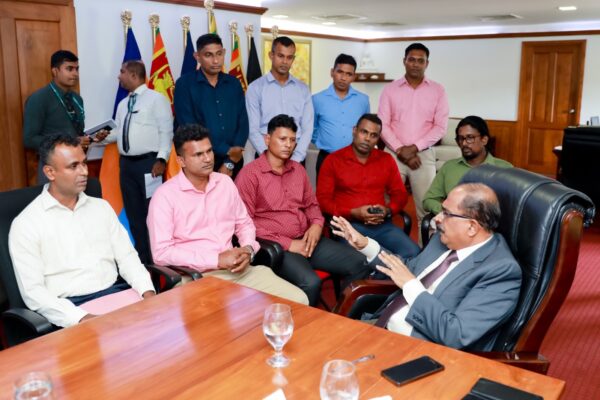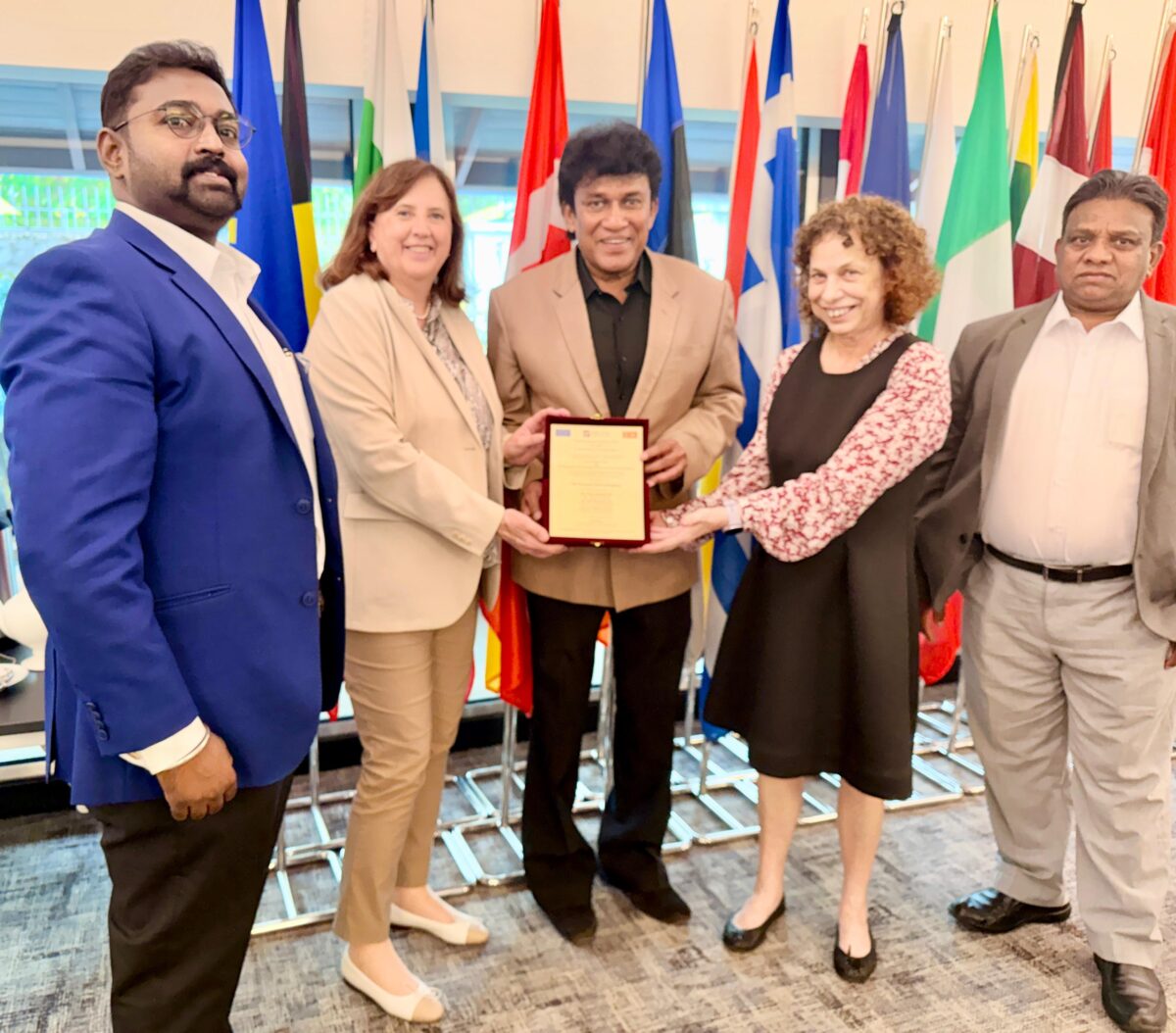
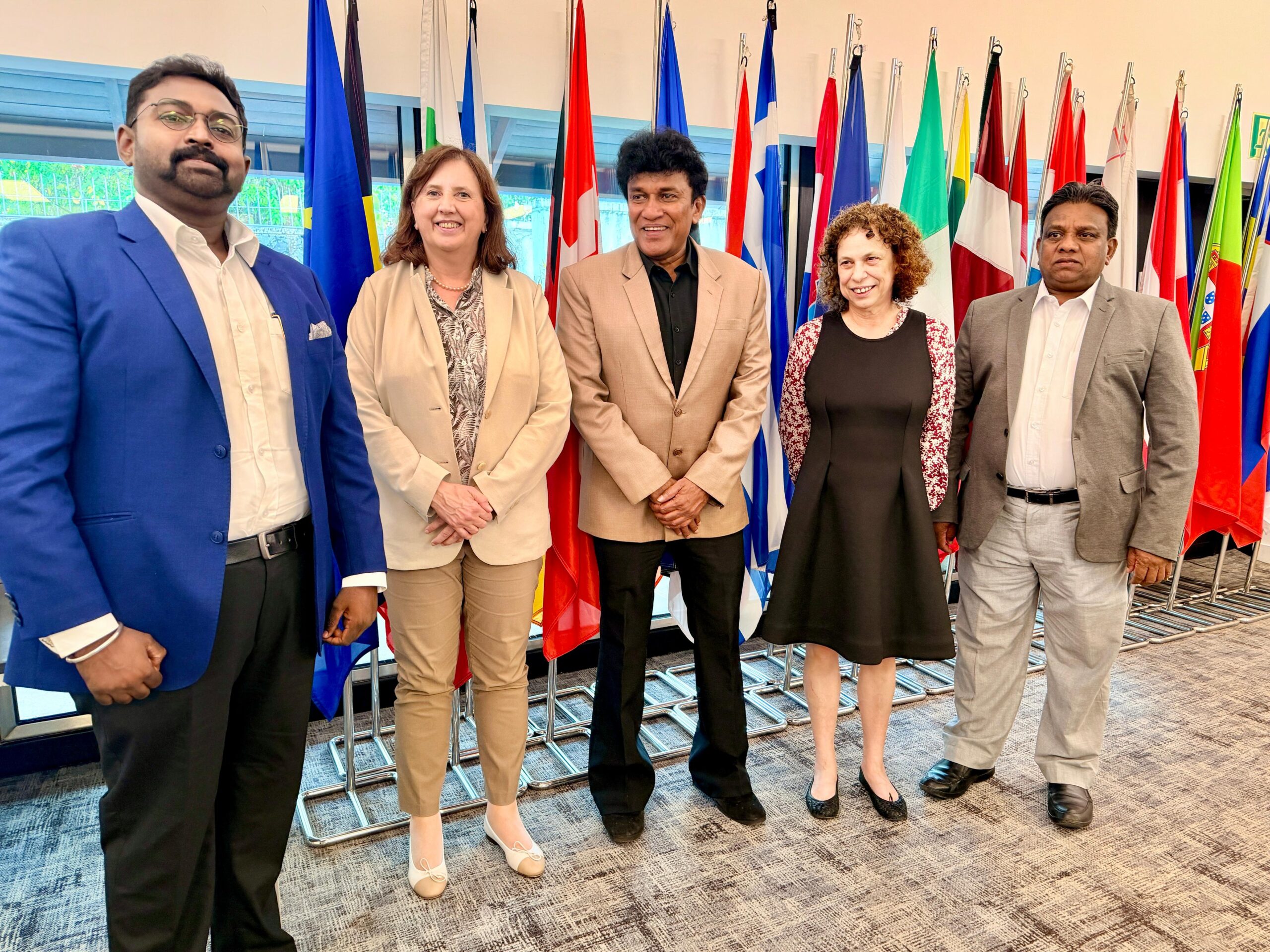
COLOMBO :The Tamil Progressive Alliance (TPA) held a high-level and forthright engagement with the visiting delegation of the European External Action Service (EEAS), led by Director for Asia and the Pacific Ms. Paola Pampaloni, at the Delegation of the European Union in Colombo, hosted by H.E. Ambassador Carmen Moreno.
The TPA delegation was led by . Mano Ganeshan, MP. Also present were Mr. Barath Arullsamy, Vice President of International Affairs, and Prof. Vijayachandran, General Secretary of the Upcountry People’s Front and TPA Politburo Member.
Hon. Mano Ganeshan stated that while the TPA supports the continuation of GSP+ trade concessions for Sri Lanka, preferential market access must be tied to measurable guarantees of justice, equality, and dignified citizenship rights for historically marginalised communities, including secure land rights for the Malayaga Tamil people.
He emphasised that the credibility of GSP+ depends not merely on ratification of international conventions, but on real, verifiable implementation, including:Secure land rights for Malayaga Tamil families, Elimination of entrenched discrimination in plantation regions, Protection of labour dignity and eradication of exploitative, modern slavery-like conditions linked to plantation supply chains, Inclusive development and equal national integration. Without tangible progress, the spirit and governance logic of GSP+ risk being undermined.
The TPA placed before the EEAS the continuing structural exclusion of the Malayaga Tamil community, highlighting persistent landlessness, intergenerational poverty despite sustaining key export sectors such as tea and apparel, systemic socio-economic inequality, and long-standing development neglect compared to national averages.
The delegation also noted with concern the continued silence of the Government of Sri Lanka despite repeated calls for dialogue and resolution on these matters.Independent policy evidence has consistently documented disproportionate vulnerability, unequal recovery, and structural exclusion affecting plantation communities.
Mano Ganeshan conveyed grave concern over the exclusion of Ditwaha-displaced Malayaga families from the Government’s LKR 5 million per unit national housing scheme, while redirecting them to the Indian-assisted LKR 2.7 million programme.
He stated that separating plantation communities into inferior recovery frameworks risks institutionalising segregation and perpetuating systemic apartheid-like discrimination, incompatible with principles of equality and non-discrimination.
The delegation called for equitable and non-discriminatory disaster recovery for all affected Malayaga families.
The TPA reiterated its non-negotiable position:
- Immediate inclusion of all Ditwaha-displaced Malayaga families within the national housing framework.
- International assistance cannot substitute the Sri Lankan State’s obligation to its own citizens.
- Housing solutions must recognise land-based livelihoods, social structure, and safety needs of plantation communities.
The TPA emphasised that continued denial of land security and persistent structural discrimination raise serious questions regarding effective implementation of international obligations linked to GSP+, particularly concerning:Non-discrimination and minority equality, Adequate housing and land security, Labour dignity and protection from exploitative conditions, Inclusive governance and development justice
Hon. Mano Ganeshan stressed that recognition of land rights for the Malayaga Tamil community would constitute a concrete and measurable step toward demonstrating genuine compliance with the principles underpinning GSP+. The Tamil Progressive Alliance called upon international partners, including the European Union, to ensure that trade partnerships promote justice and inclusive national development, not merely economic exchange.
Resolving the long-standing marginalisation of the Malayaga Tamil community is essential for strengthening democratic inclusion, ensuring social stability, advancing equitable development, and upholding the credibility of Sri Lanka’s international commitments.
The TPA remains committed to constructive engagement, while affirming that justice, land rights, and equality are fundamental prerequisites for sustainable partnership and national progress.