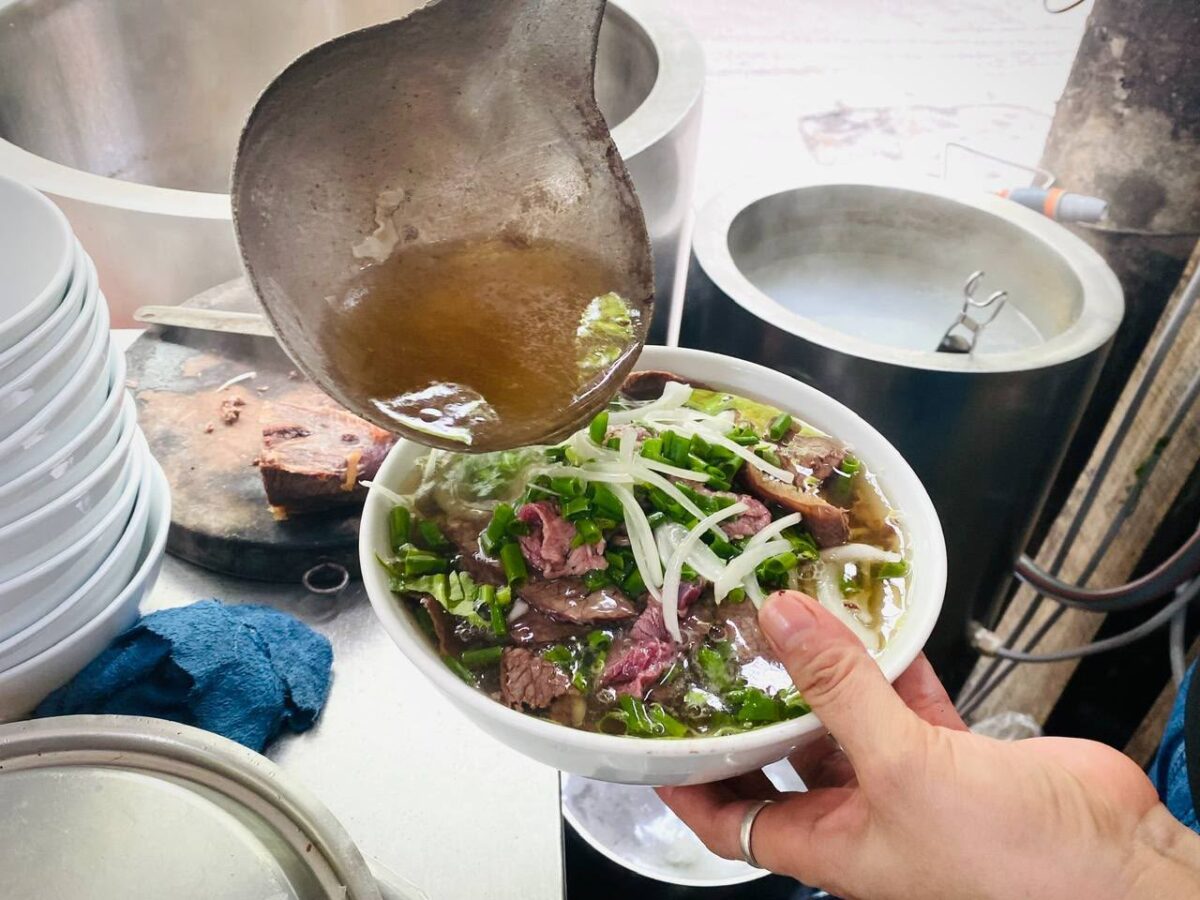
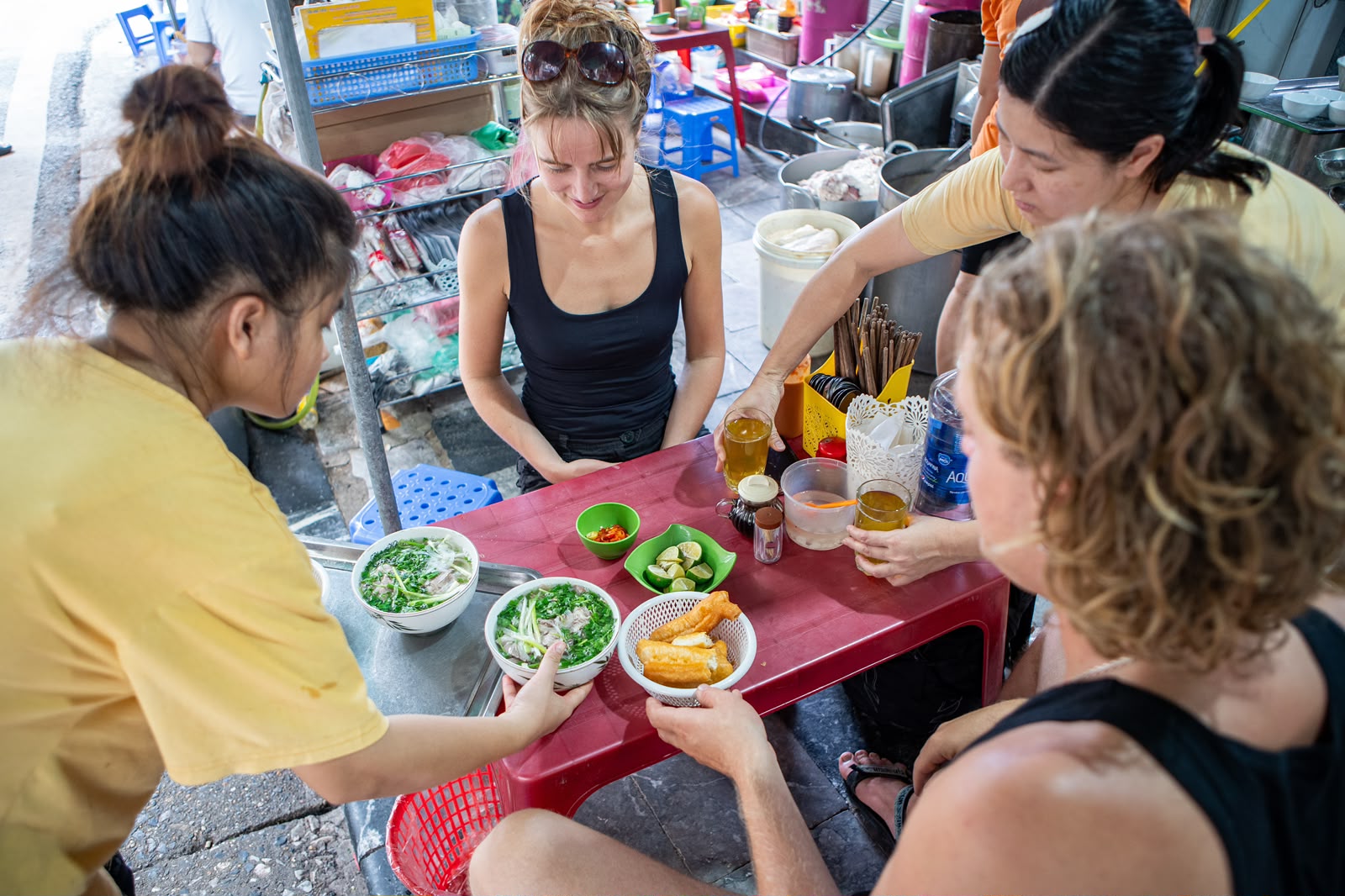
HA NOI : It is six in the morning in Hanoi. The city has barely woken up, yet the pavements are already busy. At a small corner shop, a cook ladles hot broth into a bowl, lays down a tangle of white rice noodles, places a few slices of beef on top, and finishes with a handful of spring onions and a splash of fragrant stock. The bowl is placed before a waiting customer. Chopsticks are lifted, and the day begins.
This is how millions of Vietnamese people start their mornings. And it has been this way for over a century.
Phở as a morning bowl for Vietnamese
What is in the bowl?
Phở is a noodle soup built on a foundation of slow-simmered bone broth, flat rice noodles known as bánh phở, and a topping of meat, fresh herbs and seasoning. Simple in appearance, endlessly complex in flavour.
The dish divides broadly into two families. Phở nước (soup-based phở) is the classic form, arriving as a bowl of hot broth with noodles and meat. Within this category, phở bò (beef phở) is the most iconic, available as well-done brisket, shank and fatty cuts, or as phở tái (rare beef phở), where thin slices of raw beef are added to the bowl and cooked by the heat of the broth alone. Phở gà (chicken phở) and phở sốt vang (red-wine braised beef phở) round out the soup-based varieties.
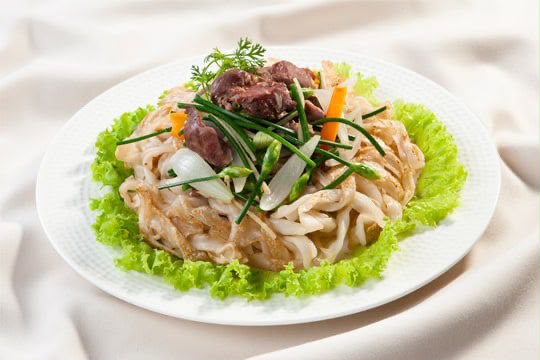
Phở khô (dry phở) takes the same noodles and ingredients in an entirely different direction: phở xào (stir-fried phở), phở chiên phồng (puffed fried phở), phở rán (pan-fried phở) and phở cuốn (phở rolls), where flat sheets of rice noodle are wrapped around meat and fresh herbs and dipped in sauce.
A dish of phở xào (stir-fried phở)
Even within the soup tradition, the bowl changes as you travel. In southern Viet Nam, the broth is sweeter and the table arrives with a plate piled high with bean sprouts, Thai basil, sawtooth coriander and thinly sliced onion, alongside beef balls, hoisin sauce and chilli sauce. In the northern mountains, phở takes on the flavours of wherever it lands. The phở chua (sour phở) of Lang Son and the phở vịt (duck phở) of Cao Bang share little more than the name with the bowl you find in Hanoi.
The origins of phở: a culinary mystery
For all its familiarity, the origins of phở remain one of Viet Nam’s most debated culinary mysteries. Writer and researcher Nguyễn Ngọc Tiến has spent years working through archival records and family chronicles in search of an answer, and has identified four theories, none of them proven beyond doubt.
Theories about the origin of phở
The first points to bún xáo trâu, a simple dish of rice noodles in buffalo bone broth, sold to dockworkers and porters on the banks of the Red River. Over time, sellers replaced buffalo with beef, which was cheaper and more available as the French raised large herds of cattle in Ba Vi. The soft noodles gradually gave way to thicker flat rice strips, and a dish began to take shape.
The second theory looks to the French colonial kitchen. A beef stew called pot-au-feu, prepared at the De Lanessan Hospital around 1894 to nourish wounded soldiers, may have influenced early phở cooks. The theory has its sceptics, as pot-au-feu is made with root vegetables and tastes bears little resemblance to phở in either preparation or flavour.
The third places the dish’s birthplace in Van Cu village in what was then Nam Dinh province, where local cooks sold strips of softened rice paper in bone broth with beef to factory workers at Viet Nam’s earliest textile mills. This account, while plausible, does not explain how the name “phở” came to be.
The fourth traces the word itself to ngưu nhục phấn, a Cantonese noodle dish seasoned with Chinese medicinal herbs. Street vendors calling out “phấn ơ” across Hanoi’s streets are said to have given rise, over time, to the word the world now knows.
Nguyễn Ngọc Tiến concludes that phở most likely emerged in the late 19th century, shaped by the creativity of Hanoi’s middle class into something distinctly and irreversibly Vietnamese.