From A Reader
COLOMBO: The international community cannot afford to remain a passive observer while a humanitarian mission faces the threat of military obstruction. The Global Sumud Flotilla (GSF), carrying essential supplies to the besieged population of Gaza, represents not just an act of solidarity but a test of global conscience and commitment to humanitarian principles.
- The continued blockade of Gaza has resulted in severe shortages of food, clean water, medicine, and other essentials, placing civilians—especially children—under extreme hardship. This situation demands urgent and coordinated international intervention.
- The attempt by the Israel Defense Forces (IDF) to intercept or block humanitarian missions such as the GSF raises serious concerns under international humanitarian law, particularly regarding the protection of civilian aid efforts.
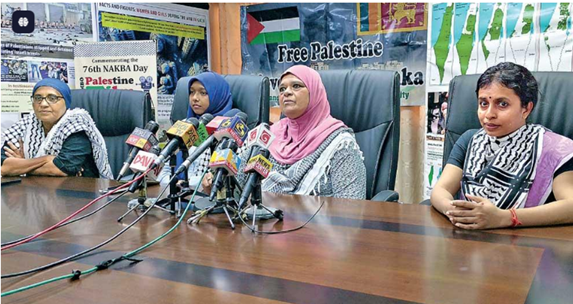
- The participation of individuals such as Sameera Mahboobdeen from Sri Lanka’s Free Palestine Movement highlights the global nature of this humanitarian cause and the personal risks undertaken by civilians in pursuit of justice and relief.
- A previous GSF attempt was already forced to retreat due to obstruction, underscoring the urgent need for an impartial international security presence to prevent recurrence and ensure safe passage.
- The United Nations has both the moral authority and operational capacity to intervene through its peacekeeping forces to safeguard humanitarian corridors and uphold international law.
- It is imperative that the Government of Sri Lanka, along with other nations, formally request the UN to deploy peacekeeping forces to escort and protect the GSF, ensuring that humanitarian aid reaches those in dire need without further delay.
- Failure to act decisively risks normalizing the obstruction of humanitarian assistance and undermines the very principles upon which global peace and cooperation are founded.
A swift, collective response is not only justified—it is essential. The credibility of the international community in defending human rights and humanitarian access hangs in the balance.
Mohamed Zahran
Colombo