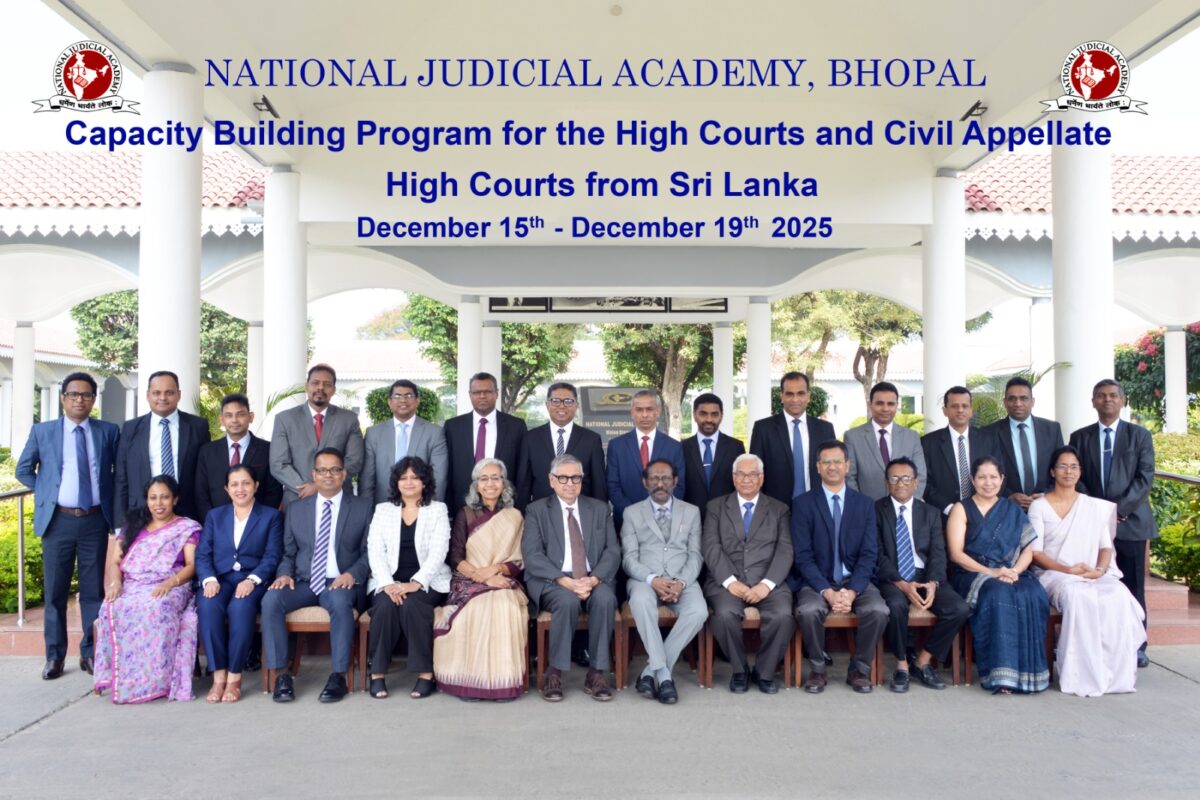


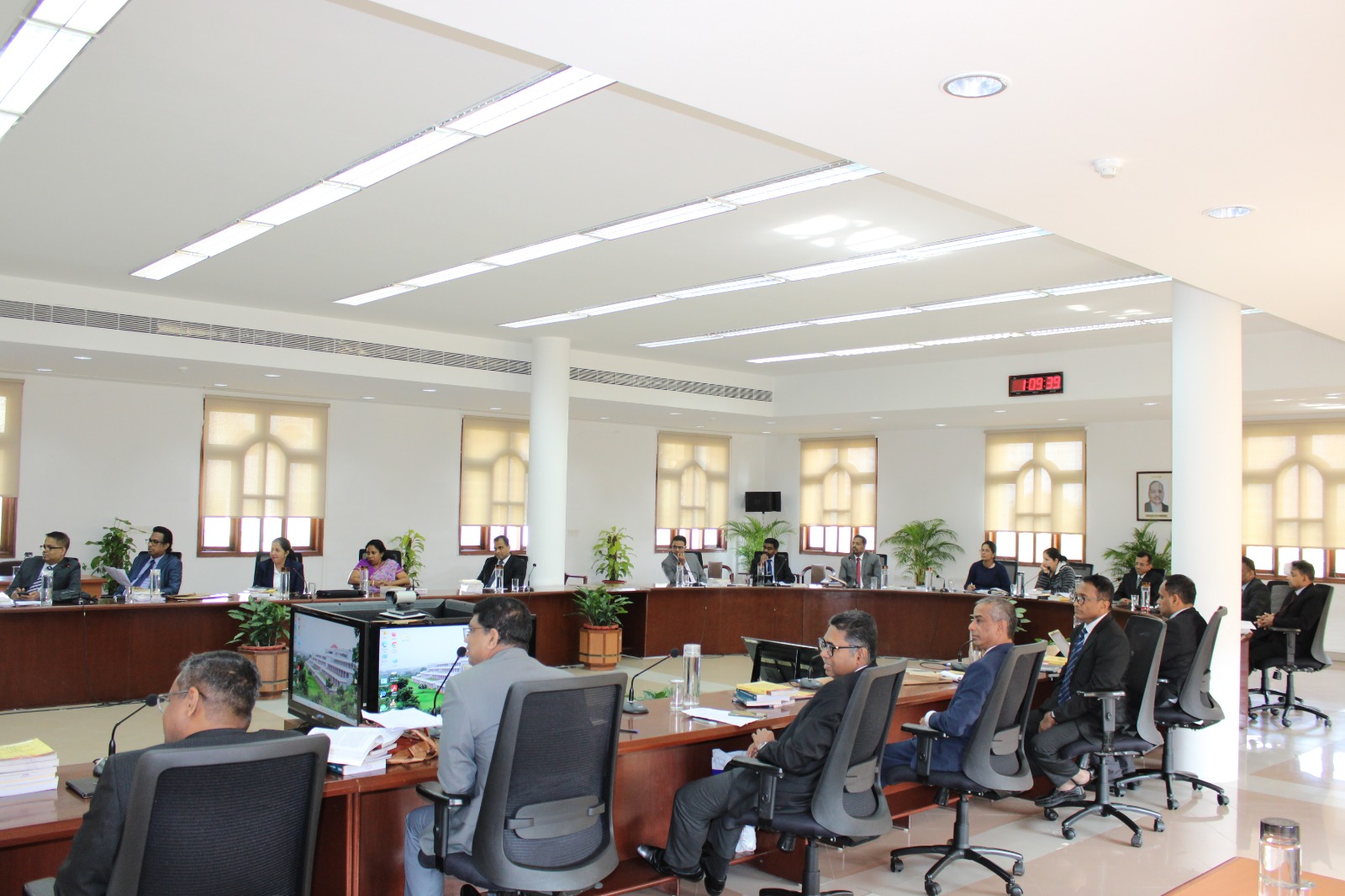
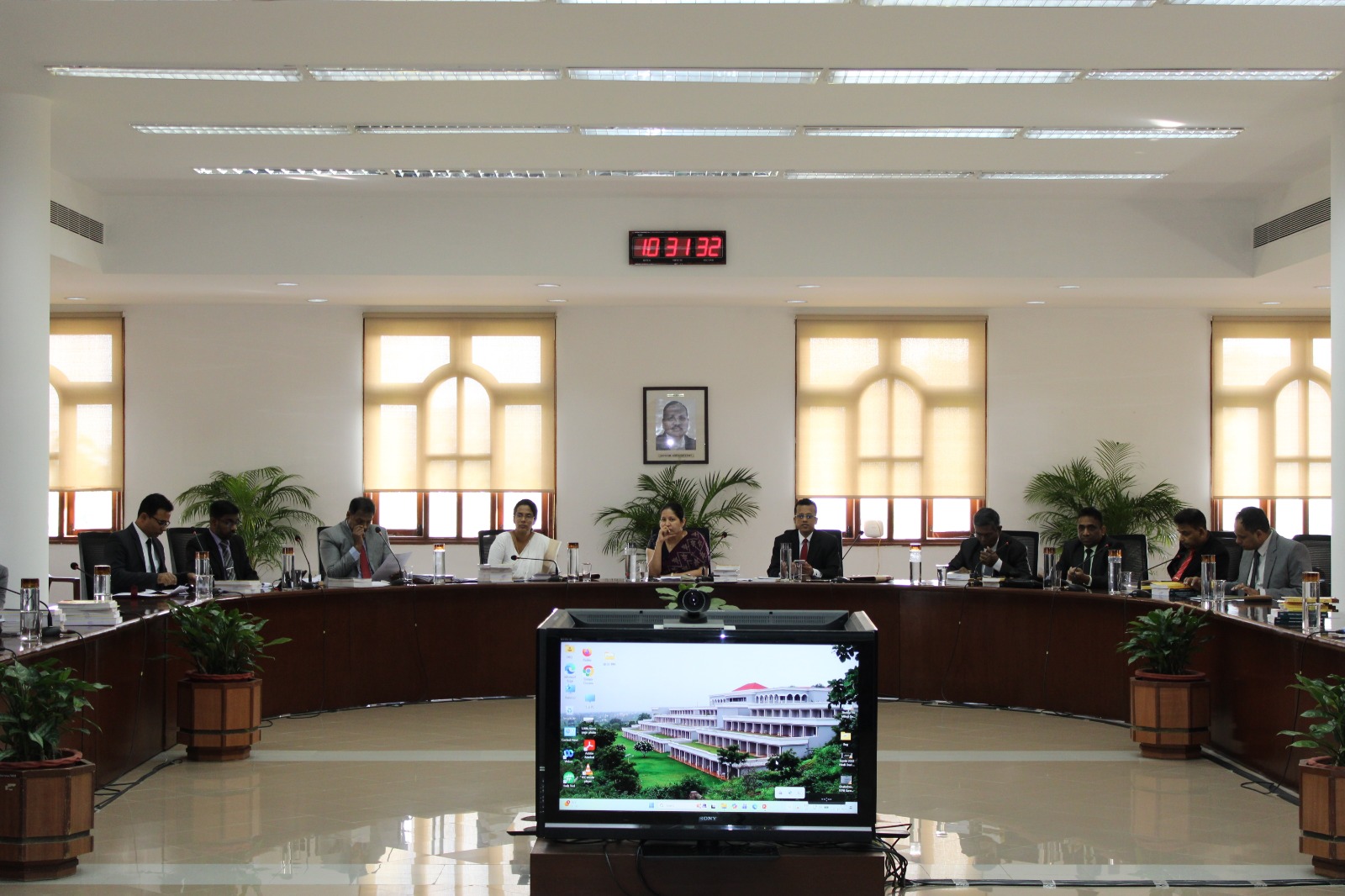
NEW DELHI : A knowledge exchange and capacity-building programme for 20 High Court Judges from Sri Lanka was organized at the Indian National Judicial Academy, Bhopal from 15-19 December 2025.The programme comprised nine thematic sessions covering key areas of judicial functioning, including judicial decision-making and appellate review; pre-trial procedures and plea agreements; court and case management; use of technology and digital transformation in courts; cybercrime and the handling of electronic evidence; judicial leadership and strategic thinking; integrity, ethics and accountability; commercial arbitration, mediation and alternative dispute resolution mechanisms; and judicial stress and wellness. The programme also included educational visits, including a field visit to Sanchi aimed at providing cultural exposure and facilitating informal interaction with peers and faculty. The programme concluded with a feedback and audit session, during which participants reflected on key learnings and provided inputs to guide the design and improvement of future programmes.
The programme formed part of the broader framework of bilateral cooperation between India and Sri Lanka in the area of capacity development. This collaboration gained further momentum following the announcement by Prime Minister of India, Shri Narendra Modi, during his State visit to Sri Lanka in April 2025, whereby 700 customized training opportunities are being made available annually for Sri Lankan professionals. Complementing this initiative, nearly 300 Sri Lankan civil servants are undergoing training each year under a Memorandum of Understanding between the National Centre for Good Governance of India, and the Sri Lanka Institute of Development Administration, signed during the State visit of President of Sri Lanka, Anura Kumara Disanayaka to India in December 2024. Taken together, these capacity-building initiatives of India cover knowledge exchange and professional development for around 1000 Sri Lankan nationals each year – over and above existing training programmes such as the Indian Technical and Economic Cooperation Programme.