
Noman Pervaiz
ISLAMABD : The Glory of Pakistan’s Heritage Noman Pervaiz Peshawar, the capital of Khyber Pakhtunkhwa, lies at the edge of the historic Khyber Pass and here lies its importance since time immemorial. Peshawar has seen many invaders and travellers from around the world due to its proximity to the Khyber Pass which is the gateway to the subcontinent. Peshawar is a great Pathan city. The Pathans have a proud and long history replete with instances of bravery and courage. Today they guard the Pakistan-Afghanistan border along the great passes of the Khyber, the Tochi, the Gomal and others on Pakistan’s territory, but before independence they successfully defied mighty empires, like the British and the Moghal and others before them, keeping the border simmering with commotion, and the flame of freedom proudly burning.
THE OLD CITY:
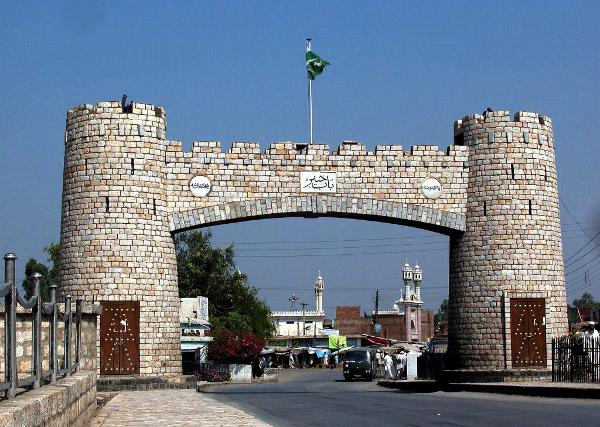
Until the mid-fifties, Peshawar was enclosed within a city wall and sixteen gates. Of the old city gates the most famous was the Kabuli Gate but only the name remains now. It leads out to the Khyber and on to Kabul.
You come across two-and-three storey houses built mostly of unbaked bricks set in wooden frames to guard against earthquakes, Many old houses have beautifully carved heavy wooden doors and almost all have highly ornamental wooden balconies. There is a tall and broad structure whose lofty portal looks down upon the street.
This historical building houses the police offices and the site was occupied centuries ago by a Buddhist stupa, then by a Hindu temple and then by a Moghal sarai. It was, in Sikh days, the seat of General Avitable, an Italian soldier of fortune in the service of Ranjit Singh.
QISSA KHAWANI BAZAAR:
Here perhaps visiting travellers or the relaxing townsmen were regaled with stories by professional story tellers, in the evening, in the many teashops that still adorn the bazaar front with their large brass samovars and numerous hanging teapots and teacups. As in most eastern bazaars, the shops of delicacies predominate, and here too you will find many colorful fruit shops displaying the glorious harvest of Peshawar’s unrivaled bread and justly celebrated “Kababs” and “Tikkas” meat sizzling on hot coals, in the many wayside cafes. Leather goods shops are the next most numerous, selling that wonderful footwear, the Peshawari “Chappals” or sandals, belts, holsters and bandoliers and a special variety of light but sturdy suitcase called “Yakhdaan”.
OTHER BAZAARS:
As we move up, the Qissa Khawani Bazaar turns left and here begins the bazaar of coppersmiths whose jewel-like engraved and embossed jars, bowls, ewers and plates are piled up in shops like a glistening treasure trove. Other famous bazaars of Peshawar are the Khyber Bazaar. Bird Bazaar and Meena Bazaar, Jewellery Bazaar and Mochilara (Shoe Makers’ Bazaar). In fact, the variety of craft in which Peshawar excels even today is amazing and this is a part of the city’s character, often eclipsed by its martial tradition. Remember that it was in this valley of Peshawar that there flourished that remarkable school of Ghandhara sculpture, which is one of the glories of Pakistan’s heritage.
CHOWK YADGAAR:
Soon we reach the central square called chowk Yadgaar, the traditional site of political rallies. The two routes from the old city meet here. Parking of cars can safely be done only at this place in the old city.
MOSQUE OF MAHABAT KHAN:
The only significant remaining Moghal mosque in Peshawar was built by Mahabat Khan in 1670 A.D. when he was twice Governor of Peshawar under Moghal Emperors Shah Jehan and Aurangzeb. The mosque was nearly destroyed by fire in 1898 A.D. and was only saved by the unremitting efforts of the faithful. The extensive renovation of the mosque was done by the traditional craftsman. The mosque is a fine specimen of Moghal architecture of Emperor Shah Jehan’s period. The interior of the prayer chamber has been lavishly decorated with floral work and calligraphy.
BALA HISAAR FORT:
The mighty Bala Hisaar Fort lies on both the eastern approaches to Peshawar city. It meets the eye when coming from Rawalpindi or from the Khyber. It is a massive frowning structure as its name implies, and the newcomer passing under the shadow of its huge battlements and ramparts cannot fail to be impressed. Originally built by Babar, the first of the Moghals in 1526-30, it was rebuilt in its present form by the Sikh Governor of Peshawar, Hari Singh Nalva, in the 1830’s under the guidance of French engineers. It houses government offices at present.
PESHAWAR MUSEUM:
Peshawar Museum is housed in an imposing building of the British days. It was formerly the Victoria Memorial Hall built in 1905. The large hall, side galleries and the raised platform which were used for ball dances, now display in chronological order finest specimens of Gandhara sculptures, tribal life, the Muslim period and ethnography.
SETHI HOUSES:
These houses are situated in Mohallah Sethian and can be approached from Chowk Yadgaar. These are highly decorated style of buildings with carved wooden doors, partitions, balconies, mirrored and painted rooms. The Sehtis are the traditional business community of Peshawar. The main house was built in 1882 A.D. by Haji Ahmed Gul who migrated from Chamkani (a near village) almost 6 generations ago.
NEW PESHAWAR:
Across the railway line was built the new modern Peshawar, the Cantonment, like the ones which the British built near every major city for their administrative offices, military barracks, residences, parks, churches and shops.
The Peshawar “Saddar” (Cantonment) is a spaciously laid out neat and clean township with avenues of tall trees, wide tarred roads, large single storied-houses with lawns and a pervading scent of rare shrubs and flowers that is Peshawar’s own.
The heart of Saddar is the Khalid bin Walid (Company) Bagh which is an old Mughal Garden. Its huge ancient trees and gorgeous big roses are a sight to remember. Two other splendid old gardens are the Shahi Bagh in the north-east and the Wazir Bagh in the south-east, all of which give the character of a garden city to Peshawar.
It also has many markets and shopping areas. The Peshawar of the past is the old city, the Peshawar of the British period (1849 to 1947) is the Cantonment but the Peshawar of independent Pakistan is the vast extension of the city west and east. Westward, on the road to Khyber, where in the days gone by, no one was safe from tribal raids, today stretches a long line of educational and research institutions, such as the Academy of rural development, the teachers training college, the north regional laboratories of the council of scientific and industrial research and many others.
But the pride of Peshawar today is its university, a vast sprawling garden town of red brick buildings and velvet lawns, which comprises a dozen departments and colleges of law, medicine, engineering and forestry. Special mention must be made of the Islamia College, which was the pioneer national institution that ignited the torch of enlightenment in this region many years ago. The road stretching out east towards Rawalpindi is lined for miles upon miles with factories producing a variety of goods and also orchards producing some of the world’s finest plums, pears and peaches. Rice, sugar-cane and tobacco are the rich cash-crops of the well-watered Peshawar valley through which flows the Kabul River and at the end of which the mighty Indus forms the district boundary for 48 1/2 Kms (30miles) the two joining near the historic Attock Fort which is also worth visiting. It is a great city to visit and is easily reachable by land and air routes. It has convenient hotels and lodges where stay can be warm and comfortable. People wishing to explore Pakistan will find Peshawar a pleasant and delightful city.