


NEW DELHI: India’s capital will roll out fuel-saving measures starting on Monday, including work-from-home days for city employees, following Prime Minister Narendra Modi’s appeal for greater public participation to mitigate the economic fallout of the US-Israeli war on Iran.
New Delhi will be the first Indian city to enforce an energy-saving campaign in the country of 1.4 billion people amid a global energy crisis sparked by the war in the Middle East.
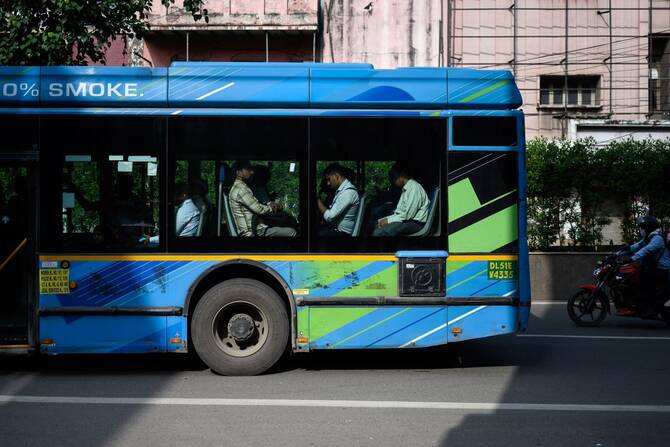
The 90-day drive was announced by Chief Minister Rekha Gupta on Thursday and includes greater use of public transportation, reduced petrol quota for officials, adjusted working hours for government offices and two work-from-home days for the local staff.
The Delhi government will also issue an advisory to the private sector to implement similar remote work arrangements, as Gupta appeals to the capital’s 35 million residents to follow suit.
“I urge the people of Delhi to adopt work-from-home wherever possible, observe one day a week as ‘No Vehicle Day,’ prioritize public transport, and make virtual meetings a part of their work style,” she said.
Earlier this week, Modi appealed to Indians to conserve fuel and gas, revive working from home and limit foreign travel as a part of austerity measures reminiscent of the COVID-19 pandemic era.
“The government is continuously trying to ensure that these adverse circumstances have the least possible impact on ordinary citizens. But at such a time, the country greatly needs the power of public participation,” he said on Monday.
“We must unite so that no crisis can hinder our progress and development.”
India is the world’s third-largest importer of oil and heavily reliant on energy supplies through the Strait of Hormuz, a key waterway that was effectively blocked following the US-Israeli attacks on Iran that began on Feb. 28.
The country raised diesel and gasoline prices by more than 3 percent only on Friday — the first increase in four years — after keeping prices stable for around two months, despite Brent crude’s cost spiking since the war began.
It has also increased the prices of liquefied petroleum gas, a primary cooking fuel in India, after supply disruptions caused major shortages just a few weeks after the conflict erupted.
The global shortage in gas and fuel supply is likely to affect India “very badly,” said Prof. Arun Kumar, a development economist, as India imports some 85 percent of its crude needs and around 55 percent of its gas.
The steps that the Indian government is taking now “should have been taken much earlier” and “more steps need to be taken,” he added.
Governments in many Asian countries dependent on oil imports have implemented energy-saving measures to mitigate the ongoing supply crisis, which includes returning to online-based work to reduce fuel consumption.
“If we keep saying ‘no, no, everything is fine,’ tomorrow will just hit us,” Kumar told Arab News on Friday, adding that even if the Strait of Hormuz were to open, it would take months for supply to be restored.
“So that’s what the government (has been) doing, saying there’s no problem, and we have enough stocks … They did not take the steps that were necessary.”
For Tausif Rahman, who heads a Delhi-based company, the government’s recent austerity appeal came as a surprise.
“Most of the corporate world started believing that what is settling down now, and if anything was supposed to be done, it should have been done earlier, when the war was at its peak,” he told Arab News.
“What we hear from the authorities (is) that we are getting the oil, we are having a very good relationship with Iran, our tankers are passing by the Strait of Hormuz. So that’s why it’s surprising that if everything is going well, then why is WFH required from the corporate?” Arab news


