


HA NOI : Stepping into the ancient town of Hoi An, visitors can feel a rich blend of architectural heritage shaped by Japanese, Chinese, Vietnamese and French influences, all woven together along the banks of a peaceful river.
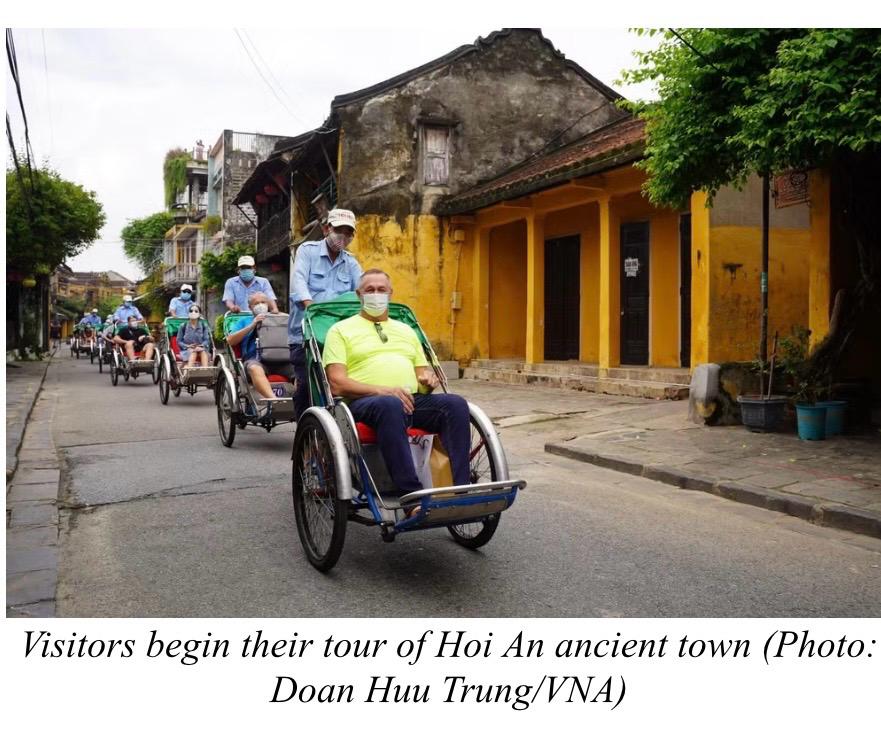
Visitors begin their tour of Hoi An ancient town (Photo: Doan Huu Trung/VNA)
Located on the romantic banks of the Hoai River, just 30 kilometres from Da Nang city, the ancient town of Hoi An has long been one of the most renowned and captivating destinations for both domestic and international travellers.
Having weathered centuries of historical change, the flow of time has given Hoi An a serene, contemplative beauty.
In contrast to modern cities, Hoi An leaves a lasting impression on visitors through its moss-covered tiled roofs, weathered yellow-painted walls, and the lanterns that have become the town’s signature symbol.
Formed and developed since the 16th century, Hoi An was once one of the busiest international trading ports in the region. During that period, it became a hub where merchants from China, Japan, the Netherlands, India and Spain gathered to exchange goods.
As a result, the architecture and cultural values of Hoi An ancient town reflect a convergence of both Eastern and Western civilisations.
The ancient town is celebrated for its architecture, a classic example of a traditional trading port in Southeast Asia, and remains almost entirely preserved to this day. Its buildings, places of worship, and cultural heritage stand as living evidence of the town’s formation, prosperity, and eventual decline.
Hoi An is home to 1,360 heritage structures, including 1,068 ancient houses, 11 ancient wells, 38 family worship halls, 19 pagodas, 43 shrines, 23 communal houses, 44 ancient tombs of special significance, and one ancient bridge.
Walking through this beautiful old town, one can deeply sense the artistic and cultural fusion reflected in the rows of houses, each carrying the architectural imprint of a different civilisation.
Strolling through Hoi An, visitors can explore centuries-old pagodas such as Chua Cau (the Japanese Covered Bridge), Phuoc Lam Pagoda, and Van Duc Pagoda, as well as admire the elaborately decorated assembly halls and temples built by the Chinese community. Nearby stand houses reflecting traditional Vietnamese architecture alongside buildings carrying the distinctive charm of French colonial style.
Beyond its architectural museum-like quality, Hoi An’s cultural richness also lies in its vibrant intangible heritage. Despite the many upheavals of history, the daily life of local residents has retained its original charm, untouched by the rush of modern life.
The town’s streets, laid out in a grid pattern, wind gently along the riverbank, embracing the houses within. In every quiet corner, visitors can easily come across street vendors selling famous local dishes such as cao lau noodles, Quang noodles, Vietnamese bread, and chicken rice, alongside small shops offering handicrafts.
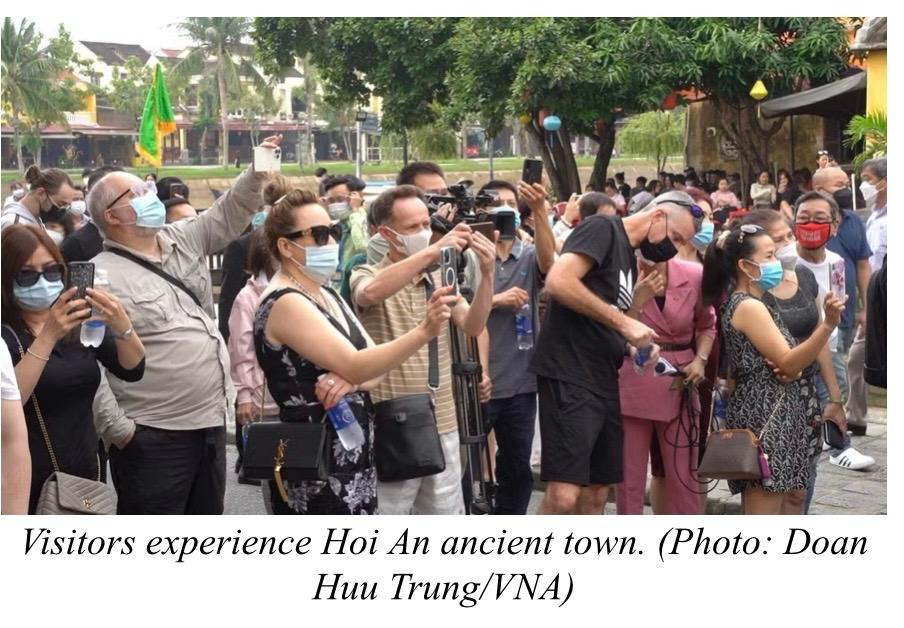
Visitors experience Hoi An ancient town. (Photo: Doan Huu Trung/VNA)
Traditional customs, daily habits, beliefs, folk arts and cultural festivals continue to be preserved and passed down by the local community.
At night, the ancient town comes alive with nostalgic charm, as the sound of bai choi folk singing echoes along the river. Particularly, if visitors arrive in Hoi An on the 14th day of the lunar month, they can immerse themselves in the town’s famous Lantern Festival, when the ancient streets glow even more vividly than usual in warm shades of red and gold, radiating from thousands of lanterns hung throughout the alleyways.
Viewed from a distance, the ancient town appears to float in a magical glow created by thousands of lanterns lining the streets, houses, and both banks of the river.
Another memorable experience not to be missed in Hoi An is releasing floating lanterns on the river. From Bach Dang wharf, small boats drift gently along the romantic Hoai River, allowing visitors to admire the town’s nighttime scenery, feel the cool evening breeze, listen to captivating stories about the old town, and release their own glowing lanterns onto the water.
According to local belief, releasing a floating lantern is like letting go of one’s worries, bringing a sense of peace and happiness.
Pedestrian streets in Hoi An ancient town are carefully prepared to welcome visitors. (Photo: Doan Huu Trung/VNA)
Beyond this, simply slowing down to wander through the narrow lanes, admire the ancient houses, sample Hoi An’s signature dishes, or browse handicraft stalls from the region’s renowned craft villages is, in itself, a wonderful experience for visitors.
Amid the pace of modern life, traditional craft villages remain alive and well here, including Kim Bong carpentry village, Tra Que vegetable village, and Thanh Ha pottery village. These trades have sustained generations of families and remain a source of pride for the local community. Today, they also serve as living repositories of Hoi An’s cultural heritage, drawing visitors who wish to learn more about Viet Nam’s traditional crafts.
Images of spinning wheels, silkworm trays, and looms, alongside young women reeling silk threads in the rustic setting of the Hoi An Museum of Folklore or within the grounds of Hoi An Silk Village, remain among the most captivating discoveries for visitors exploring the ancient town in recent years.
With direct flights between Vietnam and Sri Lanka set to launch later this year, Hoi An’s lantern-lit streets and centuries-old charm are now closer than ever for Sri Lankan travellers seeking a journey into Vietnam’s cultural heritage.
According to Vietnam+


