

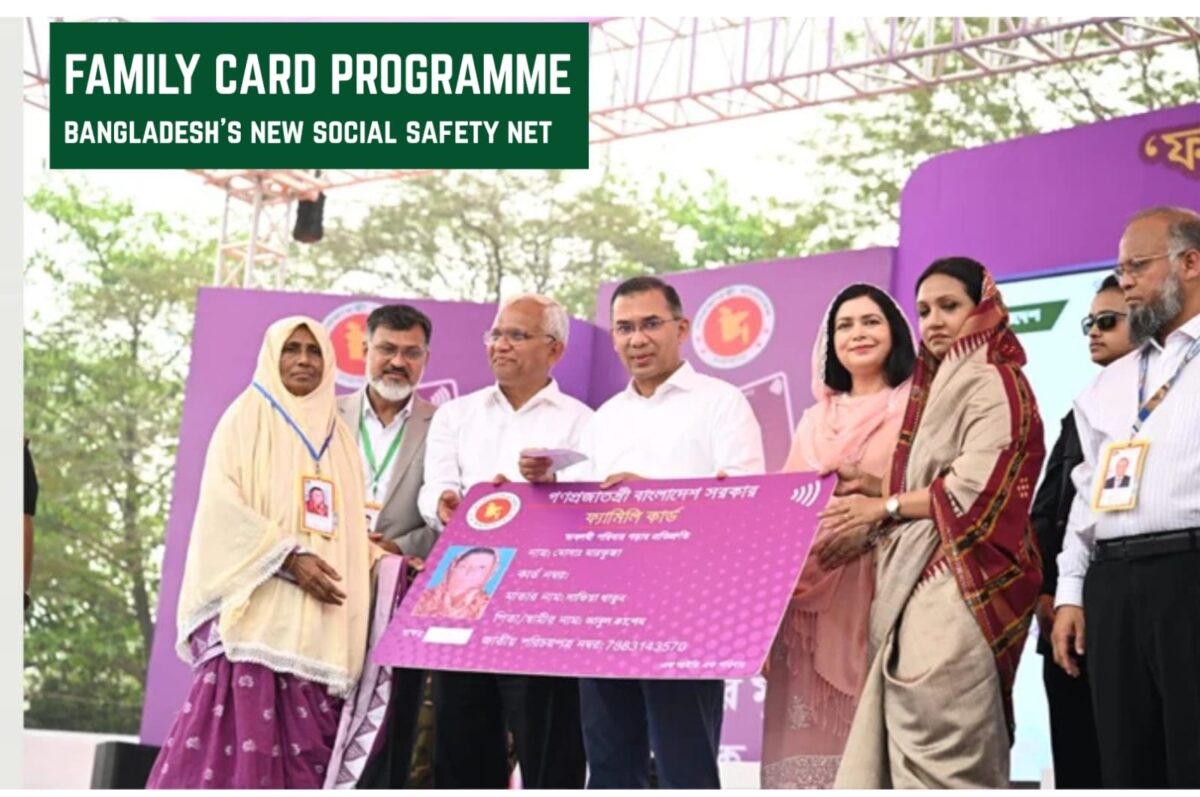
DHAKA : Championed by the Hon’ble Prime Minister of the Government of the People’s Republic of Bangladesh, H.E. Mr. Tarique Rahman, Family Card initiative demonstrates a clear commitment to safeguarding families and delivering essential support directly to the grassroots. In a continued effort to strengthen social protection and ensure equitable access to essential goods, the Government of Bangladesh has introduced the Family Card initiative, a transformative programme designed to support low and middle income households. At a time when global economic pressures, inflation, and supply chain disruptions have impacted everyday living costs, this initiative stands out as a practical and people-centered solution to safeguard vulnerable families. The Family Card programme enables eligible households to purchase essential commodities, such as, rice, lentils, edible oil, sugar, and onions, at subsidized prices. By issuing a unique card to registered families, the government ensures that assistance reaches the intended beneficiaries directly, reducing leakages, middlemen interference, and inefficiencies often associated with traditional distribution systems. At its core, the initiative aims to provide financial relief to millions of families struggling with rising food prices. With inflation affecting purchasing power, many households, particularly in urban and semi-urban areas, face difficulty in meeting daily nutritional needs. The Family Card system addresses this challenge by stabilizing access to essential food items at affordable rates, thereby enhancing food security across the nation.
One of the most significant strengths of the programme is its targeted approach. Beneficiaries are carefully selected based on socio-economic criteria, ensuring that support is directed toward those who need it most. This includes low-income earners, day laborers, rickshaw pullers, small vendors, and other vulnerable groups who are often the first to be affected during economic downturns. By prioritizing these communities, the government reinforces its commitment to inclusive development and social equity. Transparency and accountability are also key pillars of the Family Card initiative. The use of a card-based distribution system allows for better monitoring and control, minimizing the risk of corruption or misuse. Digital records and local administrative oversight help track distribution, ensuring that goods are delivered efficiently and fairly. This modernized approach reflects Bangladesh’s broader push toward digitization and governance reform. Beyond immediate relief, the initiative has broader socio-economic implications. By easing the financial burden on families, it allows households to allocate resources to other essential needs such as education, healthcare, and housing. This contributes to overall human development and improves quality of life. Furthermore, by stabilizing demand for essential commodities, the programme also supports market balance and helps prevent extreme price volatility. The Family Card initiative has proven particularly impactful during periods of heightened demand, such as Ramadan, when food consumption increases significantly. During such times, the programme ensures uninterrupted supply of essential goods at controlled prices, preventing market exploitation and ensuring that families can observe cultural and religious practices without financial strain. By ensuring affordable access to essential goods, it not only addresses immediate economic challenges but also lays the foundation for long-term social stability. For countless families across Bangladesh, the Family Card is more than just a piece of identification, it is a symbol of support, dignity, and hope in challenging times.
March 26, 2026
0 Comment