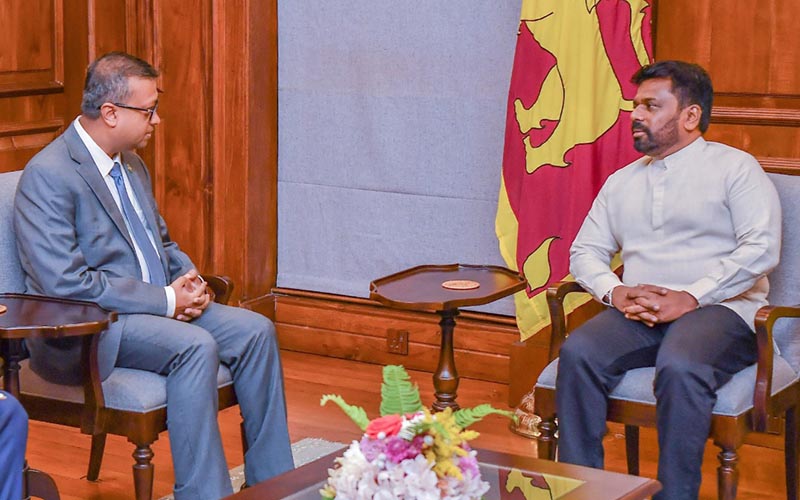


COLOMBO: Bangladesh and Sri Lanka share a longstanding relationship built on mutual respect, regional cooperation, and shared aspirations for economic growth and stability. Since the establishment of diplomatic ties in 1972, the two South Asian nations have steadily strengthened their partnership across multiple sectors, reflecting a commitment to deepening engagement and fostering mutual benefit. Currently, bilateral relations are gaining renewed momentum, particularly in the areas of trade, investment, and connectivity. Both countries have recognized the importance of enhancing economic cooperation, with Bangladesh emerging as one of the fastest-growing economies in the region and Sri Lanka offering strategic advantages in maritime trade and logistics. Efforts to boost bilateral trade, reduce barriers, and explore preferential trade arrangements have opened new opportunities for businesses in both nations.
Beyond trade, collaboration in sectors such as agriculture, education, tourism, and healthcare has further enriched the relationship. Knowledge exchange, capacity-building initiatives, and people-to-people connections continue to play a vital role in strengthening ties. Cultural similarities and shared regional heritage also contribute to a strong foundation of friendship between the two countries.
Regional cooperation remains a key pillar of Bangladesh-Sri Lanka relations. Both nations actively engage in multilateral platforms such as SAARC and BIMSTEC, working together to promote regional integration, economic development, and collective resilience. Their shared commitment to peace, stability, and sustainable development reinforces their role as responsible partners in South Asia. Bangladesh is a member of the Colombo Plan Secretariat since its inception and has been working closely with the Secretariat in the areas of human resource development in the context of South-South cooperation. Bangladesh and Sri Lanka also maintain excellent cooperation in the United Nations.
The common traditions of the Commonwealth have consolidated the affinity and kinship between the peoples of the two countries. People-to-people contact has naturally been the mainstay of the bilateral relations between the two countries. Sri Lankan students study in medical and dental colleges of Bangladesh. Bangladeshi Buddhist monks study in different monastic educational institutions of Sri Lanka. Many Sri Lankan technicians and professionals are employed in various garment, banking, medicine, ICT, logistics and health sectors in Bangladesh. There are also occasional exchanges of cultural troupes and youth delegations between the two countries.
As both countries navigate evolving global and regional challenges, there is a growing recognition of the need to further expand cooperation in areas such as blue economy, digital transformation, and climate resilience. The partnership between Bangladesh and Sri Lanka reflects a dynamic and evolving relationship grounded in trust, cooperation, and shared progress, promising a future of strengthened collaboration and mutual prosperity. With a forward-looking approach and continued diplomatic engagement, Bangladesh and Sri Lanka are well-positioned to elevate their bilateral relationship to new heights.
Historical Connections Between Bangladesh and Sri Lanka
The historical ties between Bangladesh and Sri Lanka date back centuries, rooted in shared cultural, religious, and maritime linkages across the Bay of Bengal. Long before the establishment of formal diplomatic relations in 1972, the peoples of these two South Asian nations were connected through ancient trade routes, cultural exchanges, and spiritual interactions that shaped their mutual understanding and respect.
One of the most significant historical connections lies in the spread of Buddhism, which links the two regions through a shared spiritual heritage. Ancient Sri Lanka played a crucial role in preserving and promoting Theravada Buddhism, while areas like Paharpur and Mainamati in Bangladesh, were important centers of Buddhist learning and culture. Monks, scholars, and pilgrims frequently traveled between the two regions, fostering intellectual and religious exchange.
Maritime trade across the Bay of Bengal also played a vital role in strengthening early connections. For centuries, merchants from Bengal and Sri Lanka engaged in the exchange of goods such as spices, textiles, and precious commodities. These interactions not only boosted economic activity but also facilitated cultural diffusion, influencing language, art, and traditions in both regions. Following Bangladesh’s independence in 1971, Sri Lanka was among the early countries to recognize the new nation, marking the beginning of formal diplomatic relations. This gesture reflected the longstanding goodwill and historical affinity between the two countries. Today, these deep-rooted historical connections continue to influence modern bilateral relations. Cultural exchanges, academic collaboration, and shared regional identity remain important pillars of the partnership. The historical bond between Bangladesh and Sri Lanka is not merely a reflection of the past; it is a living foundation that continues to guide their cooperation and friendship in the present and future.