

MAHIL DOLE
COLOMBO : Reimagining Sri Lanka’s Post-Easter Security Approach with Fairness, Precision & Trust
The Easter Sunday attacks marked one of the darkest and most defining tragedies in modern Sri Lankan history — a man-made catastrophe that devastated families, fractured trust, and unsettled the nation’s collective psyche. In the aftermath, the State mobilized urgently, understandably determined to prevent recurrence. Yet, urgency often arrived with broad strokes and suspicion-driven policing rather than precision-based security.
Today, nearly six years later, we must ask: Has national security policy unintentionally placed the Muslim community under perpetual scrutiny?
And if so — is this scrutiny protecting the nation or deepening division?
Pre-Easter Context
Before the attacks, the Muslim community coexisted within Sri Lanka’s plural society — contributing to commerce, governance, education, social welfare, and the economy. While pockets of imported extremist ideology emerged over time, the vast majority of Muslims remained peaceful, loyal citizens. The failure was not communal — it was a missed opportunity to detect, isolate, and rehabilitate radical elements early, when global currents began influencing vulnerable segments.
Extremism did not arise from Islam — it arose from distorted interpretations exploited by a few, and nurtured by international ideological infiltrations with vested interests. A spark was ignored until it became a flame.
The Easter Tragedy & Aftermath
The attacks were a shock beyond comprehension. National response mechanisms activated rapidly, determined to prevent repetition. But with fear came blanket measures, sweeping investigations, and profiling, often targeting a whole identity rather than specific threats.
“One bitten, twice shy” became the operating psychology — but trauma-driven policy is not a permanent strategy.
Post-Easter Reality: A Community Under Constant Watch
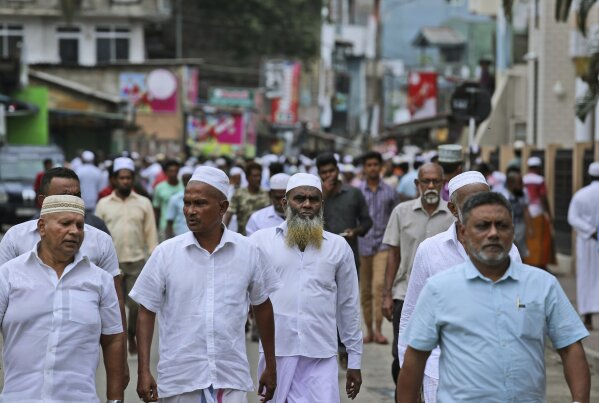
In the years that followed, many Muslims felt — and continue to feel — observed, questioned, and monitored in routine religious and social life.
Mosque events, youth programs, religious classes, social gatherings, even private functions have often faced:
calls asking for details of organisers
unannounced visits
requests for participant lists
officers introducing themselves with “We are from intelligence…”
While prevention is necessary, frequency and selectivity have created insecurity rather than reassurance.
It sends an unspoken message:
“We know you. We are watching you. We know what you are doing.”
Such an approach may tick operational boxes, but it breeds psychological distance and erodes trust. When scrutiny becomes identity-based instead of behaviour-based, alienation grows, and alienation becomes fertile ground for resentment — the very danger we aim to prevent.
Can National Security Rely on Broad Surveillance?
Security cannot rely on a four-inch brush where a one-inch brush is needed.
Not every beard is ideology.
Not every hijab is militancy.
Not every sermon is radicalism.
Not every gathering is a security threat.
Shortcut intelligence may provide surface control, but deep solutions require precision, context, and community partnership. When suspicion replaces engagement, information dries up, trust collapses, and society becomes divided into “watchers” and “watched.”
Political Responsibility & Public Perception
The State has a duty to restore confidence — not suspicion.
Muslims must feel safe to move, gather, worship, and live as freely as any other citizen. Rights cannot be conditional or selectively applied.
It is worth remembering that:
A significant proportion of Muslims — especially in the North, East, and urban constituencies — placed faith in the Government with their vote.
The Opposition too must recognise that support for them was often a protest vote against racism, exclusion, and discriminatory politics.
These realities reflect a yearning for fair governance and dignified coexistence — not political patronage.
If leaders fail to understand this, we risk losing not merely electoral support but a generation’s trust in democracy itself.
Restoring Trust: A Shared Responsibility
The question many ask is: Where does this cycle end?
How do we move from suspicion toward reconciliation?
The State must act — but the Muslim community must also take ownership of healing and transparency.
It is necessary — even uncomfortable — to acknowledge that the violent ideology embraced by a minority, fuelled by manipulated interpretations of Islam, contributed to the current mistrust. Acceptance of this reality strengthens, not weakens, the moral authority of the community.
Therefore:
Islamic teachings and madrasa education must be open, transparent, and accessible.
Mosques and scholars should confidently engage with other communities.
Youth must be empowered with authentic, moderate Islamic knowledge to counter misinterpretations.
Interfaith interactions should become the norm, not the exception.
Trust cannot be demanded — it must be demonstrated, lived, and earned mutually.
Recommendations for Policy & Reform
To transition from surveillance to security, the way forward should include:
Intelligence Modernization
Move from blanket monitoring to data-driven profiling & behavioural analysis.
Invest in cyber-intelligence, community liaison officers, and analytical capability.
Rights-Based Counter-Terrorism
Protect constitutional freedoms and dignity in surveillance processes.
Ensure accountability, documentation, and reasoned intervention.
Community Partnership
Engage Muslim scholars, youth, women’s groups, professionals & elders.
Create communication channels that build trust rather than fear.
Education & Narrative Correction
Promote accessible Islamic knowledge and interfaith learning.
Counter extremist narratives through informed scholarship.
Political Sensitivity
Recognize Muslim support as a democratic trust, not leverage.
Avoid rhetoric that isolates any community for political gain.
The End: So Far, Yet So Near
The path to peace is not one-sided. The State must guarantee equal dignity and freedom. The Muslim community must actively reinforce trust and openness.
Security built on fear breeds silence. Security built on trust breeds cooperation.
If both sides meet halfway — with sincerity, accountability, and transparency — the end of suspicion may not be distant. The end is near if we walk toward it, far if we stand still.
Sri Lanka’s future depends not on how we remember Easter, but on how we ensure it never repeats — without losing who we are as a nation.
Strength, unity, and safety will not come from watching each other — but from understanding one another.
Surveillance or Strategy? Reforming Post-Easter Counter-Terrorism Policy
From Blanket Suspicion to Precision Security: A New Approach Required.
Writer
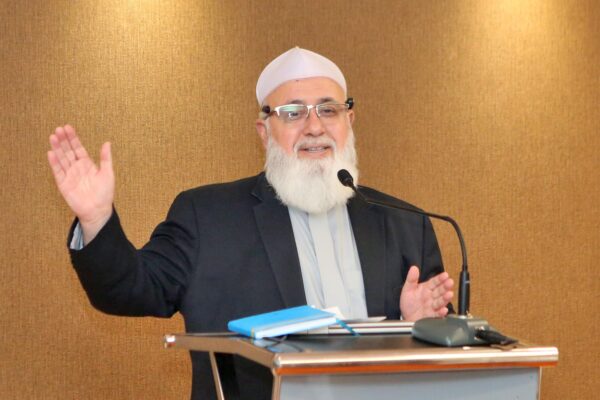
Mahil Dole, SSP (Retired), is the former Head of the Counter-Terrorism Division of the State Intelligence Service of Sri Lanka, and has served as Head of the Sri Lankan Delegation at three BIMSTEC Security Conferences. With over 40 years of experience in policing and intelligence, he writes on regional security, interfaith relations, and geopolitical strategy.