

FAZHAN NAWAZ
COLOMBO ; In the heart of Central Asia, a quiet revolution is taking place. It is not fought with weapons, but with manuscripts, museums, and microchips. Under President Shavkat Mirziyoyev, Uzbekistan is working to bring back the glory of its medieval “Golden Age,” when cities like Samarkand and Bukhara were the world’s leading centres of science, poetry, and philosophy. What makes this revival unusual is its method: the President is using artificial intelligence and digital technology to protect, restore, and share a heritage that is more than a thousand years old.
A Nation Looking Back to Move Forward
Centuries ago, the region once known as Transoxiana produced some of history’s greatest minds. The astronomer-king Ulugh Beg built an observatory in Samarkand that mapped the stars with astonishing accuracy. Scholars in Khorezm’s Mamun Academy advanced mathematics and medicine long before Europe’s own Renaissance. Mirziyoyev often invokes this legacy, describing Ulugh Beg not merely as a scientist but as a statesman who placed learning above all else. The President has called this modern effort the “Third Renaissance” — a national project to restore Uzbekistan’s place as a centre of knowledge and culture, following what historians count as two earlier golden eras in the region’s past.
This is not simply nostalgia. It is state policy. Since taking office in 2016, Mirziyoyev has steadily opened a country once known for isolation, welcoming foreign researchers, easing visa rules, and inviting the world to rediscover Uzbekistan’s history alongside its people.
Building Monuments to Memory
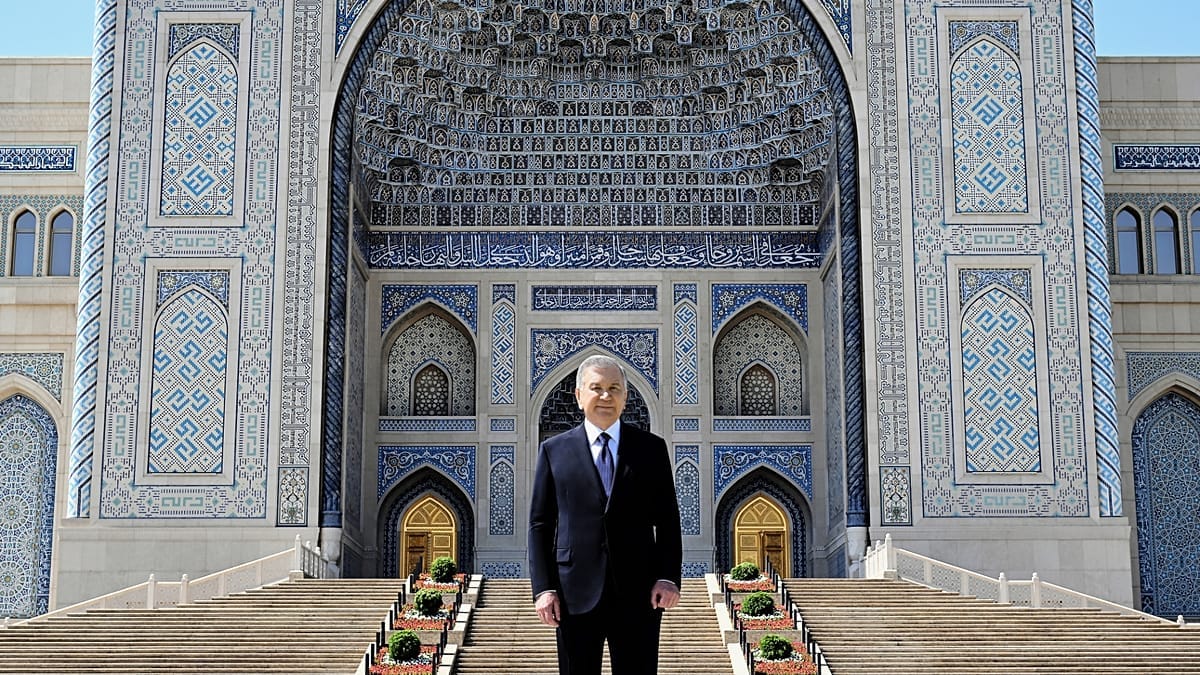
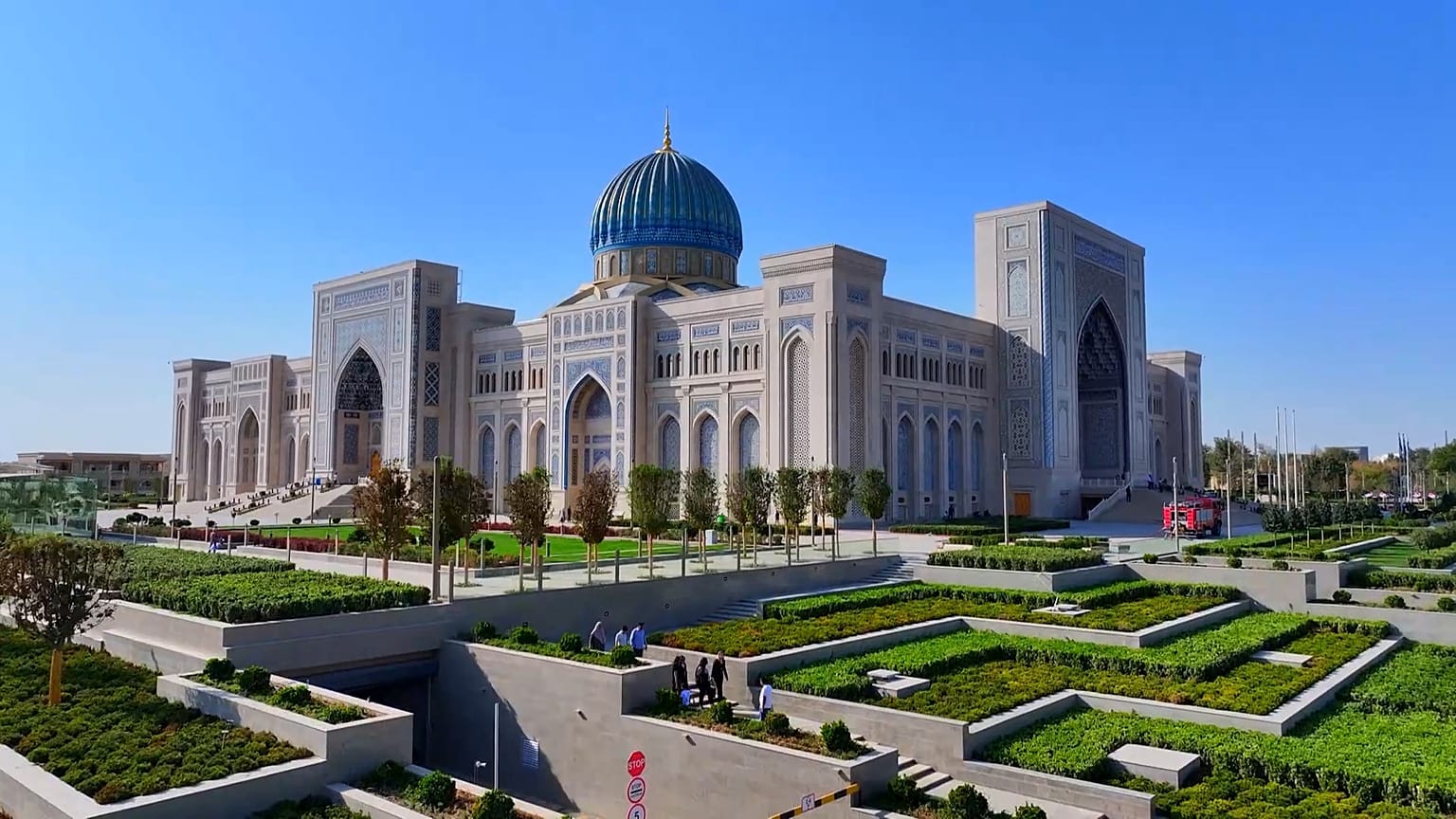
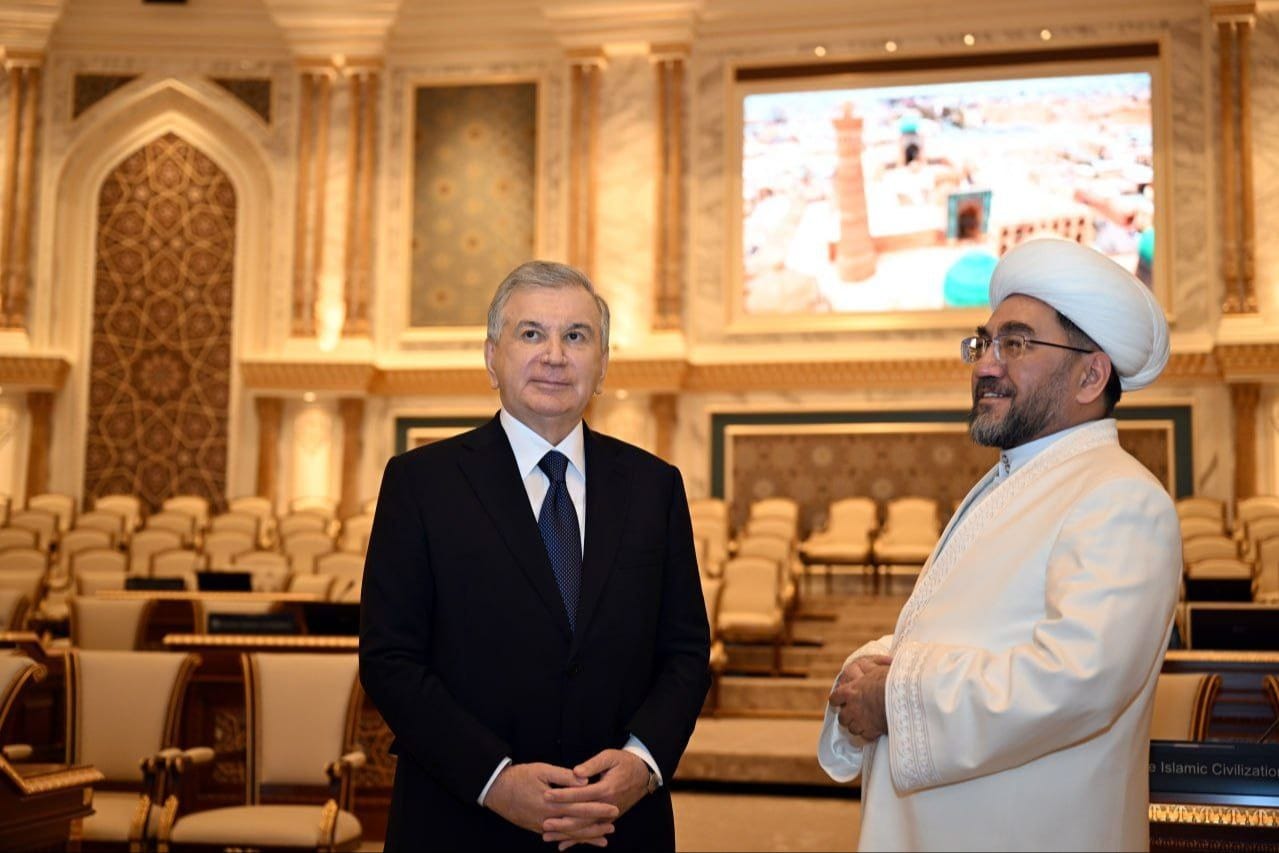
The clearest symbol of this ambition rose in Tashkent this year: the Center of Islamic Civilization, opened in March 2026 after work by more than 1,500 specialists from 40 countries. The centre houses one of the most treasured objects in the Islamic world, the 7th-century Uthman Qur’an, alongside research labs, restoration workshops, and archives. It has already been named among the world’s most beautiful new museums. Rather than a traditional museum of static displays, the centre is built around immersive, technology-driven exhibits that let visitors walk through history rather than simply observe it.
This is only one part of a much larger programme. Uzbekistan is home to more than 8,000 cultural heritage sites, including five UNESCO World Heritage Sites, and the government has created a dedicated Cultural Heritage Agency to protect them. Bukhara has applied to become a UNESCO City of Literature, and in 2025 Samarkand hosted UNESCO’s General Conference — a rare honour reflecting how far the country’s global cultural standing has climbed in a few short years.
Artificial Intelligence Enters the Old City
What sets Uzbekistan’s approach apart is its embrace of artificial intelligence as a tool of cultural preservation, not just economic growth. Museums across the country are being digitised: entrance systems, exhibits, and archival collections are moving online, with QR codes, virtual tours, and mobile apps making centuries-old treasures accessible to anyone with a smartphone. Rare manuscripts and archival materials are being scanned and catalogued so they can be studied and protected for generations to come, even as originals remain fragile.
Tourism, too, is being reshaped by AI. Officials have described a future where a visitor to Bukhara can use an AI-guided app to build a personal route through the city’s history — one traveller might explore 15th-century astronomy, another the era of the Silk Road, each guided by technology that understands their interests. This is part of an ambitious plan to welcome twelve million tourists in 2026, supported by expanded hotel capacity and simplified e-visas.
Uzbekistan has also placed itself at the centre of global conversations on AI ethics in culture. In 2025, UNESCO and Uzbekistan’s Art and Culture Development Foundation co-hosted an international conference in Samarkand on the role of artificial intelligence in museums, bringing together experts from France, UNESCO, and beyond to discuss how technology can serve — rather than replace — human heritage. The country has even helped establish an international prize recognising research on the ethics of artificial intelligence.
Why It Matters
For a country with one of the youngest populations in the world — the median age is under 28 — this fusion of old and new carries real weight. It is not only about preserving stone monuments or fragile pages, but about giving young Uzbeks a living connection to a history that once made their homeland one of the great centres of learning on Earth. By pairing that history with modern tools, Mirziyoyev’s government is betting that heritage and technology need not be rivals — they can be partners.
Whether this Third Renaissance fulfils its promise will be judged over years, not months. But the direction is already clear. Uzbekistan is not simply dusting off its past for tourists to photograph. It is trying to put that past to work — using the very newest technology to make sure the achievements of Ulugh Beg, Ibn Sina, and generations of scholars before them are neither forgotten nor frozen in time, but carried forward into the next chapter of the country’s story. (Fazhan Nawas is the News Editor
Sri Lanka Broadcasting Corporation)