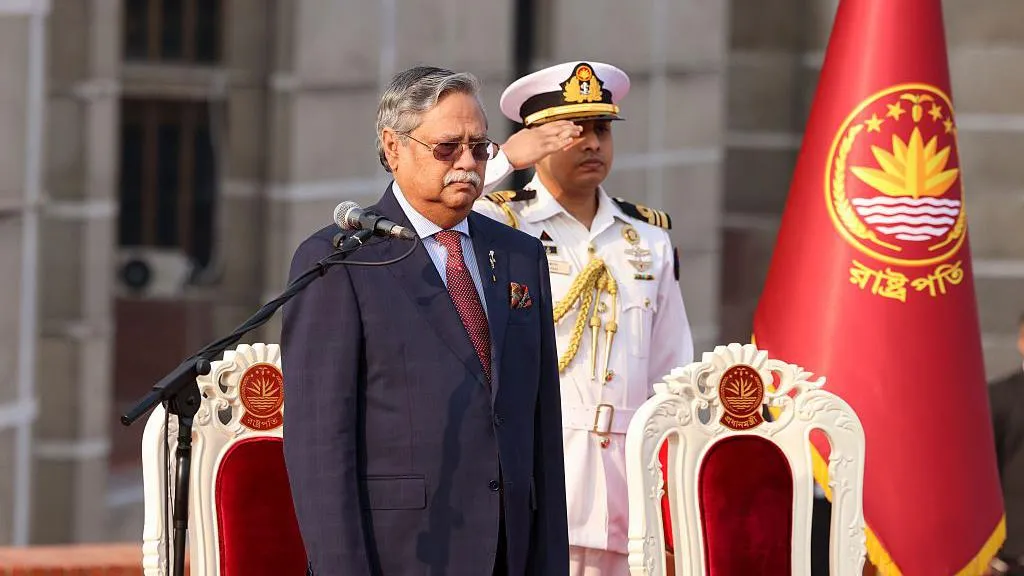

Bangladesh president Mohammed Shahabuddin has resigned, as concerns grow that his former ally, ousted prime minister Sheikh Hasina, will return to the country.
Shahabuddin’s resignation comes days after Hasina told Reuters that she would return to Bangladesh, where she faces the death penalty for crushing student-led protests in 2024 which led to the toppling of her government.
Since then, Shahabuddin has been under pressure to resign from leaders of the ruling Bangladesh Nationalist Party, sources had told BBC Bangla.
Several officials from the president’s office said Shahabuddin signed his resignation letter on Friday afternoon. In the letter he cited ill health as the reason for quitting.
The resignation letter has been submitted to the speaker of parliament, Hafiz Uddin Ahmad.
The speaker is cutting short his visit to Thailand, where he had gone for medical treatment, sources told BBC Bangla.
He will be discharging the duties of the president until a new leader is elected. According to Bangladesh’s constitution, a new president must be elected by parliament within 90 days.
Following the ouster of Sheikh Hasina’s government in the July mass uprising, sweeping changes were made across the board.
Many of her allies were removed, ranging from top-ranking bureaucrats and police officials who had served under her administration to others in key positions.
Shahabuddin was one of the few allies to remain in office.
He continued to serve when an interim government led by Nobel laureate Muhammad Yunus took power, and even after the Bangladesh Nationalist Party secured a landslide victory in the general election in February.
But Shahabuddin, whose term was supposed to end in 2028, told Reuters last December that he was eager to leave his presidency.
He said he had felt “humiliated” by the interim government, citing the sudden removal of his portraits from Bangladeshi consulates and embassies.
At that time he said he would continue his presidency until elections were held and let the next government decide on his position.
Hasina vows to return
Earlier this month, Hasina said in a Reuters interview that she and her allies would return from exile in India and face the court in Bangladesh.
Last year, the International Crimes Tribunal in Bangladesh found Hasina guilty of allowing lethal force to be used against protesters.
The UN Human Rights Commission has estimated that at least 1,400 people died during the unrest which eventually saw Hasina flee the country.
The court sentenced her to death in absentia.
In the months following her departure, her party, the Awami League, has been banned from politics, and many of its leaders jailed.
“My party leaders and workers are being subjected to tremendous repression,” she told Reuters during the interview earlier this month.
“If death comes, I want it to come on my own soil, where my parents are buried and where their blood was shed.” BBC