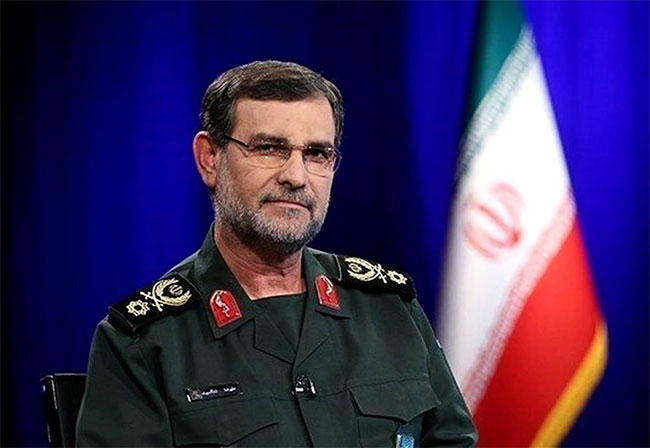
TEHRAN :The commander of Iran’s elite naval force, Alireza Tangsiri, has been killed in a strike in southern Iran, an Israeli official said, the latest high-profile casualty in the war that’s now in its fourth week.
Tangsiri, who led the naval wing of Iran’s powerful Islamic Revolutionary Guard Corps, was reportedly killed in a strike in the port city of Bandar Abbas. The official added that Commodore Tangsiri had been responsible for overseeing the closure of the Strait of Hormuz. Iran’s chokehold on the crucial waterway has upended oil and gas deliveries from the Middle East.
There was no immediate confirmation from Iran, and the Israel Defense Forces did not comment on the reported strike.
If confirmed, the killing would deal a major blow to Iran’s military leadership, particularly its naval operations in the strategically vital Persian Gulf.
WHO WAS ALIREZA TANGSIRI?
Born in Bushehr Province in southern Iran, Alireza Tangsiri rose through the ranks of the IRGC Navy after serving during the Iran-Iraq War and the so-called Tanker Wars, the United States’s first conflict with Iran during the 1980s.
Tangsiri went on to command the IRGC Navy’s 1st Naval District in Bandar Abbas and served as deputy commander from 2010 to 2018, before taking over as the force’s chief.
Tangsiri’s reported death adds to a growing list of senior Iranian officials assassinated since the war began on February 28, when the US and Israel launched coordinated military strikes on Iran.
Among the first, and most consequential, losses was Iran’s Supreme Leader Ayatollah Ali Khamenei. What followed was a systematic takedown of an entire echelon of the Islamic republic’s political and military brass.
On March 17, senior politician and Iran’s security chief Ali Larijani was killed in an Israeli strike on the outskirts of Tehran. The bombing also reportedly claimed the lives of his family members.
Days later, Ali Mohammad Naini, spokesperson of the Revolutionary Guards, was killed in a joint US-Israeli strike. His death came hours after he appeared on national television asserting that Iran retained full missile production capability despite wartime pressures.
- Agencies ada derana