

P M AMZA
COLOMBO At the time of filing this article, media reports indicate that the Sri Lankan Government has decided to appoint a non-Muslim as Consul General in Jeddah. The concerns that have emerged in response cannot be dismissed as communal sentiment or resistance to equality in public service. Rather, they arise from a more fundamental and institutional consideration: functional suitability.
Jeddah is not an ordinary diplomatic posting. In operational terms, it constitutes Sri Lanka’s most critical religious-service mission overseas, with responsibilities that are intrinsically linked to the facilitation and management of Haj and Umrah for Sri Lankan citizens.
The effectiveness of the mission is therefore inseparable from the religious and logistical realities governing access, mobility, and engagement within the holy precincts central to these obligations
This singular characteristic places the Jeddah Consulate in a category distinct from most other overseas missions. Treating it as a routine posting risks weakening service delivery and diluting the State’s constitutional obligation to facilitate religious freedom in practice, not merely in principle.
A Consulate Defined by Pilgrimage
Each year, tens of thousands of Sri Lankan Muslims travel to Saudi Arabia to perform Haj and Umrah. The Sri Lankan Consulate General in Jeddah serves as the principal operational platform through which pilgrimage-related coordination, intervention, and crisis management are undertaken.
Many of these responsibilities are location-specific. They require physical presence and direct access to the holy cities of Mecca and Medina, where the overwhelming majority of pilgrimage-related challenges arise. The head of the consulate is therefore not merely an administrator, but the principal authority expected to intervene personally during emergencies and high-risk situations.
Legal Reality: Access Is Not Optional
Saudi Arabia strictly prohibits non-Muslims from entering Makkah .This restriction is grounded in Islamic doctrine and codified in Saudi law, enforced through checkpoints, permits, and surveillance mechanisms.¹ It is neither symbolic nor discretionary, and it is uniformly respected by all foreign missions operating in the Kingdom.
The implication is unavoidable. A Consul General who cannot legally enter Mecca is structurally constrained from performing the most critical functions of the post. While delegation to Muslim officers or locally engaged staff may mitigate some operational gaps, authority without access inevitably weakens accountability, speed of response, and credibility. In moments of crisis—stampedes, heat-related deaths, missing pilgrims, or sudden regulatory changes—remote supervision is an inadequate substitute for senior-level presence on the ground.
Functional Suitability and Comparative Practice
The concern raised by this appointment is not unique to Sri Lanka, nor is it exceptional in international practice. States routinely recognise that certain postings require context-specific suitability, shaped by legal access and operational realities rather than abstract equality alone.
Religious and cultural sensitivities frequently shape diplomatic norms. Vatican City maintains distinctive diplomatic protocols informed by ecclesiastical tradition. Mount Athos restricts entry to men only, a rule respected by the Greek state and the international community. In India, access to the Jagannath Temple has traditionally been limited to Hindus, a restriction upheld by law and long-standing social consensus.²
At the same time, India also demonstrates that religious autonomy does not necessarily equate to exclusionary intent. The Guruvayur Temple has, over time, evolved administrative mechanisms—including declarations of faith—that allow entry by visitors from other religious backgrounds, reflecting an effort to balance tradition with inclusivity.³ The key point is that each religious site determines its own access rules, and states design administrative arrangements in recognition of those realities.
Equality Does Not Mean Interchangeability
Critics of a function-based approach may argue that opposition to such an appointment risks endorsing religious discrimination or undermining equality within the public service. This concern, while understandable, conflates equal eligibility with identical deployment.
Equality in public administration does not require that all officers be interchangeable regardless of operational context. International human-rights jurisprudence recognises that restrictions grounded in religious doctrine, when applied uniformly and without arbitrariness, do not constitute discrimination.⁴ Assignments that ignore legal access and functional reach may satisfy formal notions of equality while undermining institutional effectiveness.
Ambassadorial Oversight Is Not a Substitute for Consular Access
A related argument suggests that the religious identity of the Consul General in Jeddah is immaterial if the Ambassador in Riyadh is a Muslim. This reasoning reflects a misunderstanding of diplomatic structure and operational jurisdiction. An Ambassador is accredited to the entire host country and bears strategic responsibility for the bilateral relationship, but cannot substitute for the immediacy, jurisdiction, and functional authority of a Consul General operating within a defined consular district. Haj- and Umrah-related crises often demand rapid, on-site intervention in and around the holy cities, sometimes within hours and outside routine diplomatic channels. An Ambassador based in Riyadh—several hundred kilometres away and managing a wide national portfolio—cannot realistically discharge these time-sensitive consular functions. The Consul General in Jeddah is therefore not a secondary proxy but the primary operational authority for pilgrimage affairs. To suggest otherwise conflates strategic oversight with tactical execution and overlooks the jurisdictional logic on which consular systems are built.
Constitutional Obligations of the Sri Lankan State
Sri Lanka’s constitutional framework reinforces the need for a pragmatic, facilitative approach. Article 10 of the Constitution guarantees freedom of thought, conscience, and religion, while Article 14(1)(e) explicitly protects the right of every citizen to manifest religion in worship, observance, practice, and teaching.⁵ These provisions impose a positive obligation on the State not merely to refrain from interference, but to enable citizens to meaningfully exercise their religious rights.
Haj is not a purely private undertaking conducted in a foreign jurisdiction. Its performance is structurally dependent on state-to-state coordination, regulatory compliance, and diplomatic intervention. When the State appoints a head of mission who is legally barred from accessing the primary operational theatre of Haj, it risks rendering constitutional guarantees formal rather than substantive.
Experience from the Ground
This analysis is informed not only by comparative practice and constitutional principle, but also by direct diplomatic experience. The author served as Sri Lanka’s Ambassador to Saudi Arabia and was closely involved in engagement with Saudi authorities, pilgrimage coordination, and crisis-response mechanisms. That experience underscored a consistent reality: effective management of Haj-related issues depends on immediate access, personal intervention, and senior-level credibility on the ground, particularly in Makkah. Structural limitations on access are therefore not abstract inconveniences, but practical constraints with real consequences for pilgrim welfare.
Conclusion: Pragmatism over Abstraction
Diplomacy is ultimately judged by outcomes, not symbolism. The Jeddah Consulate exists primarily to serve Sri Lankan pilgrims at one of the most sacred and demanding moments of their lives. That mission requires presence, access, and authority to reside in the same individual.
Recognising this reality is not identity politics. It is administrative pragmatism grounded in law, comparative practice, constitutional responsibility, and lived diplomatic experience. When diplomatic equality meets religious reality, good governance requires the courage to acknowledge that context matters.
Footnotes
Saudi Ministry of Hajj and Umrah, Regulations Governing Hajj and Umrah Affairs (Riyadh).
Supreme Court of India, Indian Young Lawyers Association v. State of Kerala, (2018) 10 SCC 1.
Guruvayur Devaswom Board, Administrative Guidelines and Public Statements on Temple Access (Kerala).
United Nations Human Rights Committee, General Comment No. 22: Article 18 (Freedom of Religion or Belief) (1993).
Constitution of the Democratic Socialist Republic of Sri Lanka (1978), Articles 10 and 14(1)(e).
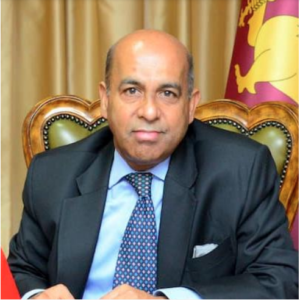
( The writer,P M Amza is Former Sri Lanka Ambassador to EU , Belgium, Turkey and Saudi Arabia and Former Chief of Protocol , Ministry of Foreign Affairs)