

A.M.M.MUZZAMIL
COLOMBO
Since Cyclone Ditwah struck on 28 November , Sri Lanka has been grappling with a humanitarian emergency of historic proportions. Unprecedented and relentless extreme weather has ravaged the island, displacing thousands of innocent families and plunging them into a desperate struggle for survival—marking one of the nation’s most severe crises in recent memory.
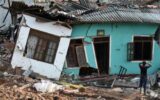
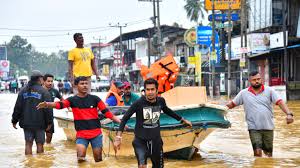
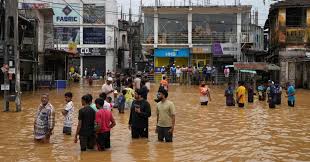
The devastation now spans 25 districts, with heart-breaking tragedies such as the disaster in Rambukwela village, where more than 50 families were buried beneath a torrent of earth. The scale of suffering continues to grow with each passing day.
To date, landslides and floods have claimed over 600 lives, more than 215 individuals remain missing, and approximately 2 million people from 586,464 families have been profoundly affected. The heartbreak endured by these families—many having lost their homes, livelihoods, and loved ones—is immeasurable.
Tens of thousands, rendered homeless, have sought shelter in state-run welfare centres. Though operational, these facilities are critically overstretched and urgently require strengthened support: food, medical supplies, shelter, sanitation, and essential services to meet the overwhelming humanitarian demand.
In this context, President Anura’s response has been notably action-driven—prioritizing tangible results over political rhetoric. He moved swiftly to unlock critical resources, authorizing over a billion rupees for immediate relief and empowering district authorities to mobilize further aid. This approach stands in sharp contrast to past shortcomings.
Unlike the controversial “Helping Hambantota Fund,” which was tainted by allegations of diverted foreign aid, President Anura has established the “Rebuilding Sri Lanka Fund,” committed to transparency and managed through a designated government account.
The economic toll of this disaster is still unfolding, yet early estimates are staggering. The Commissioner General of Essential Services cautions that recovery could cost between USD 6–7 billion—equivalent to a devastating 3–5% of GDP—delivering a profound blow to a nation already struggling with economic hardship.
It is heartening to note the remarkable outpouring of international generosity. In an extraordinary gesture, a special telethon by Maldivian media raised more than MVR 11.6 million for Sri Lanka in a single day. Australia, the United States, India, Pakistan, Japan, Nepal, the UAE, Saudi Arabia, and many other nations have also extended generous assistance. In moments like this, humanity truly transcends borders.
In a crisis of such magnitude, even the smallest act of kindness can bring immense relief. Local and international support at this critical hour helps restore dignity, safety, and hope to those enduring suffering beyond words.
Across the island, Sri Lankans—regardless of ethnicity, creed, or background—have stood shoulder to shoulder, offering help in every imaginable way. Few nations witness such spontaneous unity, where citizens come together with unwavering humanitarian spirit to support their fellow countrymen.
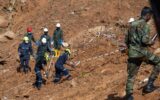
Meanwhile, the armed forces—often the first responders—have been fully deployed in ongoing rescue operations, working tirelessly to locate and assist the missing, even as adverse weather threatens their own lives. Their selfless service deserves the nation’s deepest gratitude.
Tragically, while the country bleeds, certain segments of the political opposition appear more focused on exploiting the catastrophe for short-term political gain than on helping save lives and rebuild shattered communities. This is not the moment for point-scoring or petty blame. The nation’s need for unity is absolute. All political actors must set aside opportunism and commit wholeheartedly to national recovery.
You don’t need to be a Stephen Hawking to understand atmospheric changes. Even a Grade 10 student from Mahiyanganaya knows that weather events arise from complex natural processes, making their exact behaviour impossible to predict. A system can stall, shift direction, or deviate from all projections, and no mathematical model can capture every variable.
Even the United States cannot perfectly forecast hurricanes, nor can Japan predict earthquakes with certainty. This reality highlights the importance of vigilant monitoring and decisive action.
Today, our country stands wounded, breathing through the ragged aftermath of Cyclone Ditwah. Though the storm has passed, the devastation remains deeply etched. Homes lie in ruins, children are without schools, water sources are contaminated, roads are impassable, and countless livelihoods have been destroyed. The physical and psychological toll on our people is profound—almost unbearable.
Yet the resilience of our nation remains unbroken. With renewed hope and steadfast determination, we will rise again—like a phoenix emerging from the ashes. Together, we can rebuild shattered lives and extend a lifeline to communities striving to endure unimaginable hardship.
As the Holy Qur’an reminds us with timeless clarity: “Verily, with hardship comes ease” (94:5). This divine assurance offers comfort and courage, urging us to persist through adversity with the certainty that every trial is temporary and paves the way for renewal, strength, and hope.