


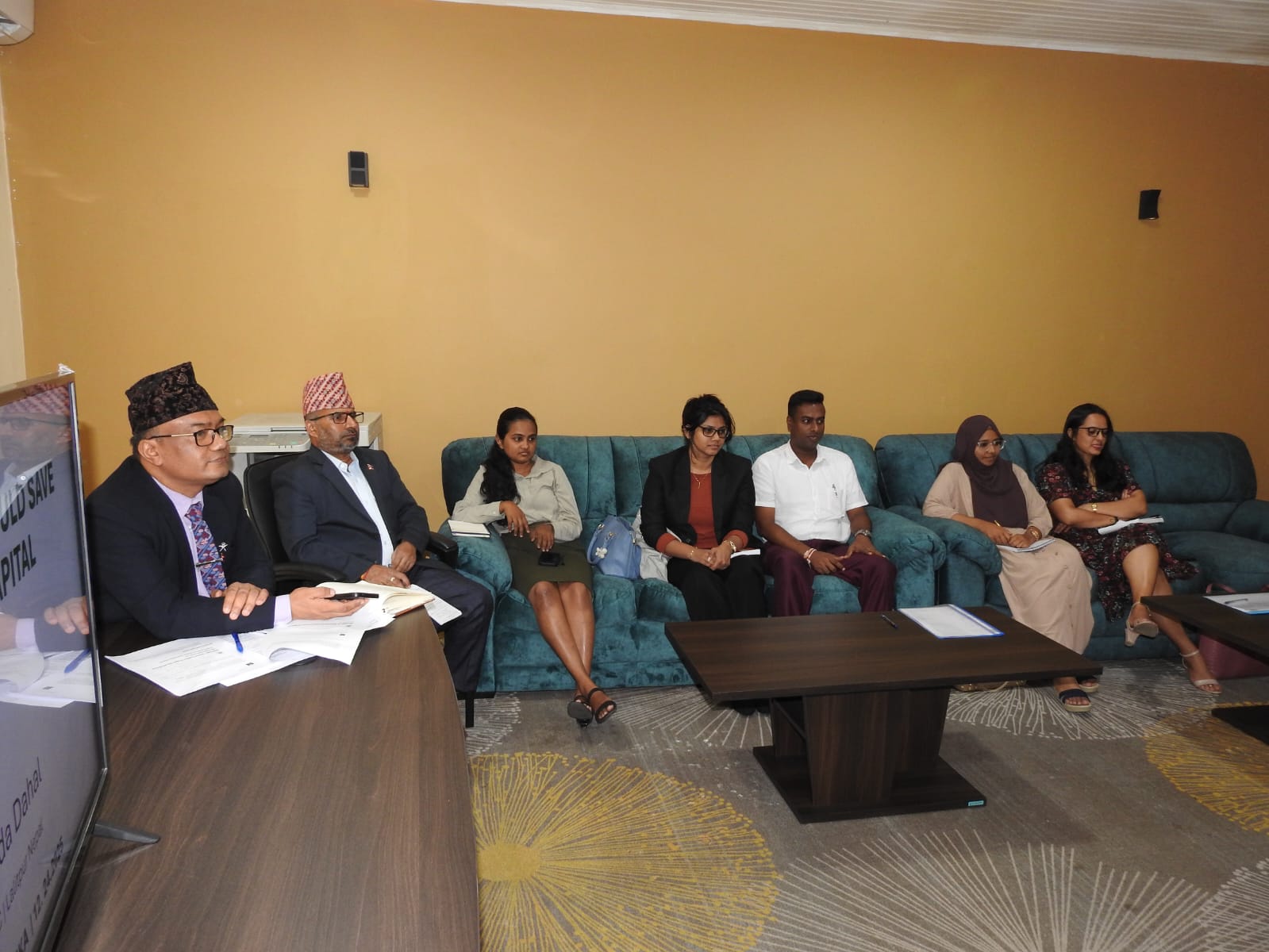
COLOMBO ; The Embassy of Nepal in Colombo hosted a guest lecture on Carbon Trading, Forest Economics, Climate Change, and Carbon Finance presented by Prab Dahal, Vice President at Eastwood Forest LLC, USA, on Wednesday, 24 December
The program began with welcoming remarks by Dr. Purna Bahadur Nepali, Ambassador of Nepal to Sri Lanka. He introduced the guest speaker Prab Dahal and highlighted the growing need for climate-related economic solutions in developing countries. A brief visual presentation on the Regional Buddhist Circuit across South Asia was also shown, emphasizing Nepal’s cultural and spiritual connections to the region.
Mr. Dahal, Vice president at Eastwood Forest LLC, USA, an expert in natural capital investment and climate finance, gave a presentation based on global and regional experiences. His lecture explored how carbon markets, forest economics, and climate finance can be effective tools for tackling climate change while promoting sustainable development. He stressed that investing in natural capital is becoming a key economic strategy that connects environmental protection with financial returns.
The interactive discussion that followed focused on climate change, climate finance, and the development challenges in Nepal and Sri Lanka. Participants looked at these issues through economic, policy, and climate justice lenses. Mr. Dahal highlighted Nepal’s successes in community forestry, noting the significant rise in forest cover over recent decades. He mentioned the country’s involvement with international carbon finance mechanisms through the World Bank and the Paris Agreement. He also discussed policy actions, like the ban on highly polluting tuk-tuks in Kathmandu, to tackle urban air pollution.
Participants talked about ongoing challenges in South Asian countries, such as weak regulatory frameworks, limited private investment, corruption, and the absence of investor-friendly policies. They noted that while developing countries contribute the least to historical emissions, they suffer most from climate-related impacts. This raises important questions about climate justice and shared global responsibility.
The conversation also covered practical issues like outdated infrastructure, the environmental effects of data centers, electric vehicle battery disposal, food security risks, and the gap between climate knowledge and actual action. Dahal pointed out that while NGO funding is helpful, it is not enough by itself. Large-scale private capital, backed by clear policies, incentives like green bonds, and regulatory changes, is crucial for effective climate action.
The lecture wrapped up with a strong call for practical, market-based solutions, policy changes, and regional cooperation to tackle the climate crisis in South Asia. It emphasized moving beyond talk to take action based on equity and economic reality.
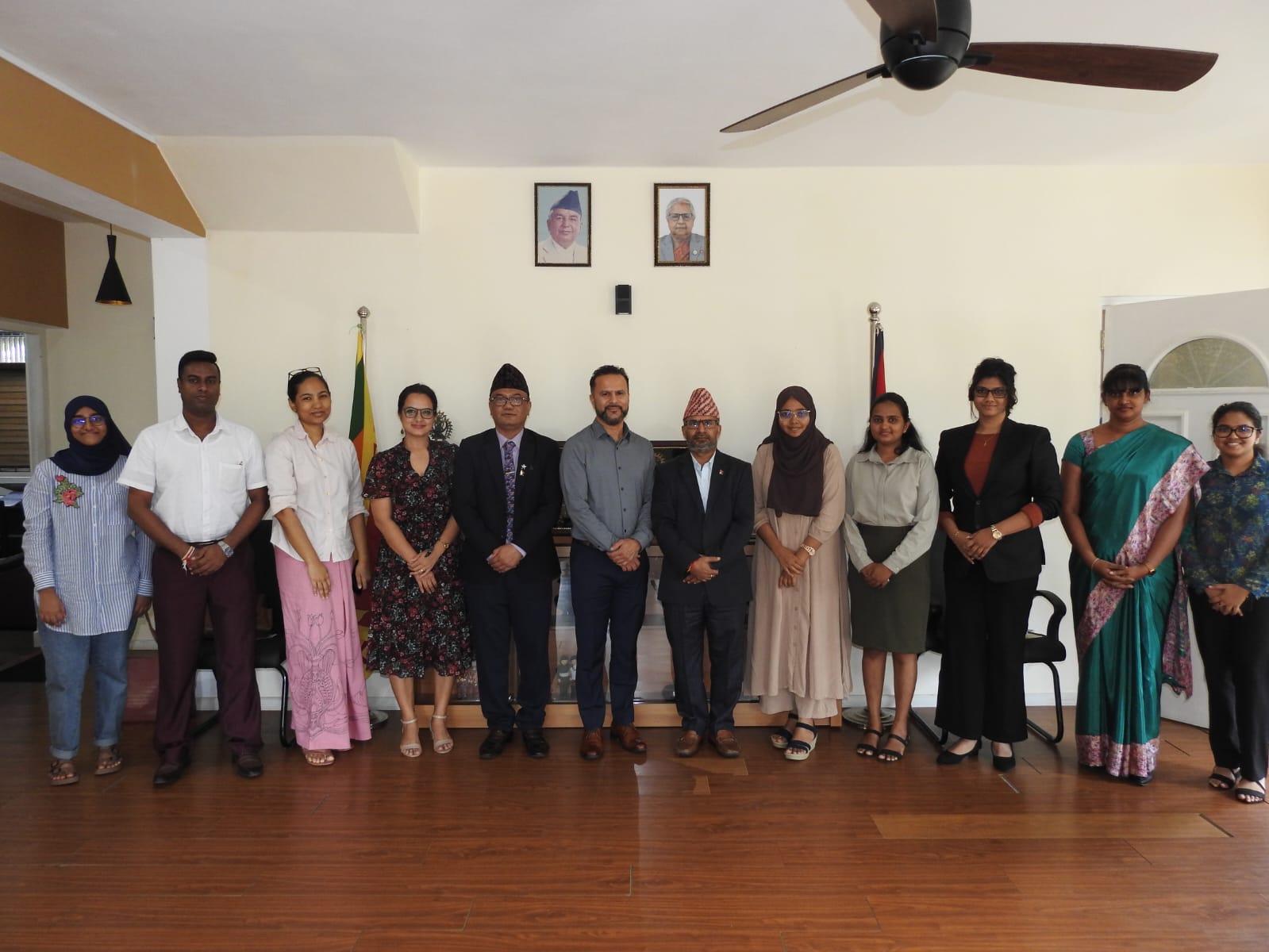
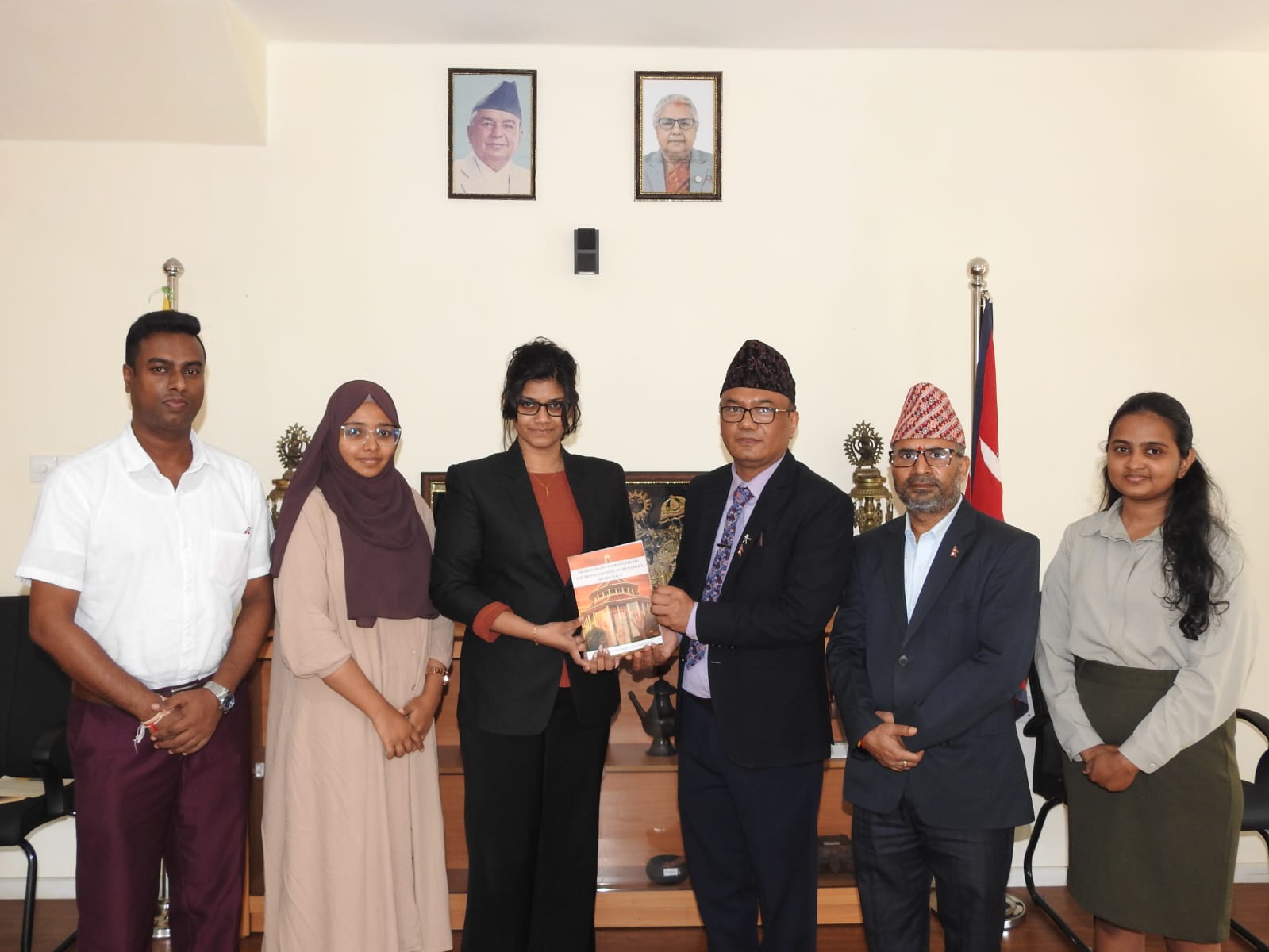
The event featured invited guests from the International Youth Alliance for Peace, including Aakhya Arundathi, Iroshan Prabhash, Samla Jauffer, Shabana Ibrahim, Shabana Pondel, and Nelum Rathnayake. Their presence led to a lively exchange of ideas. After the discussion, Mr. Vijay Kumar Raut, Deputy Chief of Mission of the Embassy of Nepal, engaged with the participants. He shared the stories and historical importance of the monuments and artworks on display at the Embassy’s Cultural Center. This interaction sparked strong interest among the participants and deepened their appreciation of Nepal’s rich cultural heritage.del, and Nelum Rathnayake. Their participation contributed to a lively exchange of ideas.
The program concluded with thanks to the speaker and participants for their valuable input on climate resilience and sustainable development.


