



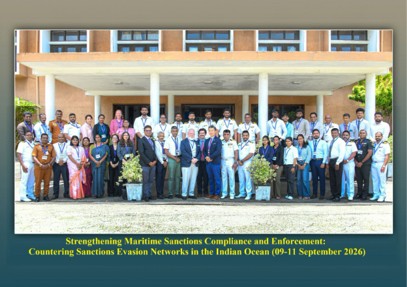
COLOMBO, :The U.S. Embassy in Sri Lanka, through the U.S. Department of State’s Office of Cooperative Threat Reduction and in partnership with the Atlantic Council, conducted a three-day training September 9–11 in Colombo to strengthen Sri Lanka’s ability to detect and respond to maritime sanctions evasion that threatens U.S. security interests and legitimate global commerce.
More than 40 officials from the Sri Lanka Atomic Energy Regulatory Council, Central Bank of Sri Lanka, Sri Lanka Coast Guard, Merchant Shipping Secretariat, Sri Lanka Ports Authority, Ministry of Defense, and Sri Lanka Navy built proficiency in using tools to identify suspicious vessels and deceptive shipping practices, assess sanctions and proliferation risks, and strengthen interagency coordination when potentially illicit maritime activity is detected in or near Sri Lankan waters.
“Sri Lanka sits at a strategic crossroads for global commerce, bringing both tremendous opportunity and the need for vigilance,” said U.S. Ambassador to Sri Lanka Eric Meyer. “As sanctions-evasion networks increasingly exploit commercial shipping, the United States is taking decisive action to counter these networks and sharing U.S. expertise with our Sri Lankan partners to protect legitimate trade, secure critical waters, and strengthen regional security.”
Through presentations and tabletop exercises led by sanctions and maritime security experts from the Atlantic Council, participants examined tactics used to conceal illicit maritime activity, including manipulation of vessel identification and tracking information, opaque ownership structures, ship-to-ship transfers, falsified documentation, and other deceptive practices designed to obscure a vessel’s identity, ownership, cargo, origin, or destination.


