


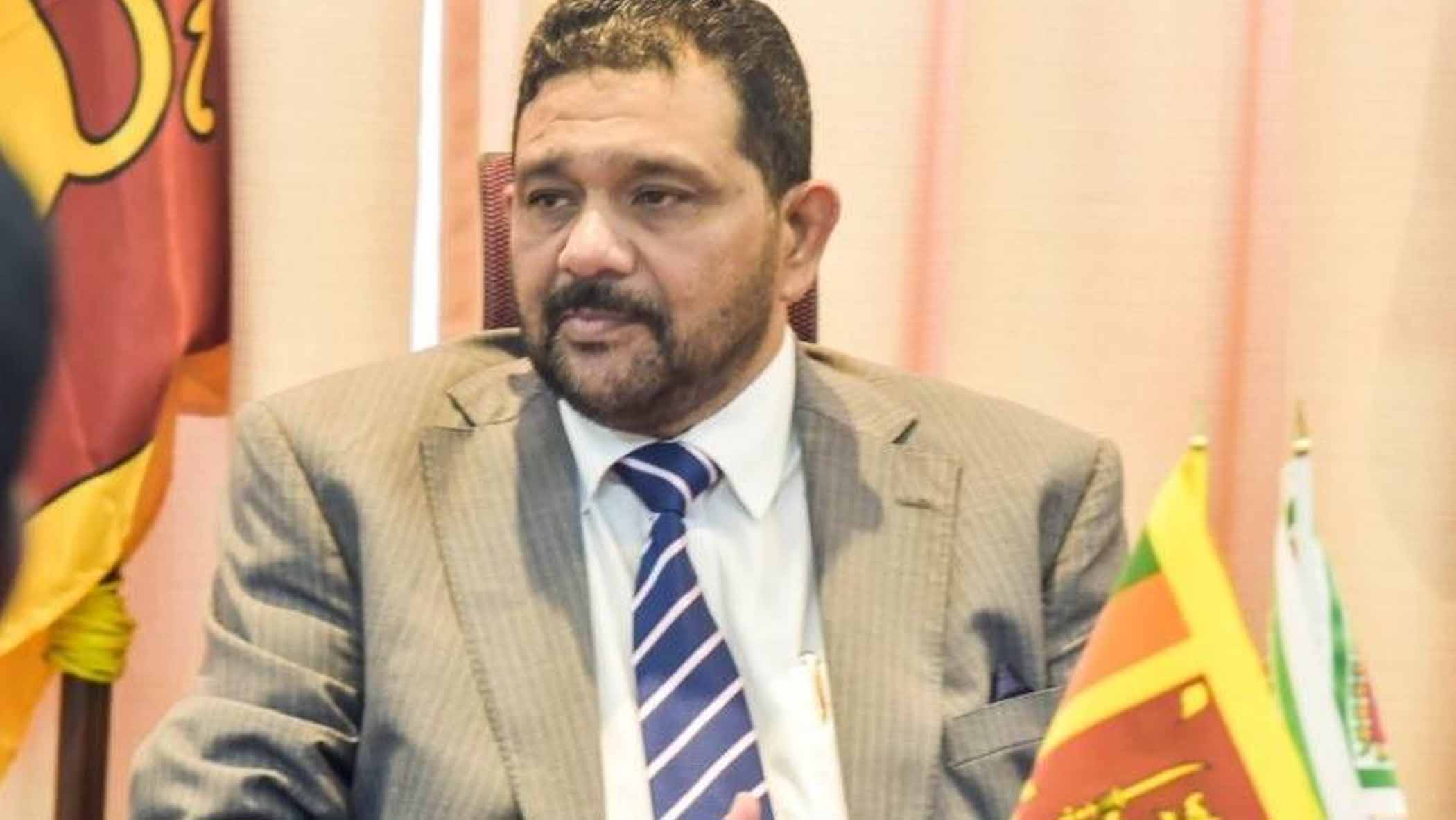
COLOMBO : M. Azath S. Salley ,Former Governor of the Western Province Leader, National Unity Alliance has written abopen letter to Nalinda Jayatissa Minister of Health about his action to transfer the Hijab-wearing young nurses to one hospital from another saying that it would not resolve the problem.
The full letter is appended here for readers’ information.
” Hon. Minister,I write to express my deep concern and unequivocal condemnation regarding the reported decision to transfer Muslim women healthcare workers affected by the issue concerning the wearing of the hijab at a hospital in Kalmunai to another hospital where they are permitted to wear their religious attire.
With due respect, transferring the affected healthcare workers is not a solution to the problem. It is merely transferring the problem from one institution to another.
These women did not request to be transferred. They did not ask to be displaced from the institutions to which they were appointed. They certainly should not be made to bear the consequences of an unresolved administrative or policy issue simply because they have sought to observe their sincerely held religious beliefs.
The Government must address the issue at its source.
If there are legitimate concerns regarding the wearing of the hijab as part of healthcare attire, those concerns must be examined objectively and professionally. Any requirements relating to infection control, hygiene, occupational health, patient safety and the effective performance of clinical duties must, of course, be respected.
However, where a hijab-compatible uniform can satisfy those same requirements, there is no justification for effectively removing or relocating the healthcare worker rather than finding a practical accommodation.
The fundamental question should be straightforward:
Does the proposed attire meet the necessary standards of hygiene, infection control, occupational health, safety and professional practice?
If it does, then the religious identity of the healthcare worker should not determine whether she is permitted to serve in the hospital to which she was appointed.
This matter goes far beyond the individual women currently affected in Kalmunai.
What happens when the next Muslim nurse faces a similar situation?
What happens when a Muslim doctor, midwife, pharmacist or other healthcare professional encounters the same difficulty?
Will they also be transferred?
Are we going to create a system in which healthcare workers are moved from one institution to another whenever a reasonable religious accommodation is requested?
That is not a sustainable policy. It is displacement.
A transfer may temporarily remove the immediate dispute from one hospital, but it does not resolve the underlying issue. The same question will inevitably arise again in another hospital unless the Government establishes a clear and consistent national policy.
Sri Lanka is a diverse country, and our public institutions must reflect that diversity. No citizen should be forced to choose between serving their country through their profession and observing a sincerely held religious practice where that practice can reasonably coexist with professional requirements.
I therefore strongly urge the Ministry of Health to take this matter seriously and establish a clear, transparent and nationwide policy on religious attire within the healthcare sector.
Such a policy should be based on objective professional standards and should apply equally to all healthcare workers.
The criteria should be clear:
- Is the attire safe?
- Is it hygienic?
- Does it comply with infection-control requirements?
- Does it allow the healthcare worker to perform her duties properly?
- Does it meet legitimate occupational-health and safety standards?
If the answer is yes, then there should be no reason to exclude, disadvantage or relocate that healthcare worker because she wears a hijab.
Let us also be clear that religious accommodation is not special treatment.
It does not mean compromising patient safety. It does not mean abandoning professional standards. It does not mean removing legitimate healthcare regulations.
It means ensuring that those regulations are reasonable, evidence-based and applied fairly to everyone.
As a country, we must have the courage to solve difficult issues rather than simply moving the people affected by them.
I therefore call upon the Ministry of Health to reconsider the approach of transferring the affected Muslim healthcare workers and instead address the underlying policy question through consultation with healthcare professionals, infection-control specialists, occupational-health experts and representatives of the relevant communities.
There must be one standard of professionalism, one standard of safety and one standard of dignity.
The solution cannot be to move a Muslim woman simply because the system has failed to determine how her religious attire can be accommodated.
Do not transfer the person. Fix the policy.
Do not move the problem. Solve it.
This should not be a Kalmunai-only solution. Sri Lanka requires a clear national framework so that Muslim healthcare workers, and indeed all healthcare workers who observe legitimate religious practices, are treated fairly and consistently wherever they serve.
I urge you, as the Minister responsible for the country’s healthcare system, to demonstrate leadership on this matter and ensure that our public healthcare institutions uphold both professional standards and the fundamental dignity of every citizen.
A transfer is not a permanent solution.
A fair, inclusive and nationally consistent policy is.
Yours sincerely,
M. Azath S. Salley
Former Governor of the Western Province
Leader, National Unity Alliance .”


