


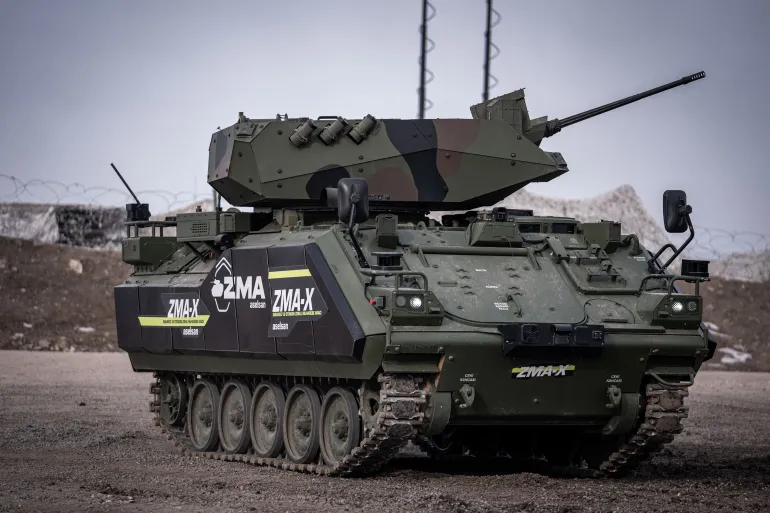
ANKARA : The rise of Türkiye’s defence industry stands as one of the most remarkable success stories of our nation’s modern history. In just a few decades, Türkiye has evolved from a country heavily dependent on imported defence technologies into a major producer and exporter in the global defence and aerospace sector. This achievement reflects not only technological progress but also the resilience, determination, and vision of the Turkish people.
The need to overcome restrictions imposed by arms embargoes was a key catalyst in building a self-reliant defence industry. Early steps in this direction included the establishment of pioneering companies such as ASELSAN and HAVELSAN in the 1970s and 1980s. These institutions laid the groundwork for innovation and technological independence. Over time, new security challenges in Türkiye’s immediate neighbourhood further underscored the importance of maintaining capable armed forces supported by an advanced national defence industry.
Private and state-backed trailblazers like BAYKAR (famous for the Bayraktar TB2 and Akıncı UCAVs), alongside giants like STM, TAI and ROKETSAN, have made Türkiye a global leader in unmanned aerial systems, precision munitions, and naval platforms, such as the TCG Anadolu and MILGEM corvettes. The sector has expanded into next-generation developments, including the KAAN 5th-generation stealth fighter, the Kızılelma combat drone, and AI-augmented air defence systems, such as Steel Dome.
Progress has been particularly striking over the past two decades. In 2002, Türkiye had only 56 defence companies and approximately 62 projects underway, with a total project volume of $5.5 billion. Today, the number of defence companies exceeds 4,500, while the number of projects has surpassed 1,400, with a total project volume exceeding $100 billion. During this period, Türkiye’s dependence on foreign defence suppliers has fallen dramatically, from approximately 80% in the early 2000s to below 20% today. This transformation has strengthened our national security and enhanced our strategic autonomy.
Equally impressive has been Türkiye’s growth in international defence markets. Defence and aerospace exports, which stood at just $248 million in 2002, reached $10.05 billion in 2025. This momentum continued in 2026, with exports totalling $5.79 billion in the first half of the year alone. Today, the Turkish defence industry ranks as the world’s 11th-largest supplier, with its products and partnerships reaching some 185 countries. This global presence demonstrates Türkiye’s ability to compete at the highest levels of innovation and quality.
Defence exports and joint production agreements have deepened our geopolitical ties across multiple regions, cementing security cooperation in the Gulf Region, institutionalizing security ties with the Turkic Republics in Central Asia, and expanding across Africa. The defence industry has become a key component of Turkish foreign policy. By fostering international engagement and creating new opportunities for cooperation, it has strengthened Türkiye’s role as a responsible and proactive partner in global security.
In South Asia, defence and security cooperation has become an important dimension of our bilateral relations. Our partnerships are built on mutual respect and shared interests, and they contribute to regional stability and prosperity. Türkiye’s defence industry offers opportunities for collaboration in areas such as maritime security, technology transfer, and capacity building for Sri Lanka. Türkiye’s experience in building a resilient and innovative defence sector demonstrates the value of investing in self-reliance, while also highlighting the benefits of international partnerships.
The rise of Türkiye’s defence industry is not merely a story of numbers and exports, it is a testament to national determination, strategic foresight, and the pursuit of excellence. As Türkiye continues to expand its capabilities, we remain committed to sharing our experience, strengthening partnerships, and contributing to peace and security in our wider region, including South Asia.-Getty images


