


ALIREZA DELKHOSH
COLOMBO
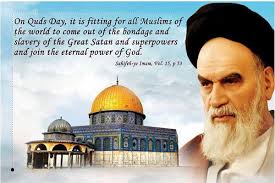
Quds Day: From an Idea to an International Demand
The last Friday of the holy month of Ramadan was designated as Quds Day several decades ago by the Founder of the Islamic Republic of Iran. This designation, more than being a mere political statement, was a call for the international community to pay attention to an issue that was gradually being forgotten: the displacement of a nation and the occupation of a land considered holy by the followers of three major divine religions.
Today, Quds Day is no longer just an Islamic occasion. It has become a symbol for all those who believe in the following fundamental principles:
- The right to self-determination for all nations.
- The prohibition of occupying another’s land by force.
- The right of displaced people to return to their homes and homeland.
- Opposition to racial discrimination and apartheid.
These principles are clearly stated in the Charter of the United Nations and the Universal Declaration of Human Rights and belong to all humanity, regardless of religion, faith, or nationality.
- The Difference of This Year’s Quds Day Compared to Previous Years
This year’s Quds Day is being commemorated worldwide while the blood of over 70,000 women, children and elderly people in Gaza has not yet dried. The genocidal machine of the Zionist regime continues its crimes, and the political and security destiny of America is also captive in the hands of this regime.
This year’s Quds Day has many differences from previous years. This year, the people of Iran observe the last Friday of Ramadan under the missiles and bombs of the Zionist regime and the child-killing American regime. They observe this day while their Supreme Leader is no longer with them and was martyred by the assassination machine of the Trump administration.
What is happening in Iran today is not the confrontation of one country against two countries. It is the confrontation of an idea against the entire might and army of the arrogant powers. Iran advocates for justice, non-discrimination, and peace, while they advocate for discrimination, double standards, blind obedience, and submission. They are oblivious to the fact that the nation of Iran is the nation of the followers of Imam Hussain (AS), who said: “A person like me does not pledge allegiance to a person like Yazid.”
Today, Iran, more proud than ever, is defending itself valiantly. It strikes back at the aggressor, and in this path, the lives of its loved ones are lost in streets, alleys, and schools. This is the price of independence. This is the price of not bowing down to the bullies. - Quds: An Issue Beyond Borders
The city of Quds holds a high status for Muslims, Christians, and Jews. This city has been a symbol of the coexistence of the Abrahamic faiths throughout history. Therefore, its situation should not be viewed merely as a local or regional conflict, but as an international issue that affects global peace and stability.
What is happening in Palestine today goes beyond a simple territorial dispute. This region is the scene of prolonged suffering for a people who have lived in displacement for decades, with successive generations experiencing life under difficult conditions.
From the perspective of international law, every human being has the right to live in their own land, the right to be free from systematic discrimination, and the right to determine their own destiny. These are the most fundamental human rights, which are, unfortunately, systematically violated in the occupied territories. - The Loss of Leaders: A Shift in Equations
In the recent days and months, the region of West Asia has witnessed significant events. On February 28. 2026, the United States and the Zionist regime violated the sovereignty of the Islamic Republic of Iran and launched a comprehensive military aggression against our country. This occurred while the Islamic Republic of Iran was engaged in negotiations with the United States to resolve differences. America’s betrayal of diplomacy began when this regime claimed that Iran poses a nuclear threat. What threat? And from which country?! From Iran? which is a member of the NPT and under full supervision, or the threat from the Zionist regime, which is not a member of the NPT, is outside the oversight of the Agency, and possesses nuclear weapons?!
Is the world once again experiencing baseless claims to start a war under the pretext of weapons of mass destruction? Was the experience of Iraq not enough for the international calamity?
Furthermore, the martyrdom of Seyyed Hassan Nasrallah, the Secretary-General of Hezbollah in Lebanon, along with a number of his companions, created another shift in the regional equations. These events illustrate the geopolitical complexities of the region and the continuation of conflicts with deep historical roots.
Following these events, the leadership structures in Iran and Hezbollah underwent change. In the Islamic Republic of Iran, the Assembly of Experts convened and elected Ayatollah Seyyed Mojtaba Khamenei as the new Leader. Although the nation of Iran and the entire Islamic Ummah are in mourning for the martyrdom of the Supreme Leader, the swift appointment of his successor by the Assembly of Experts sends a clear response to the enemies of Iran: that Iran will always remain dignified and victorious.
In Lebanon’s Hezbollah, Sheikh Naim Qassem, one of the founders of the movement, was chosen as the new Secretary-General. These leadership transitions have taken place within the framework of the internal laws and structures of these institutions.
- International Law and the Palestine Issue
From the perspective of international law, the Palestine issue is one of the longest-standing open files at the United Nations. Numerous resolutions of the UN Security Council and General Assembly emphasize the following:
· Security Council Resolution 242: Withdrawal of Israeli armed forces from territories occupied in the 1967 conflict.
· Resolution 338: Initiation of peace negotiations in the Middle East.
· General Assembly Resolution 194: The right of return for Palestinian refugees.
· Advisory Opinion of the International Court of Justice: The illegality of the separation walls in the West Bank.
Unfortunately, many of these resolutions have not been implemented due to a lack of sufficient enforcement mechanisms and double standards in the international arena. This situation has fueled the continuation of the humanitarian crisis in the region. - Iran and the Palestine Issue
Since the beginning of the Islamic Revolution, the Islamic Republic of Iran has made supporting the Palestinian people one of the principles of its foreign policy. This support is rooted in the ideological beliefs of the Founder of the Revolution, who considered Palestine the “primary issue of the Islamic world.” Following the recent developments and the change in leadership, Iran appears to remain committed to its traditional positions regarding Palestine. In his initial messages, Iran’s new Leader has also emphasized continued support for the Palestinian people and resistance against occupation. This stance aligns with the views of many countries in the region and the world that seek a just solution to the Palestine issue. - The International Community and Its Historical Responsibility
Here, addressing all governments and international organizations, I remind you that the Palestine issue is a humanitarian and legal matter and should not be sacrificed to the geopolitical conflicts of major powers.
It is firmly believed that:
- Lasting peace in the region is only possible through the full implementation of international law and an end to occupation.
- A two-state solution, or any other solution acceptable to the parties, must be achieved through negotiation and with the guarantee of the full rights of the Palestinian people.
- The right of return for Palestinian refugees is a legal and undeniable right and must not be ignored in any agreement.
- East Quds, as the capital of the State of Palestine, must be returned to its rightful owners, and its final status should be determined by agreement between the parties.
- Conclusion
It is hoped that a day will come when, through dialogue, diplomacy, and respect for international law, all nations—regardless of ethnicity or race—will live together in peace and tranquility.
That day will be when justice replaces oppression, and human rights triumph over military power. - ( The writer is the Iran ambassador in Sri Lanka)


