


COLOMBO :The Lunar New Year is the most important and beloved holiday in Vietnam. Not only does it mark the arrival of spring and the start of a new year, but Tết is also the time of reflecting, reconnecting with families, and honoring ancestors for a new year of prosperity and good fortune.
Lunar New Year in Vietnam, also known as Tết Nguyên Đán, plays a pivotal role in Vietnamese culture. The word “Tết” means festival and Nguyên Đán means the first day of the year. Both of these words come from Sino-Vietnamese – a linguistic mixture of Vietnamese and Chinese morphemes.
The Vietnamese New Year is closely tied to Vietnam’s agrarian culture, which follows the lunar calendar, and falls between January and February. It serves as a time to pay homage to gods of prosperity and pay respects to ancestors, seeking blessings for a wealthy harvest and good fortune next year.
Today, the holiday is celebrated nationwide, following the lunar calendar of mid January or late February, and usually lasts for 5 to 7 days, promoting a sense of unity through this joyous community gathering.
Tết may have indigenous origins independent of Chinese customs. These passages describe the lively gatherings, feasting, and celebrations tied to the new planting season, depicting the values believed by the Vietnamese ancestors.
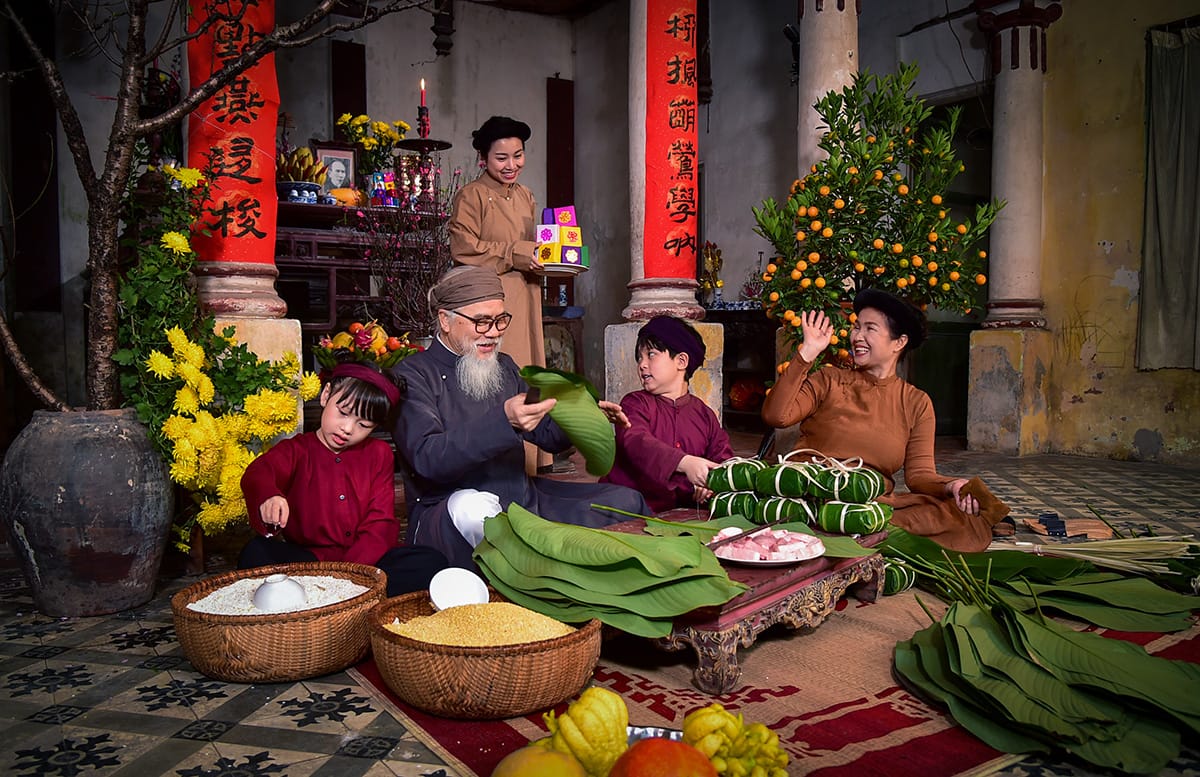
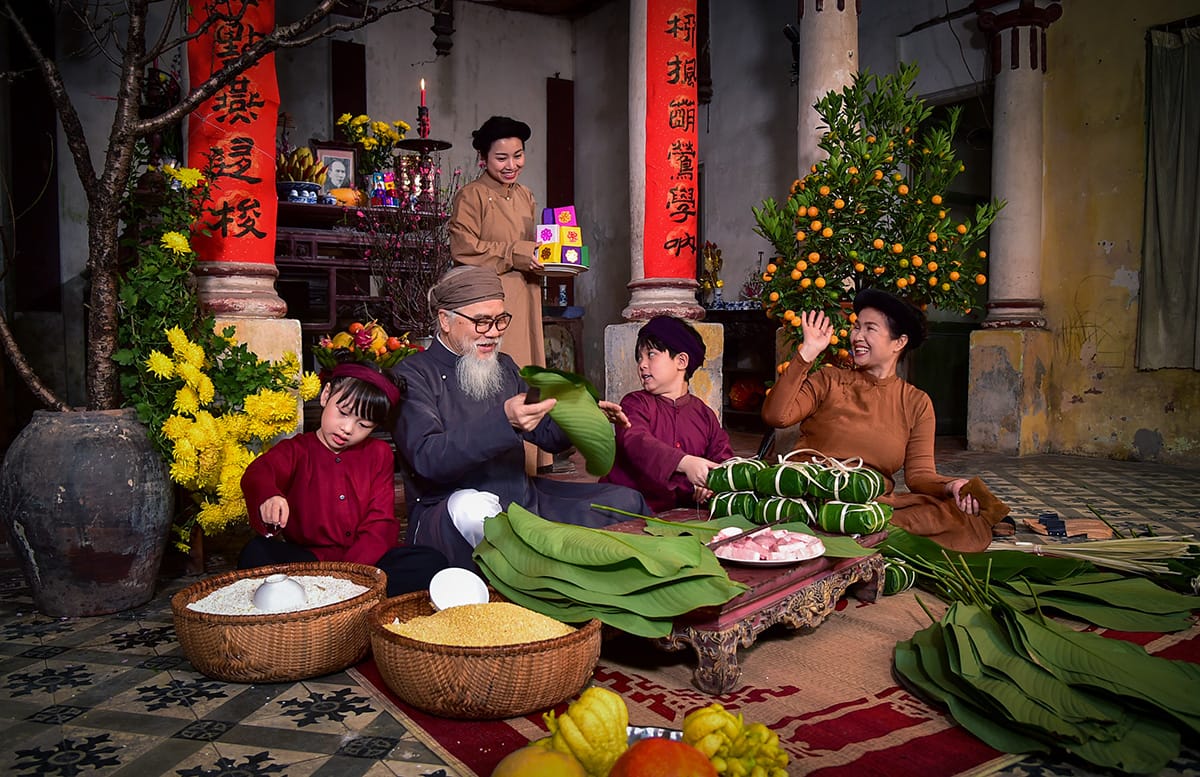
There are of course some similarities in terms of customs such as family reunions, decorative elements, and the exchange of lucky money. The Lunar New Year in Vietnam, however, includes instinctive style and personality that are deeply linked with the country’s identity. For example, the historical legend of “Banh Chung Banh Day,” states during the Hung Kings period, before the Chinese occupation, Vietnamese people had been celebrating the new year’s fortune.
Preparation for the Lunar New Year in VietCleaning and Decorating the House
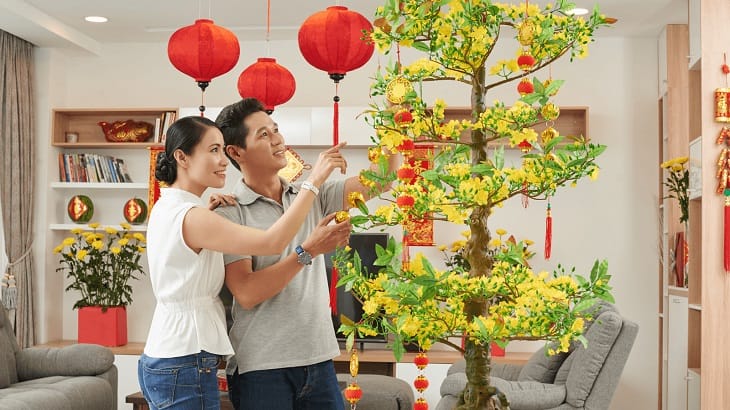
In the days before the Lunar New Year, Vietnamese families will gather to clean their house. It is believed that this will sweep away any bad luck and bad energy to welcome good fortune. Then, the house itself will be decked with colorful decorations such as red banners, followers, and sometimes reorganization, symbolizing a positive fresh start. The most important decoration is the kumquat trees, peach blossoms, or apricot blossoms, tying the spirit of the new year together.
Shopping for Lunar New Year
Shopping during the Lunar New Year is a significant experience, more than about preparing and acquiring the items themselves. Tet market is bustling and full of various products, from traditional dishes like Banh Chung (glutinous rice cake), fruits such as oranges or pomelos (symbol of prosperity), and vibrant flowers. As mentioned, the kumquat tree, cherry, or apricot blossoms are more than a decoration. They represent each household’s personality and symbol of good fortune, so people chatter, discuss, and evaluate with each other, to get the best plant for their homes. Together, it reinforces a sense of community, shared happiness, and wealth.
Offering to Ancestors
A must-include part of the Lunar New Year in Vietnam is the altar, a place to honor the ancestors. People prepare offerings of fruits, cakes, and fresh incense to pay respects and invite their ancestors to join in the celebration. This practice emphasizes the importance of family relationships during Vietnamese celebrations. Some prominent traditions include the tradition of presenting the “5 fruits” tray, visits to the ancestors’ graves, or the traditional Year-End ceremony.


