


The Government Has the Capacity to Rebuild Lives Affected by the Disaster to
a Better Level than Before – President
5COLOMBO : President Anura Kumara Dissanayake stated that the Government has the capacity to rebuild the
lives of people affected by the disaster to a level better than before, and that Rs. 500 billion has
been allocated for this purpose in this year‟s budget.
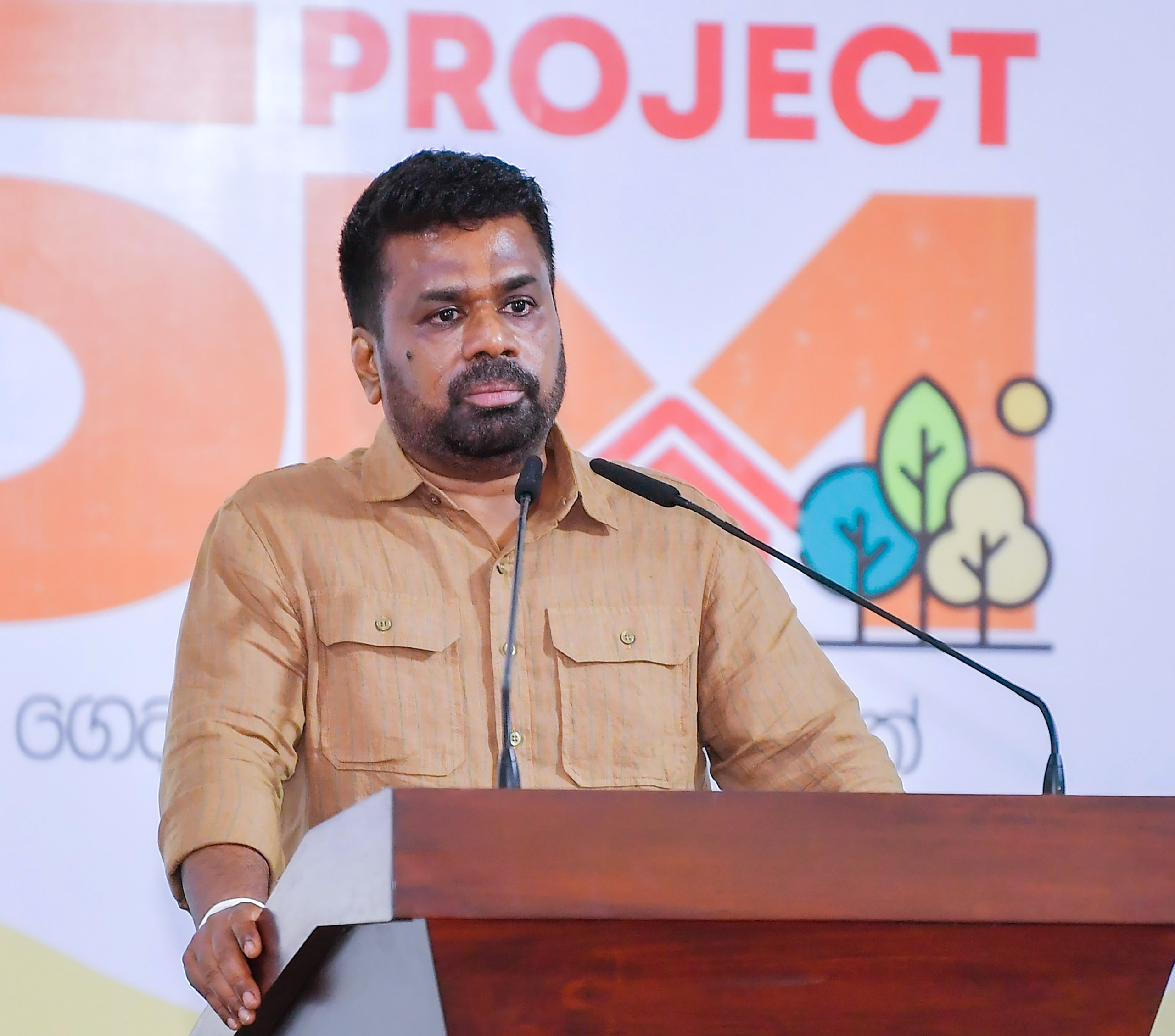
The President made these remarks while attending a programme held this afternoon (09) at the
Ridigama Dodamgaslanda Youth Corps Centre to grant compensation for fully damaged houses in
the Divisional Secretariat areas of Ridigama, Mawathagama, Mallawapitiya, Ibbagamuwa and
Ganewatta in the Kurunegala District.
Under the „Rebuilding Sri Lanka‟ initiative launched to restore livelihoods after the disaster, the
Project 5M housing scheme is being implemented as a key project. In its first phase, compensation
is being granted to families who lost their homes and have been certified as eligible to rebuild on
the same land.
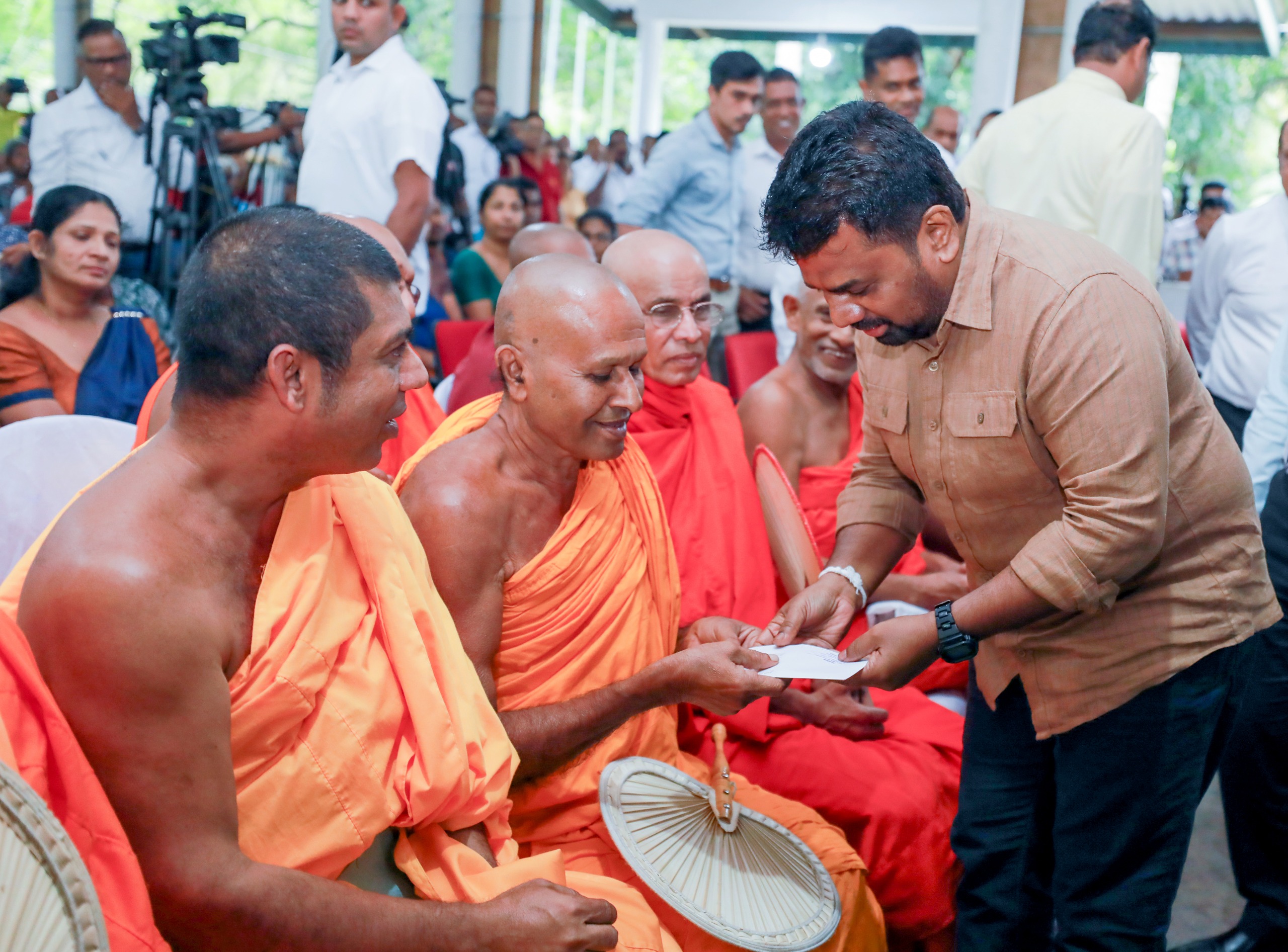
On this occasion, donations of land and funds made by Venerable Inguruwatte Dharmakeerthi Sri
Sobhitha Wimalajothyadana Thera, as well as by Mr D. P. Aberathna of Ridigama and his wife,
were also formally handed over to the President.
Addressing the gathering further, President Dissanayake said:
“We faced the greatest natural disaster in recent times. Many said that it would not be possible to
restore the country quickly. However, by now we have reopened all roads destroyed by the disaster
and restored essential infrastructure including communications, electricity and water. Our political
leadership and, in particular, public servants have worked tirelessly towards this. Although people
have often held negative views about the state mechanism, during this disaster our public officers
proved how committed they are to the country and its people, working day and night. The public
also came forward voluntarily. As a result of this collective dedication, we have made considerable
progress in recovery.
Nevertheless, this disaster will inevitably have an impact on the economy. We all remember the
severe economic crisis our country faced earlier, a crisis not caused by a natural disaster, nor by the
fault of our parents living in villages, but by corruption, inefficiency, mismanagement and wrong
decisions taken by the political authorities of the past. The entire nation suffered shortages of
electricity, fuel, gas and milk powder and the country was brought to the brink of collapse.
Subsequently, at the Presidential and General Elections, the people placed us in power with great
hope. They expected clean governance, punishment for the corrupt, the strengthening of the rule of
law and the protection of our youth from the scourge of drugs.
They also aspired to secure a decent income for everyone, which required a strong economy and we
have already achieved significant progress in that direction.
Although we have now been confronted with another disaster, we have the capacity to rebuild
people‟s lives to an even better level than before. For this purpose, we have allocated Rs. 500
billion this year, a commitment that is only possible through strengthening the economy.
Our rural communities deserve far better living conditions. There are families who cannot afford a
proper meal and generations who have never had a decent home. Our people do not deserve such a
life. We must build a country in which everyone can live with dignity throughout their 70 or 80
years of life. That is why we are resolutely committed to building a nation that safeguards both the
economy and the people.
To uplift livelihoods, everyone must first be provided with a viable source of income and our
children must receive a quality education. In our villages, education is the only path to the future.
Parents struggle immensely to educate their children, yet the current system does not yield good
results and has become a burden on parents and a hardship for children.
There are about 1,150 schools with fewer than 50 pupils. Such institutions cannot truly function as
schools as they cannot even hold literary or sports festivals. We must therefore establish a new
school system that brings children together in well-resourced institutions.
There is no value in merely preserving village schools for sentiment. Education today is a burden on
parents and a suffering for children. A system that robs children of their childhood must be
changed. We are undertaking education reforms to create a compassionate, spiritually grounded and
humane generation, not a system that produces mechanical individuals devoid of empathy or values.
Some may oppose these reforms, just as similar opposition arose when free education was
introduced. But this is a reform that will give the children of rural parents a brighter future. If there
are concerns, let us discuss them. We are not destroying education. We ourselves come from remote
villages. Education paved the way for us to be here today and therefore we will never take a
destructive path towards the education that enabled us to move forward. We are determined to
provide our children with a better education system.”
Deputy Minister of Agriculture and Livestock, Namal Karunaratne, Deputy Minister of Women and
Child Affairs, Dr. Namal Sudarshana, North Western Province Governor, Tissa Warnasuriya,
Dharmapriya Dissanayake, M.P., other public representatives, the Kurunegala District Secretary,
Divisional Secretaries, state officials and local residents were also present.


