


MAHENDRA JAYASEKERA
COLOMBO There are journeys that take us to unfamiliar lands, and others that reconnect us with a history we thought we
already knew. A recent visit to Pakistan from 2 to 8 November 2026 by a Sri Lankan delegation proved to be both. Travelling through Islamabad, Taxila, Peshawar, the Swat Valley, and Lahore, our group representing institutions including the Colombo Young Men’s Buddhist Association (YMBA) and the Bauddhaloka Foundation set out to explore how Sri Lanka and Pakistan can collaborate to protect, promote, and interpret the Buddhist heritage of ancient Gandhara.
What stood out most throughout the journey was not merely the scale of the archaeological treasures, but the genuine warmth of the Pakistani people and the deep commitment of officials, academics, and museum curators to safeguarding this shared Asian inheritance.
Diplomatic Goodwill and Institutional Partnerships
Our journey began in Islamabad with constructive discussions with the Hon. Aurangzeb Khan Khichi, Minister of National Heritage and Culture, Mr Sajjad Khan, Director General South Asia at the Ministry of Foreign Affairs, and Mr Sardar Yasir, Advisor and National Coordinator on Tourism to the Prime Minister. Rather than viewing Gandhara merely as a collection of ancient ruins, Pakistani leaders expressed a clear vision to develop it as a cultural and tourism bridge connecting Pakistan with the wider Buddhist world.
Several productive initiatives were explored during these meetings:
- Infrastructure and Relics: Constructing an additional wing at the Sri Lankan-built International Buddhist Centre in Islamabad’s Diplomatic Enclave, and establishing a dignified relic chamber for the Buddha’s relics at the Taxila Museum.
- Academic Collaboration: Strengthening scholarly ties through Memoranda of Understanding (MOUs) signed between Sri Lanka’s Nagananda International Institute of Buddhist Studies and both Hazara University and the University of Swat. Furthermore, the Colombo YMBA offered to share digital copies of rare ancient manuscripts from its D.B. Jayatilake Memorial Library to support the University of Swat’s newly established Department of Buddhist Studies.
- Cultural Exchange and Tourism: Organising international exhibitions of Gandharan artefacts in Sri Lanka and Australia, facilitating visits by Theravada monks to explain Buddhist doctrine at key archaeological sites, and forming a joint Sri Lanka–Pakistan organisation dedicated to promoting Gandharan heritage.
Crossroads of Civilisations: Taxila and Peshawar
In Taxila, a UNESCO World Heritage site that flourished as a centre of Buddhist learning between the fifth century BCE and the second century CE, the crossroads nature of Gandhara came vividly to life. Walking through the Hellenistic-patterned streets of Sirkap and standing before the towering Dharmarajika Stupa, it was evident that Buddhism here was a living culture of pilgrimage, monastic discipline, and multicultural exchange. At the Taxila Museum, the Director warmly welcomed our proposal for a dedicated relic chamber.
Travelling toward Peshawar, we visited Takht-i-Bahi, a remarkably preserved first-century hilltop monastic complex whose curators spoke of its history with infectious pride. In Peshawar itself, the Peshawar Museum provided an emotional high point. Alongside the famous, deeply moving sculpture of the Fasting Buddha, the museum’s stone reliefs transform the Buddha’s biography from Queen Maya’s dream and Siddhartha’s renunciation to his enlightenment, first sermon, and passing into a masterly visual narrative. Here, Hellenistic artistic forms merged with Indian Buddhist themes to create a distinct visual language through which Buddhism travelled across Asia.
The Living Landscape of the Swat Valley
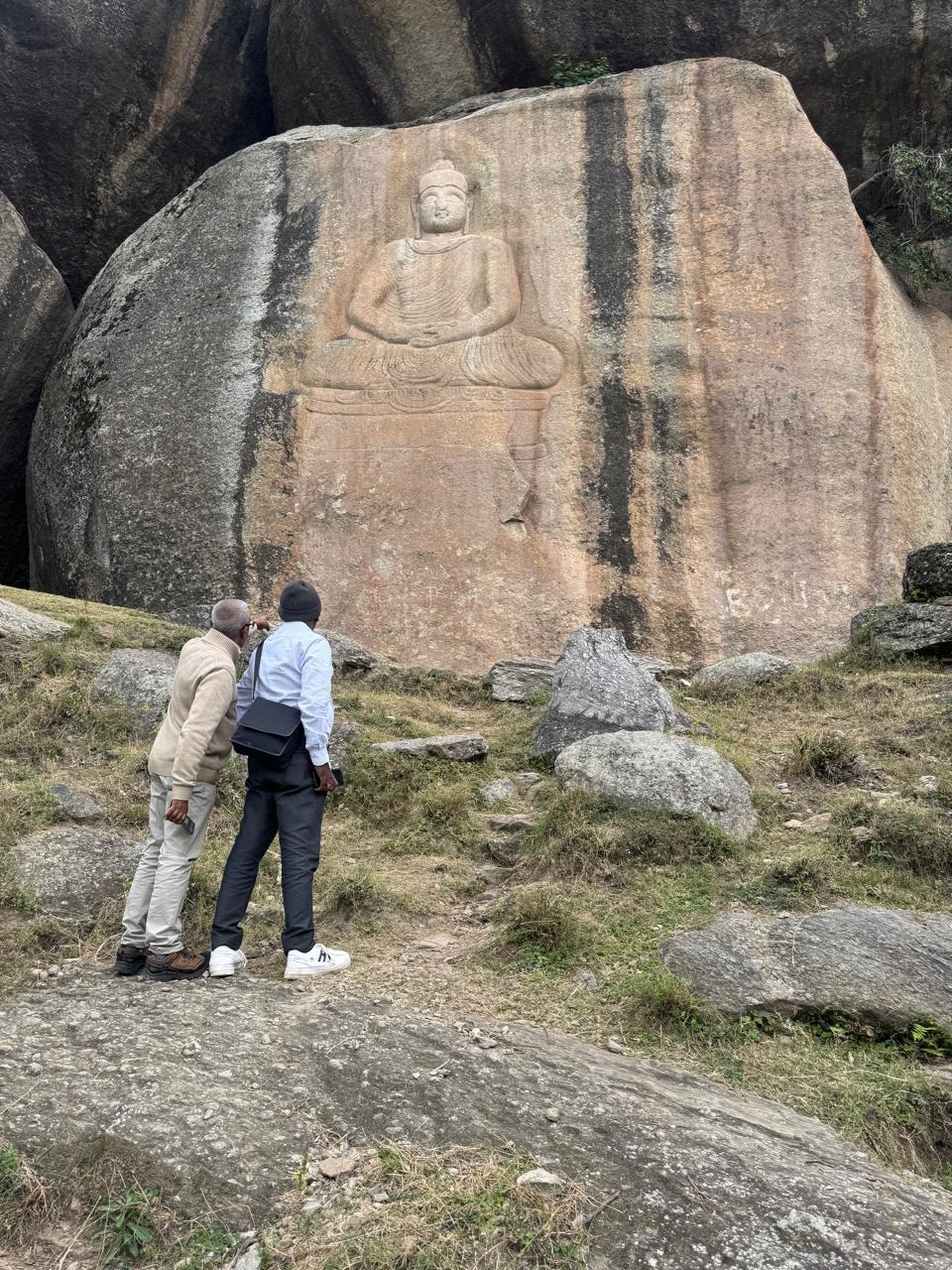
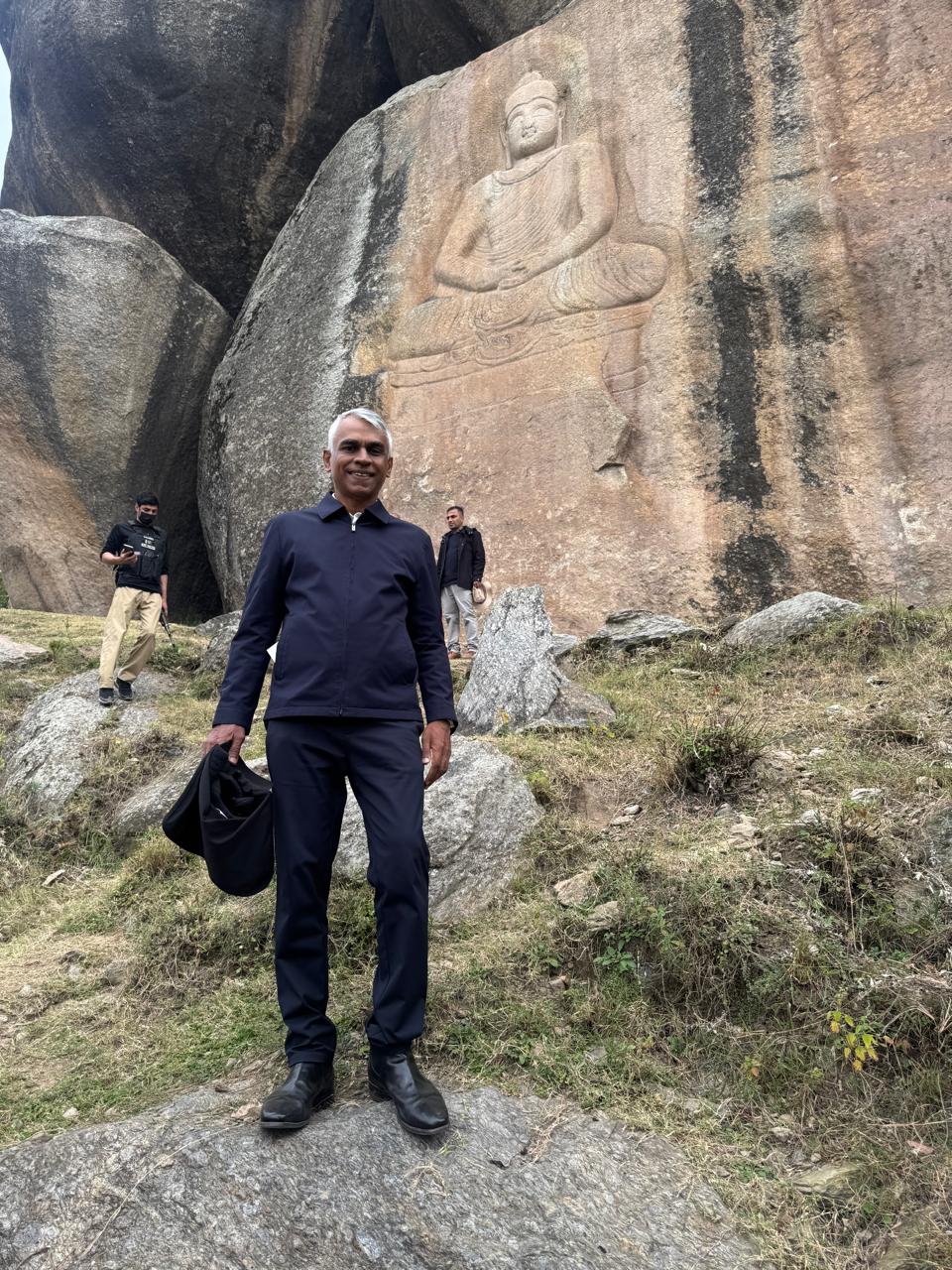
The mountain road into the Swat Valley revealed breathtaking alpine scenery beneath which an ancient Buddhist civilisation once thrived. At Jahanabad, a steep climb led us to a monumental rock-carved Buddha, made even more memorable by the spontaneous warmth of local schoolchildren who greeted us along the path.
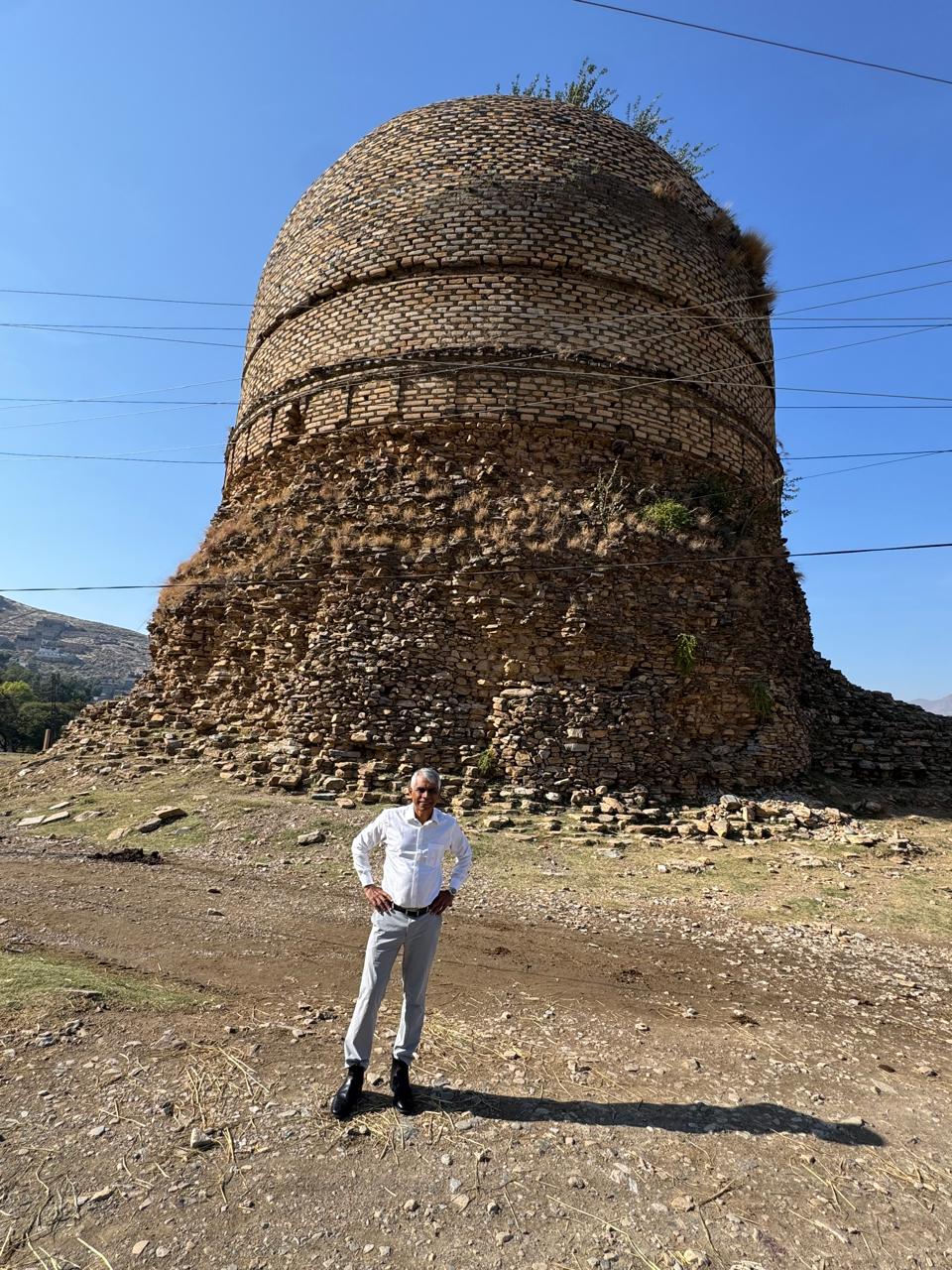
Across Swat, ancient monuments remain woven into everyday life from the Ashokan-era Butkara Stupa near Mingora to the multi-layered excavations at Barikot and the Shingardara Stupa, whose traditional links to King Uttarasena echo ancient Sri Lankan chronicles. At the University of Swat, nestled amid the mountains, the Vice Chancellor’s proud remark that the valley was “blessed by Buddhism” captured the spirit of our entire visit. Our journey concluded in Lahore, where viewing another celebrated Fasting Buddha at the Lahore Museum underscored the dedication of Pakistani professionals in preserving these masterpieces.
Transforming Ruins into Living Bridges
Pakistan is too often viewed solely through the prism of contemporary geopolitics. Beneath that modern narrative lies one of Asia’s greatest centres of Buddhist learning and artistic creativity a reminder that ancient Gandhara was a bridge through which ideas, monks, merchants, and the Buddha’s message of compassion and peace travelled across continents.
Preserving Gandharan heritage is not Pakistan’s responsibility alone; it is a shared Asian duty. With Sri Lanka’s living Theravada tradition and Pakistan’s stewardship of these extraordinary sites, both nations have a historic opportunity to turn ancient stone into living bridges of friendship and understanding.
Trust Your Lord but Tie Your Camel !!!


