


COLOMBO : The Tamil Progressive Alliance (TPA) has renewed its call for structural reform, secure land rights, and institutional inclusion for the Malaiyaha Tamil community, warning that post-Ditwaha recovery must dismantle long-standing marginalisation rather than reproduce it.
The concerns were raised during a high-level engagement with Swiss Ambassador Siri Walt, where the Alliance highlighted continuing structural discrimination affecting plantation communities and the urgent need for a durable institutional response.
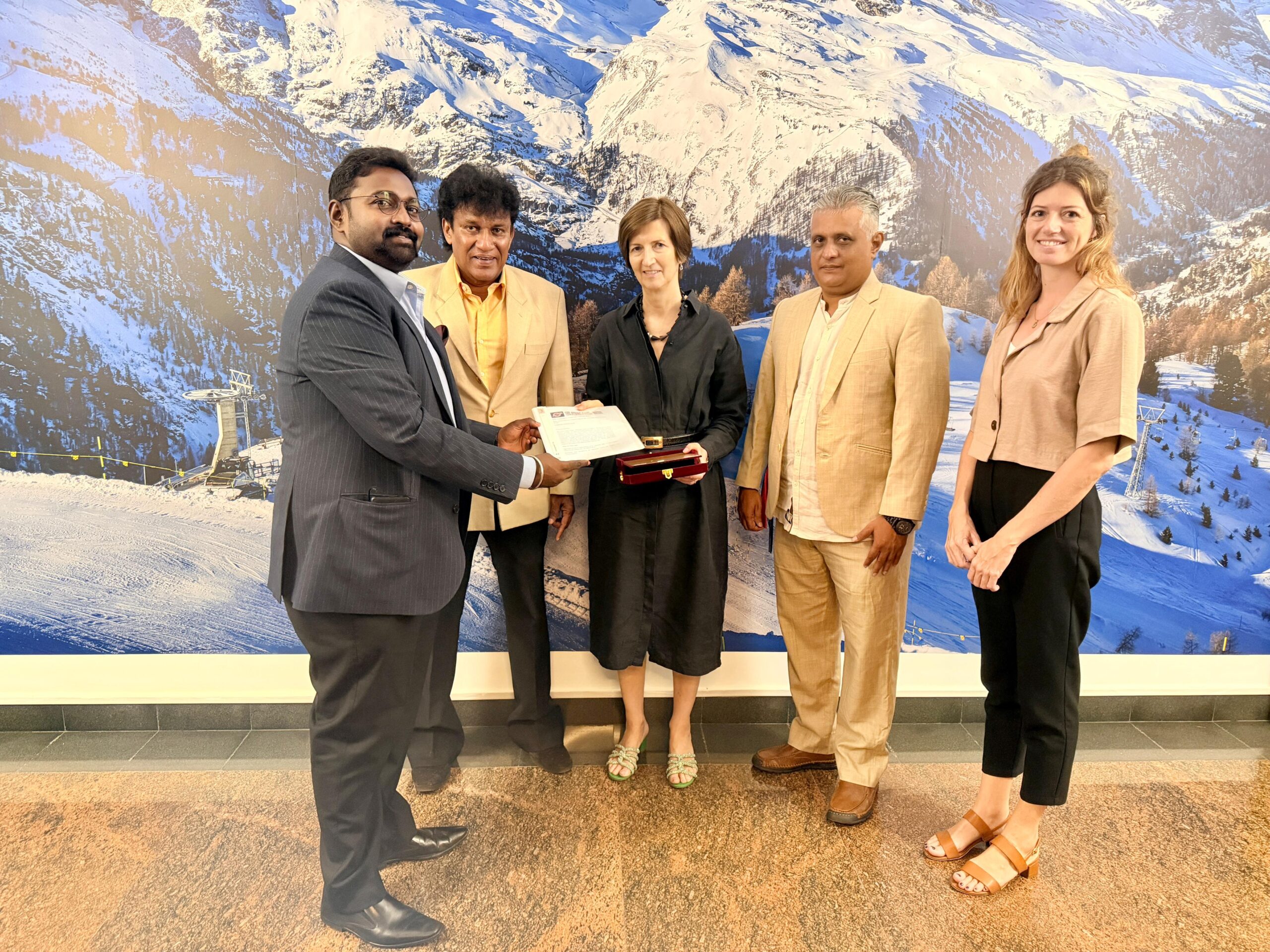
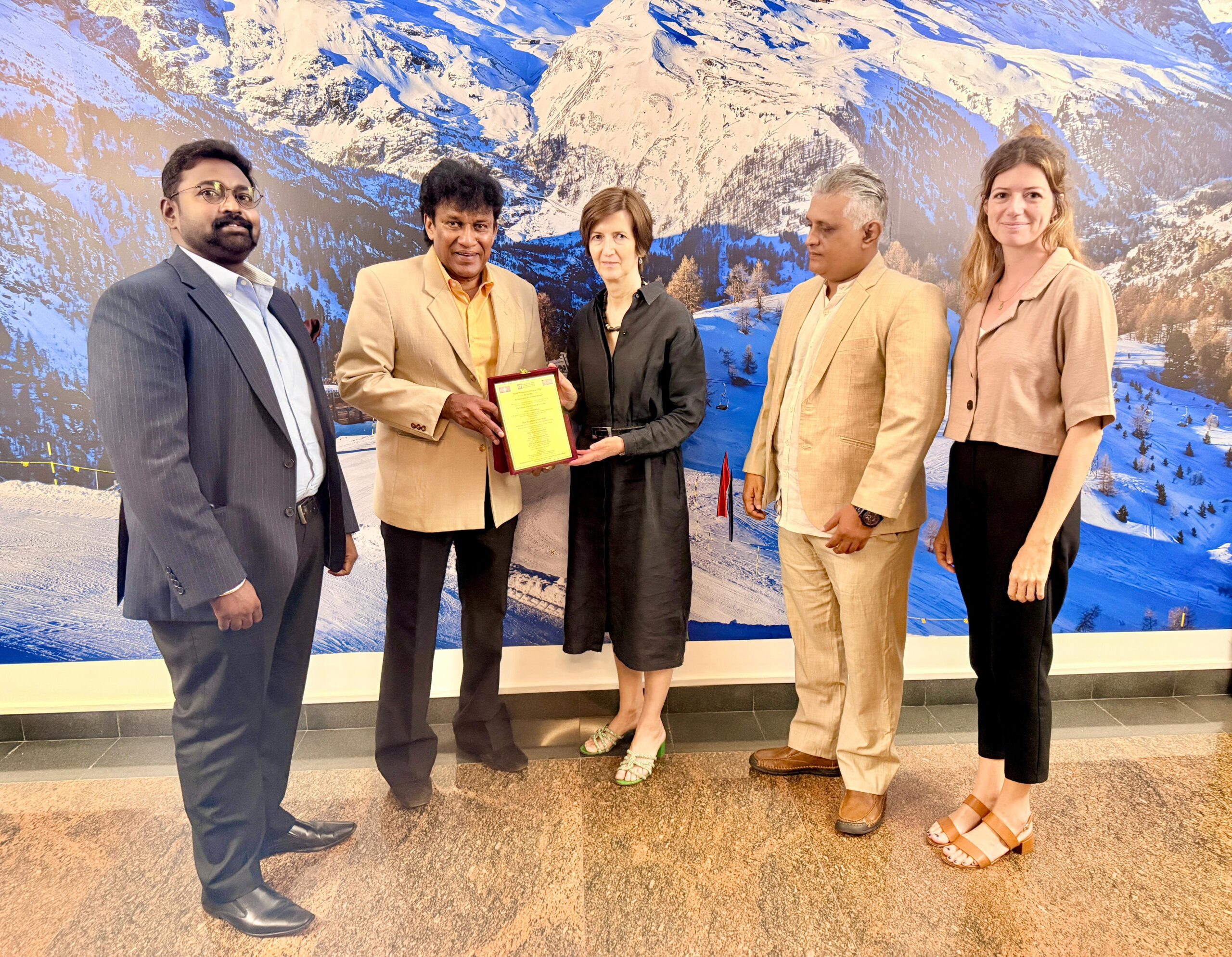
A TPA delegation led by Leader and Member of Parliament Mano Ganesan, together with DPF Vice President for International Affairs Barath Arullsamy and Colombo District Coordinator Imithazan Nawas, met Ambassador Walt, First Secretary (Political Affairs) Justine Boillat, and Political Officer Kannishka.
Ganesan conveyed the aspirations of the most marginalised Malaiyaha Tamil community and expressed concern over the absence of meaningful political response to their long-standing structural challenges. He described the post-Ditwaha period as an “opportunity in disguise” to integrate the community into the national mainstream through dignity, equality, and recognition of the right to land and housing.
The delegation sought constructive Swiss engagement, including guidance on the long-standing proposal of the TPA within the constitutional reform process, the Non-Territorial Community Council (NTCC), as a mechanism for inclusive political participation, drawing from Switzerland’s experience in supporting geographically dispersed communities. He stressed that the time has come for Swiss goodwill to meaningfully reach one of Sri Lanka’s most structurally disadvantaged populations.
He also noted disappointment that a prior request for direct engagement with President Anura Kumara Dissanayake had not received a response, underscoring the urgency of international attention, and reiterated that Swiss good offices could play a constructive role in advancing the concerns of the most marginalised Malaiyaha Tamil community.
It was noted during the discussion that although the disaster was national in scale, plantation communities suffered disproportionately in fatalities and displacement, reflecting deeper structural inequality. Vice President Barath Arullsamy emphasised that Sri Lanka possesses sufficient legal authority under emergency and land frameworks to pursue land-centred, risk-informed resettlement, but political prioritisation remains the key obstacle. He observed that the broader needs of the Malaiyaha Tamil community have long been reduced to wage and labour issues, whereas the present challenge is fundamentally civil and political, centred on land, dignity, housing, and equal inclusion.
Ganesan emphasised that the Malaiyaha Tamils must no longer be viewed solely as a labour community but recognised as an ethnic nationality of Sri Lanka with political, economic, social, and cultural rights. He outlined the proposed Non-Territorial Community Council (NTCC) as a lawful institutional mechanism to address cross-provincial disparities, strengthen representation, support land security, and sustain inclusive development, noting that the NTCC is envisioned within future constitutional reform to ensure long-term institutional inclusion for a geographically dispersed minority.
He further stressed that meaningful structural reform, particularly secure land rights and inclusive governance, must be linked to international engagement frameworks such as GSP+, so that commitments to equality and human rights translate into real outcomes. Referring to recent engagement with the European Union delegation, he noted that the Alliance has urged European partners, including France, to recognise land rights and structural inclusion within governance-linked dialogue, and expressed hope that Switzerland, as an important European partner, would support equitable recovery and long-term justice for the Malaiyaha Tamil community.
Concluding, the Tamil Progressive Alliance stated that the post-Ditwaha period represents a decisive turning point. Recovery without land, equality, and institutional inclusion cannot deliver justice. The Alliance affirmed that the struggle of the Malaiyaha Tamil community is no longer about relief, but about recognition, rights, and rightful place within the nation, and reiterated its commitment to pursue structural reform, constitutional inclusion, and equitable development until dignity, equality, and justice become lived realities.


