


COLOMBO : Tamil Progressive Alliance (TPA) Leader and Member of Parliament Mano Ganesan has appealed to the Government of India (GoI) to simplify the granting of Overseas Citizenship of India (OCI) status to recent Indian-origin Malaiyaha Tamils living in Sri Lanka who wish to obtain it.
He also called for the restructuring of the Ceylon Estate Workers Education Trust (CEWET), operating under the Indian High Commission in Sri Lanka, by expanding its mandate and modernizing it in line with the present social and developmental needs of the Indian-Origin Tamil (IOT) Malaiyaha community.
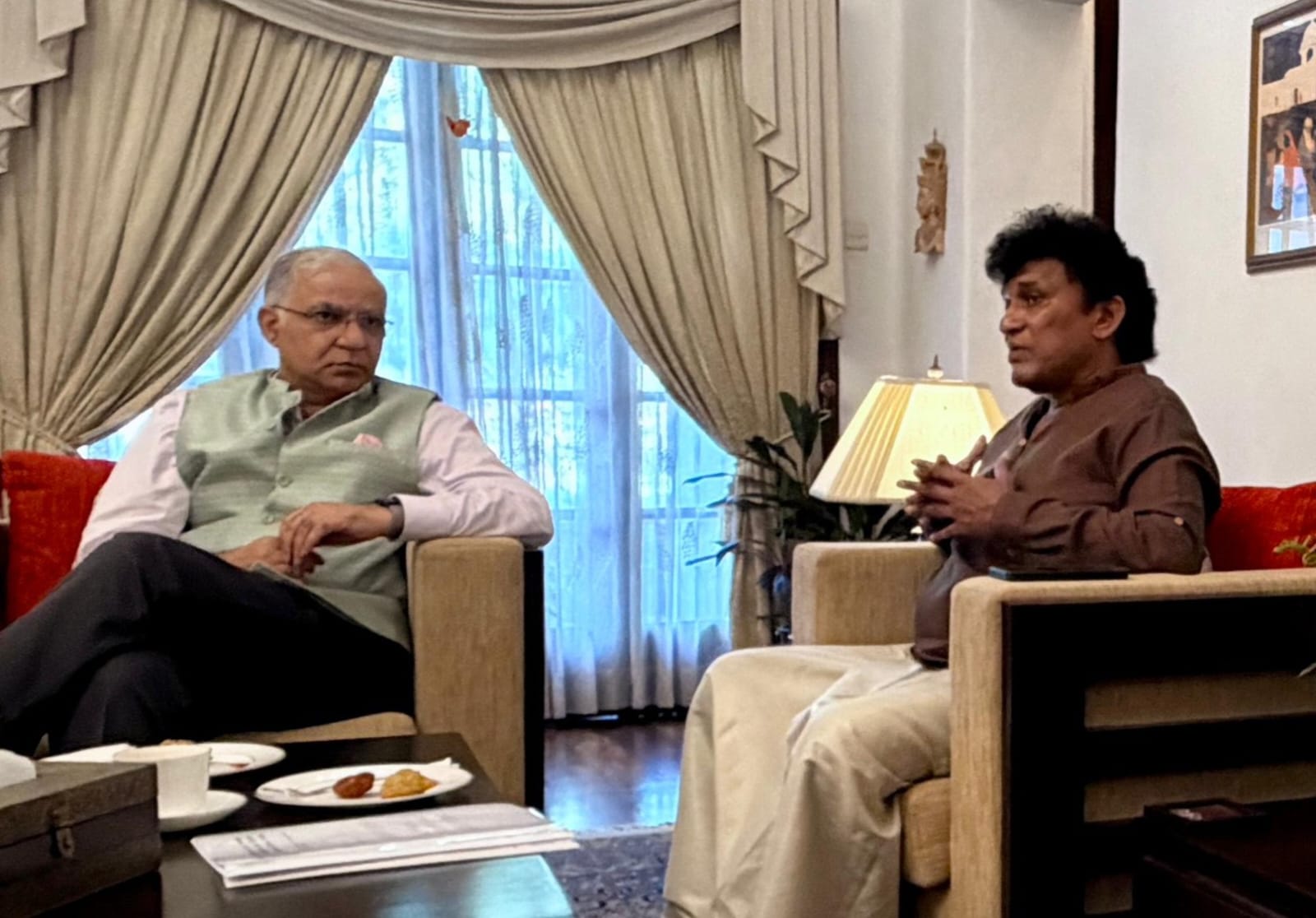
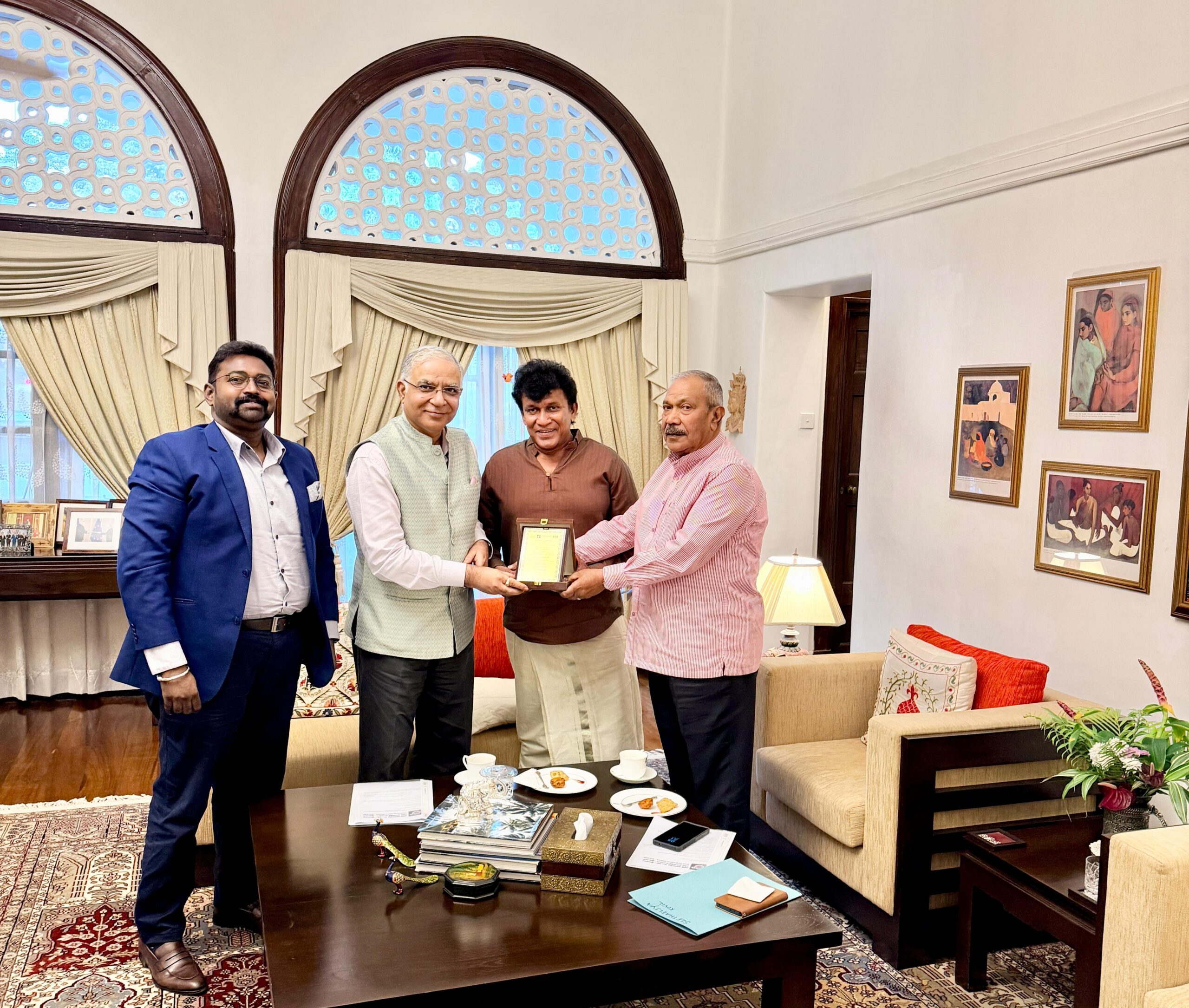
Mano Ganesan led a TPA delegation comprising Deputy Leader V. Radhakrishnan MP and TPA Politburo Member Barath Arulsamy for discussions with Indian High Commissioner Santosh Jha at India House in Colombo today. Indian High Commission Political Counsellor Ram Babu also participated in the meeting.
Taking to X-platform, Ganesan stated that the TPA has already submitted detailed proposals on these matters to Indian Prime Minister Modi, EAM Dr. S. Jaishankar, and both the current and former Indian High Commissioners to Sri Lanka.
“We now anticipate favourable responses from the Government of India,” Ganesan said.
Speaking further, Mano Ganesan noted that the population of Tamils of Indian origin living in Sri Lanka is approximately 1.5 million, with nearly one million residing in plantation regions. However, only about 100,000 remain engaged in plantation labour today.
“This demonstrates that the community has progressed through self-initiative into diverse professional, business, and social sectors, evolving into a recognized national minority community,” he said.
He emphasized that while historically many Sri Lankans trace origins to India, the more recent Indian-origin population is identified as the Malaiyaha Tamils.
“Their Indian origin identity neither can nor needs to be concealed. India carries a significant moral responsibility toward Indian-origin Hill Country Tamils, which forms the basis of our engagement,” he added.
Ganesan urged the Government of India to consider granting OCI status to Indian-origin Tamils in Sri Lanka on a voluntary basis through simplified eligibility criteria.
He noted that PM Modi responded positively to the proposal during discussions held in Colombo.
Indian-origin communities in countries such as South Africa, Mauritius, Fiji, Singapore, and Malaysia have achieved strong socio-economic advancement, whereas Indian-origin Tamils in Sri Lanka continue to face structural disadvantages arising from historical political circumstances.
“In this context, optional OCI status would function as a special protective and empowerment mechanism,” Ganesan stated.
He further observed that the 1964 Sirima–Shastri Repatriation Pact primarily served India’s national interests but weakened the socio-economic position of the community in Sri Lanka.
“Granting OCI status today would acknowledge our people’s history while expanding opportunities in education, employment, connectivity, and livelihoods, thereby strengthening the community,” he said.
Ganesan proposed that the Ceylon Estate Workers Education Trust (CEWET), functioning under the Indian High Commission since 1946, be restructured and expanded under a new framework titled: Indian Origin Tamils – Community Development Trust (IOT-CDT).
He noted that the Malaiyaha Tamil community has moved beyond plantation-based livelihoods and requires broader development-oriented institutional support. All Government of India-funded scholarships and educational development programs for the community should therefore be implemented through this restructured institution.
The TPA proposed the following initiatives:
Increase both the value and number of scholarships; Establish a Tamil-medium teacher training college to produce teachers in Mathematics, Science, Technology, and English; Create a nursing training institute dedicated to Malaiyaha Tamil women; Establish two international English-medium schools, in Colombo and Nuwara Eliya, within Sri Lankan law and modeled on India’s Navodaya school system; Develop a High-Lands University Campus in Nuwara Eliya District, in partnership with a recognized Indian university, with the long-term objective of evolving into a full national university within SriLankan law.


