


ANKARA : Türkiye has proudly emerged as Sri Lanka’s leading export destination for Ceylon tea in the first eight months of 2026, importing approximately 30.42 million kilograms. This represents a remarkable 143% increase compared to the same period in 2025, underscoring Türkiye’s growing importance as a key market for Sri Lankan tea and highlighting the strength of our economic partnership.
Although Türkiye itself is a major tea producer, with cultivation concentrated along the humid eastern Black Sea coast, particularly in the provinces of Rize, Trabzon, and Artvin, domestic production is supplemented by substantial imports. Sri Lanka has become a crucial supplier, helping to meet strong demand in a country that ranks as the world’s leading consumer of tea per capita. This exceptional level of consumption reflects tea’s deeply rooted place in Turkish culture and everyday life.
Known as çay in Turkish, tea is far more than a daily beverage. Its preparation and presentation are passed down through generations. Turkish tea is prepared using a two-tiered teapot, çaydanlık. Water is boiled in the larger lower kettle, while tea leaves are steeped in the smaller upper pot to produce a concentrated infusion.
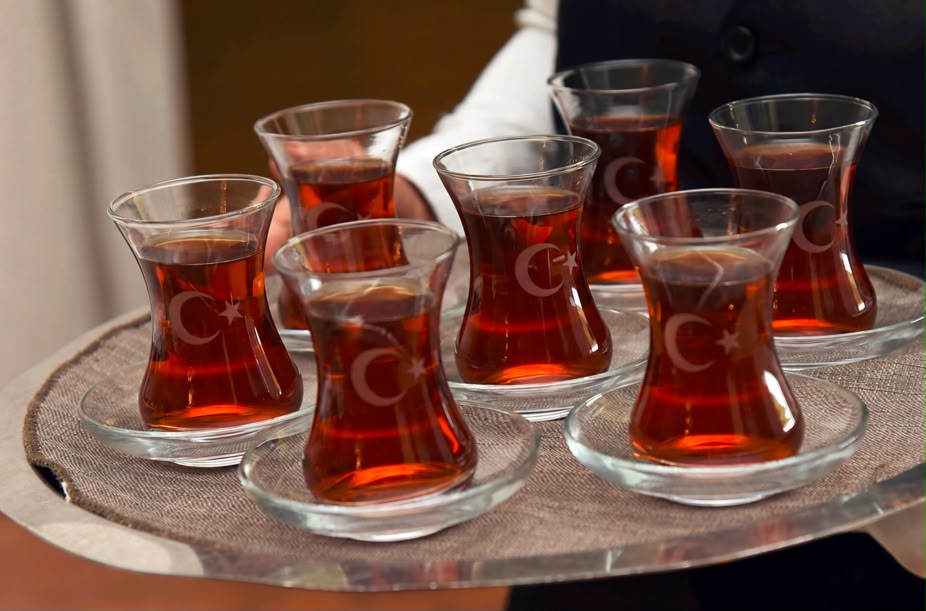
When served, the strong tea is poured into a glass first, then hot water is added to achieve the desired strength and its characteristic reddish-brown colour. Traditionally enjoyed hot, without milk, and often accompanied by sugar cubes, tea is served in small, transparent, tulip-shaped glasses known as ince belli (slim-waisted), which allow drinkers to appreciate its rich colour while enjoying its warmth.
Beyond its preparation, tea plays a central role in Turkish social life. It is a cherished symbol of hospitality, friendship, and togetherness. From breakfast until late in the evening, tea accompanies conversations, family gatherings, business meetings, and social occasions. Offering a glass of tea is widely regarded as a gesture of welcome and kindness. Whether served at home, in workplaces, or in traditional tea houses and gardens, tea brings people together, encourages dialogue, and strengthens social bonds.
The flourishing tea trade between Türkiye and Sri Lanka is, therefore, more than an economic success, it is a cultural bridge. It reflects shared traditions, mutual respect, and the enduring friendship between our peoples.


