


:Second annual “Sri Lanka Media’s Voicsurvey finds growing pride in the profession, strong appetite for AI and digital skills, and clear priorities on pay, safety and standards
COLOMBO
Journalists in Sri Lanka feel more respected today than they did a year ago. That is according to State of Journalism in Sri Lanka 2026, released recently by Mark and Comm. 77pct of respondents said journalism is a respected profession in the country, up from 55pct in last year’s survey. Fewer journalists are pessimistic about the future, too. The share who believe traditional journalism is dying fell from 43pct to 25pct.
The report is the second edition of the agency’s annual survey of working journalists. It draws on responses from 44 reporters, editors, producers and freelancers across print, broadcast and digital media, working in Sinhala, Tamil and English. The survey ran in all three languages in September 2026.
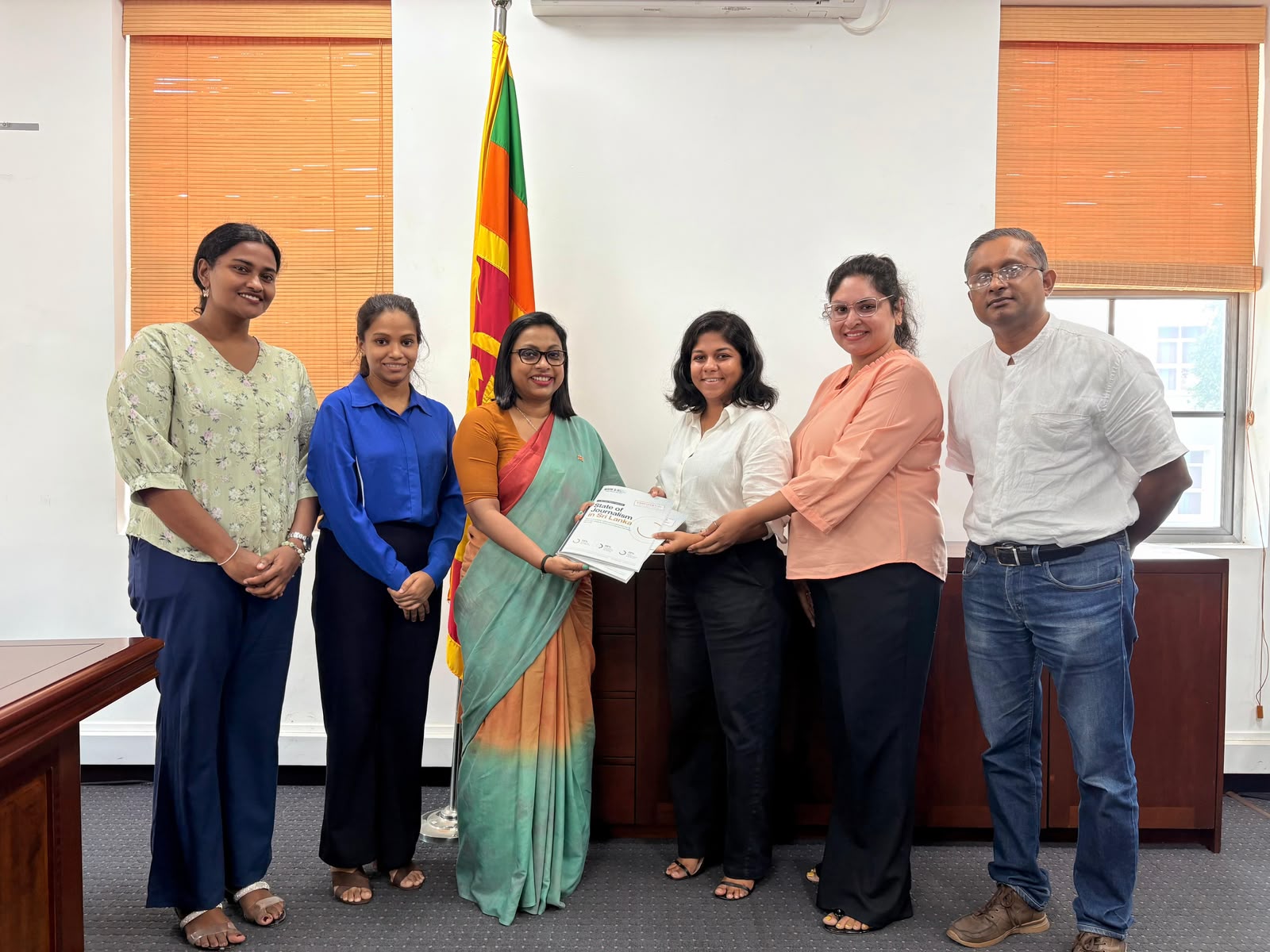
On 18 November 2026, a team from Mark and Comm met Dr. Kaushalya Ariyaratne, Deputy Minister of Mass Media, at the Ministry of Mass Media to present the report and discuss its findings. “Conducting research like this is very important for us as policymakers, as it serves as a form of guidance,” said Dr. Ariyaratne. “Hearing directly from journalists gives us a clearer picture of the realities they face and the support they need, and helps us make better informed decisions for the media sector.”
Most journalists are positive about their own work. 56pct feel secure in their jobs, and 48pct are satisfied in their roles, compared with 18pct who are not. Two in three would still recommend journalism as a career to young people, although most would advise them to go in with their eyes open.
Four in five journalists already use AI in their work. One in three uses it regularly for research, drafting or editing, and 45pct use it for specific tasks. 43pct feel well prepared to work with AI tools, and another 43pct say they would like more training. Only 7pct say they feel unprepared. Nearly half named digital and multimedia journalism as the training that would help their careers most, and 36pct said they would like formal training but have not yet had the chance.
70pct want credibility and accuracy standards strengthened through an independent self-regulatory body, and 58pct say self-regulation works but could be improved. Weak fact-checking and misinformation was the most-cited ethical concern, named by 61pct, followed by sensationalism and biased reporting at 57pct. Journalists believe the profession is respected, but only a quarter think the public sees them as fully trusted and valued, which points to verification as the clearest route to earning that trust.
The financial health of media organisations was the most widely shared challenge, named by 73pct of respondents. Three in four have experienced delayed payment for their work, and the share naming fair and timely pay as the single most important change doubled from 24pct last year to 48pct this year. Nearly half said they have experienced threats, intimidation or legal pressure linked to their reporting at some point, and 73pct believe women journalists face additional safety or workplace risks. 63pct said their workplace offers some form of mental health support, while 21pct said it is effective, showing room to build on what is already in place.
“Two years of listening to journalists tells us something encouraging. People in this profession believe in it, and they are ready for what comes next,” said Thanzyl Thajudeen, Managing Director of Mark and Comm. “They have also been clear about what would help most: fair and timely pay, safety at work and the skills to use new tools well. A strong, credible press benefits every part of society. This report gives media organisations, policy makers, educators and journalists a shared picture to work from, and we look forward to building on it together.”
The report identifies six areas where media organisations, policy makers and the profession can work together. These are fair and timely payment practices for staff and freelance journalists, and strong safeguards for journalists’ safety, including for women in the profession. They also include professional standards shaped with the participation of working journalists, practical training in digital, multimedia and AI skills, greater investment in fact-checking and verification, and effective wellbeing and mental health support in the workplace.


