


RUZAIK FAROOK
COLOMBO
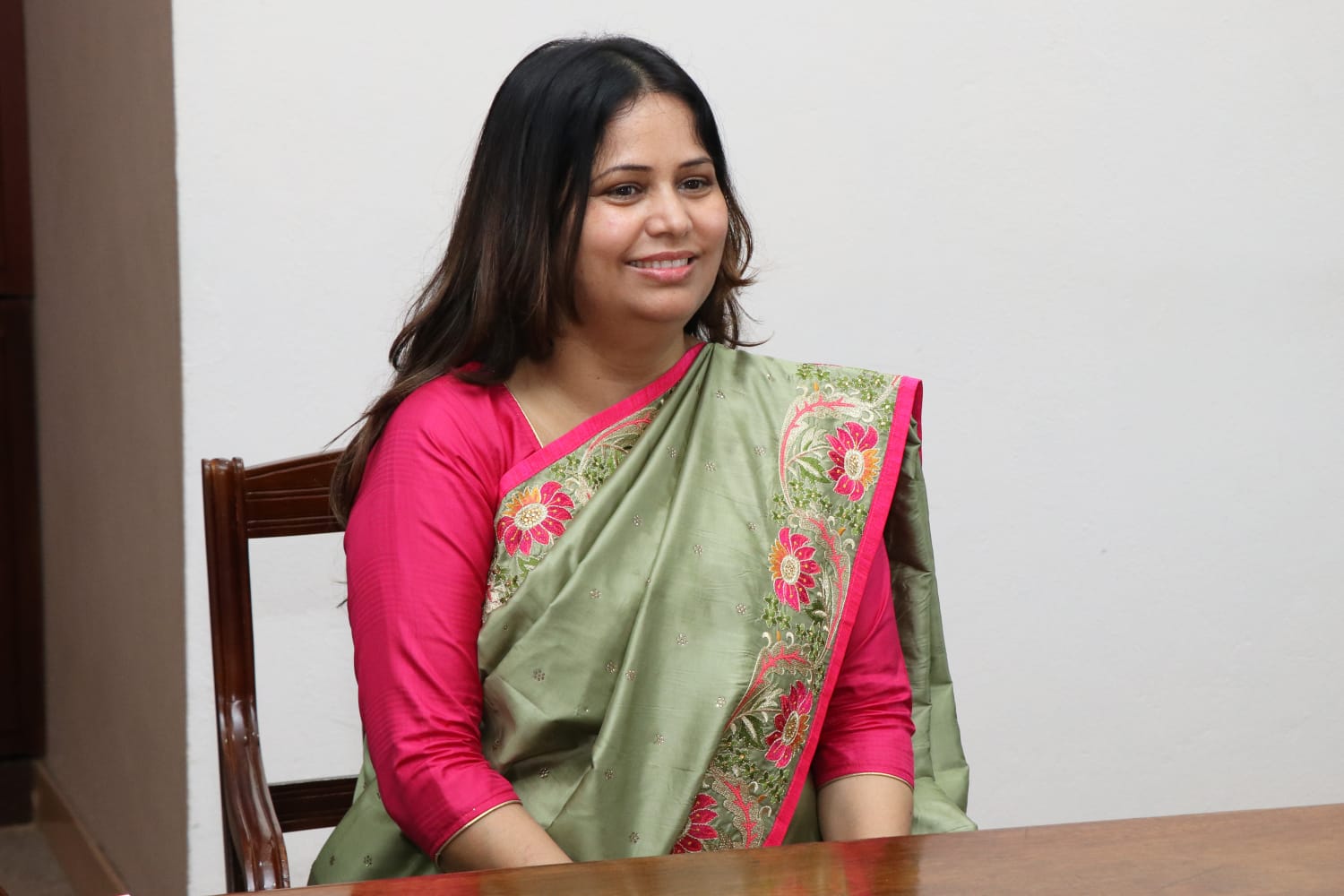
Dr. Sarmila Parajuli Dhakal, President of the International Relations and Global Diplomacy Dialogue (IRGDD) and former Ambassador of Nepal to the Sultanate of Oman and the Kingdom of Spain, concluded a series of high-level engagements in Colombo aimed at strengthening Nepal–Sri Lanka relations through diplomacy, policy dialogue, economic cooperation, and institutional partnerships.
The visit reflects IRGDD’s commitment to promoting “Development through Diplomacy” by fostering collaboration among governments, academia, think tanks, diplomatic institutions, and the private sector to advance sustainable development and regional cooperation.
Strengthening Economic Diplomacy
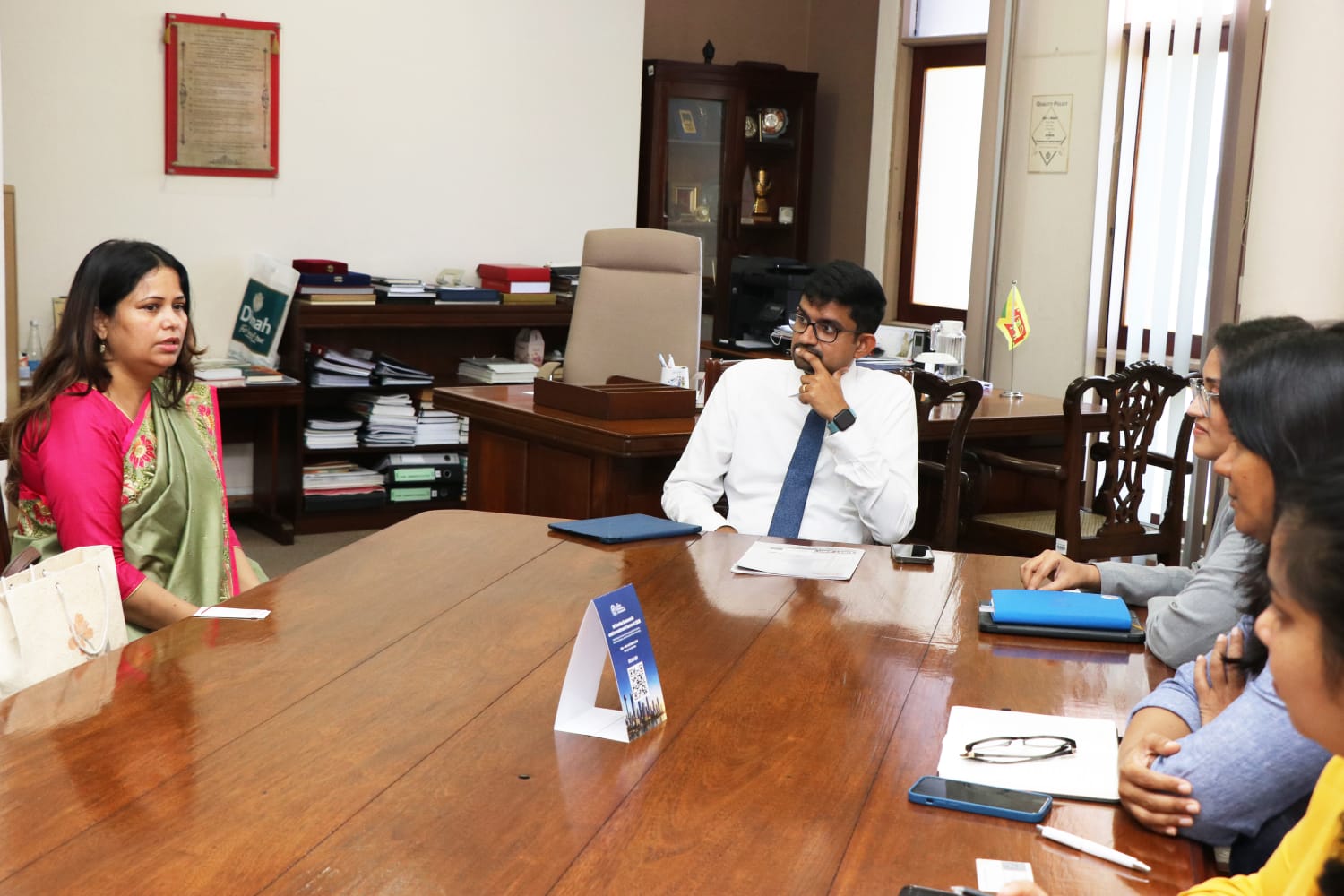
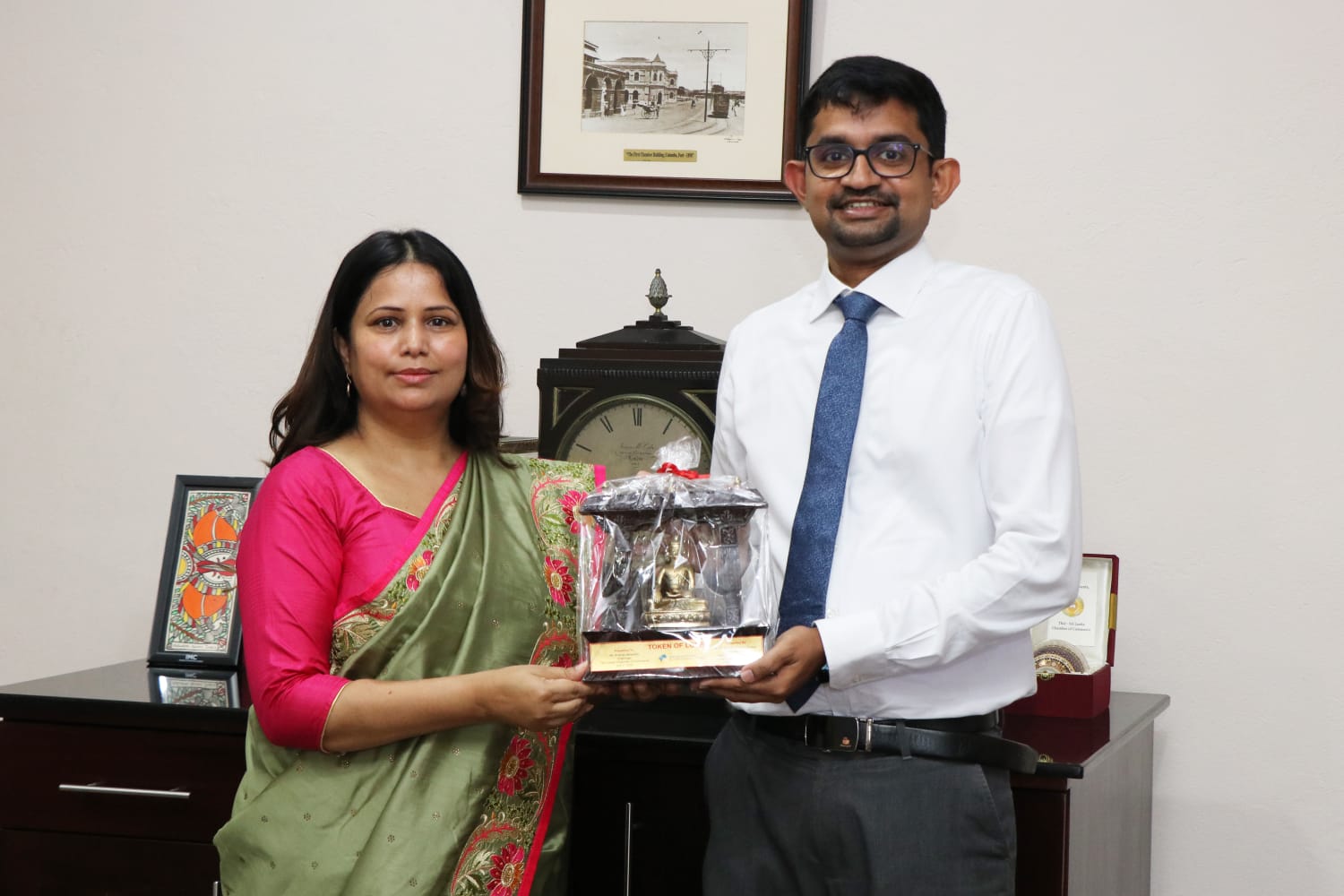
Dr. Parajuli held a meeting with Mr. Shiran Fernando, Secretary General and Chief Executive Officer of The Ceylon Chamber of Commerce, one of Sri Lanka’s oldest and most respected business institutions.
During the meeting, Dr. Parajuli presented IRGDD as an independent platform dedicated to advancing Track 1.5 and Track II diplomacy through policy dialogue, research, institutional cooperation, and international partnerships. She introduced the four strategic pillars of the organization—Ambassadors’ Club Nepal, International Relations and Global Diplomacy Dialogue (IRGDD), The Diplomat Nepal, and the Diplomatic Academy Nepal (DAN)—which collectively promote diplomacy as a catalyst for sustainable development, economic cooperation, and international understanding.
Mr. Fernando highlighted the Chamber’s longstanding contribution to Sri Lanka’s economic development through trade facilitation, investment promotion, policy advocacy, business services, and international commercial engagement.
The discussions explored opportunities for collaboration in economic diplomacy, trade and investment promotion, policy research, business networking, leadership dialogue, market intelligence, and institutional exchanges. Both sides also discussed strengthening cooperation between chambers of commerce, policy institutions, universities, and private-sector organizations to promote regional economic integration and sustainable growth.
Courtesy Visit to the Embassy of Nepal in Colombo
During her visit, Dr. Parajuli paid a courtesy call on the Embassy of Nepal in Colombo, where she was warmly received by Mr. Vijay Kumar Raut, Chargé d’Affaires a.i.
Mr. Raut briefed Dr. Parajuli on the Embassy’s diplomatic priorities, consular services, public diplomacy initiatives, and efforts to further strengthen Nepal–Sri Lanka bilateral relations.
Dr. Parajuli commended the Embassy team for its active engagement in promoting Nepal’s interests and enhancing bilateral cooperation across political, economic, cultural, educational, and people-to-people dimensions.
She also interacted with members of the Nepali community and representatives of the Sri Lankan business and social sectors at the Embassy premises, exchanging views on expanding bilateral trade, investment, tourism, education, entrepreneurship, and cultural cooperation.
Dialogue with the Regional Centre for Strategic Studies
As part of her policy engagement programme, Dr. Parajuli met with Ambassador (Retd.) Ravinatha Aryasinha, Executive Director of the Regional Centre for Strategic Studies (RCSS) and former Foreign Secretary of Sri Lanka.
The meeting focused on strengthening cooperation between IRGDD and RCSS through academic collaboration, strategic research, policy dialogue, researcher exchanges, conferences, publications, and institutional partnerships.
Both sides exchanged perspectives on the evolving strategic landscape of South Asia and underscored the importance of regional peace, stability, economic prosperity, and cooperative security in an increasingly interconnected world.
Recognizing the growing role of research institutions as instruments of soft power, they emphasized that think tanks can contribute significantly to evidence-based policymaking, informed public discourse, conflict prevention, and regional confidence-building by generating independent research and facilitating constructive dialogue.
The discussions also explored opportunities for collaborative studies on regional connectivity, economic diplomacy, sustainable development, multilateral cooperation, and emerging geopolitical issues, while encouraging stronger engagement among scholars, diplomats, universities, and policy institutions throughout the region.
Advancing Development through Diplomacy
Reflecting on the visit, Dr. Parajuli noted that diplomacy in the twenty-first century extends well beyond traditional state-to-state engagement. It increasingly depends upon collaboration among governments, research institutions, academic communities, businesses, and civil society to address shared regional and global challenges.
The visit reaffirmed IRGDD’s vision of strengthening international partnerships through dialogue, research, knowledge exchange, and institutional cooperation. It also demonstrated the growing importance of diplomacy, academic engagement, and soft power in promoting mutual understanding, regional cooperation, and sustainable economic development across South Asia.


