


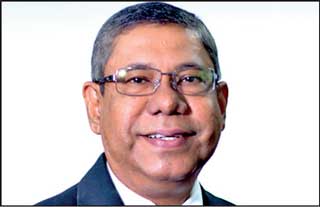
COLOMBO : Responding to news reports published in the local and web portals, The Hajj and Umrah Committee Chairman, Reyaz Mihular said in a statement to the Colombo Times on Monday, May, 11 that Besa (free movement) visa for Hajj is misinterpreted by certain parties.
Explaining the features, the chairman said ” Besa (free movement) visa is issued by the Saudi Government to the country of Sri Lanka and not to any private entity. As such the priority for allocation must be officials on duty – namely, the officers of the Department of Muslim Religious and Cultural Affairs (selected through a transparent process) and the official Sri Lankan Hajj delegation, including the Deputy Minister as its leader and Hajj Committee Members forming part of the delegation. After these official requirements are met, the remaining Besa Visas are distributed to the 6 Group Leaders of the operators (Munazzims) of which 18 were allocated for 2026 – the largest single category. In addition, a small number of visas were assigned under specific Ministry approved policies (such as self-funded spouse conflict avoidance measure) and one underprivileged nominee.
It was claimed that the Hajj Committee assured that the BESA Visas will be issued solely to the agents. This claim is false. No such promise was made by this Committee either for 2025 or 2026 Hajj season. What we stated – and what remains our policy – is that Munazzims will be allocated Besa visas, not that they would receive exclusively all visas. This is a critical distinction.
Although in the past, Sri Lanka was allocated approx. 150 Besa visas on complimentary or minimal cost basis, since 2024, it has been limited to 35 based on 1 BESA visa for every 100 pilgrims. Since Sri Lanka’s quota is 3500 pilgrims, only 35 BESA visas are allocated, and since 2025, these visas have not been issued for free. The total cost of a Besa visa now amounts to approx. Rs. 800,000/- which covers the cost of facilities provided in Mina & Arafat only. Besa visa holders must also pay for their airfare (approx. Rs. 400,000/-), hotel accommodation in Makkah & Madinah, and internal transport from Makkah to Madinah, among other expenses.
Why spouses were included – a matter of policy, not privilege
When the Chairman’s wife and another member’s wife expressed an intention to perform Hajj, the Committee faced a dilemma. If they enrolled with any Hajj operator, allegations would inevitably arise that the operator provided special discounts in return for favours. This is not speculation; last year, when the Director of the Department of Muslim Religious and Cultural Affairs enrolled his wife with one of the Hajj operators, insinuations of favouritism followed – even though he paid the full fare.
To avoid such conflicts of interest, the Committee adopted a clear policy; if a Committee Member’s spouse intends to perform the Hajj, they shall receive a Besa Visa rather than travel under any operator. The spouse must pay the full Besa Visa cost, airfare, accommodation and internal travel and no part of the Hajj Fund will be used for this purpose. The Committee obtained formal Ministry approval for this decision ensuring that it was not arbitrary.
Unlike previous Hajj Committees, members of the current Hajj committee have waived the right to receive any sitting or travelling allowances and have performed their roles in an entirely voluntary capacity. The overseas travel allowances of the Hajj Committee Members and Department Staff were materially reduced and several Hajj Committee Members returned significant portions of the overseas travel allowances that were provided to them last year.
The Hajj Committee’s principal objective, when it took on this task, was to streamline Hajj operations and eliminate the abuse and violation of pilgrims’ rights and privileges by unscrupulous operators, while recognizing that many operators do provide an honest and sincere service to pilgrims under their care. Additionally, the Hajj Committee’s decision to abolish the quota system that prevailed previously and giving the pilgrims the freedom to decide on the operator of their choice, did significantly affect the class of operators who carried on the business of selling their quotas for significant sums of money. Pilgrims are now free to select sound and efficient operators in the open market, rather than being forced to choose operators only because they have the quota. Obviously, this decision did not find favour among these unscrupulous operators, who have since carried out a mud-slinging campaign against the Hajj Committee, using social and print media.
The Hajj Committee is determined not to allow such smear campaigns to derail its work. We have always adopted an open and transparent approach in our work and have always been open to respond to any request for information on any aspect therein. We stand ready to provide any clarification or further information that may be required.”


