


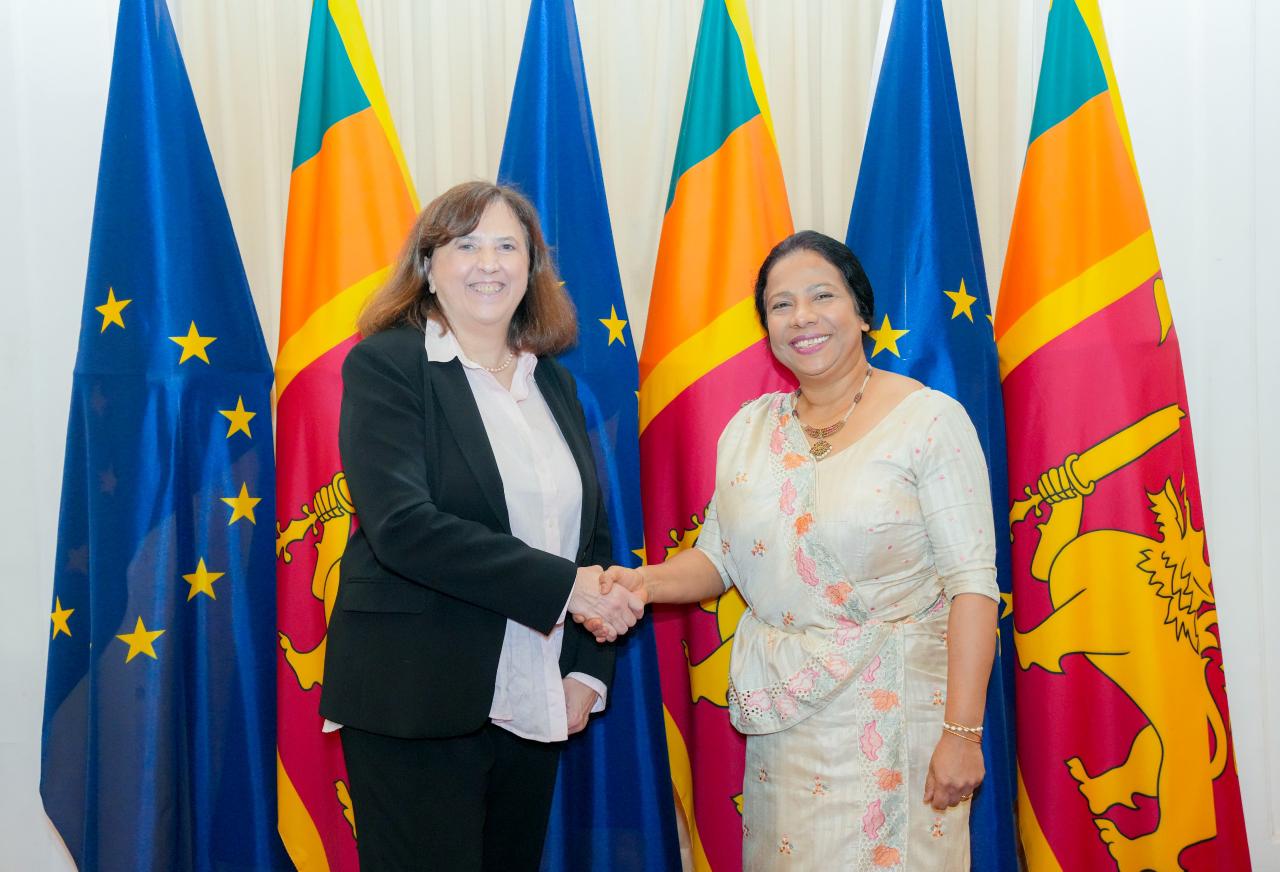
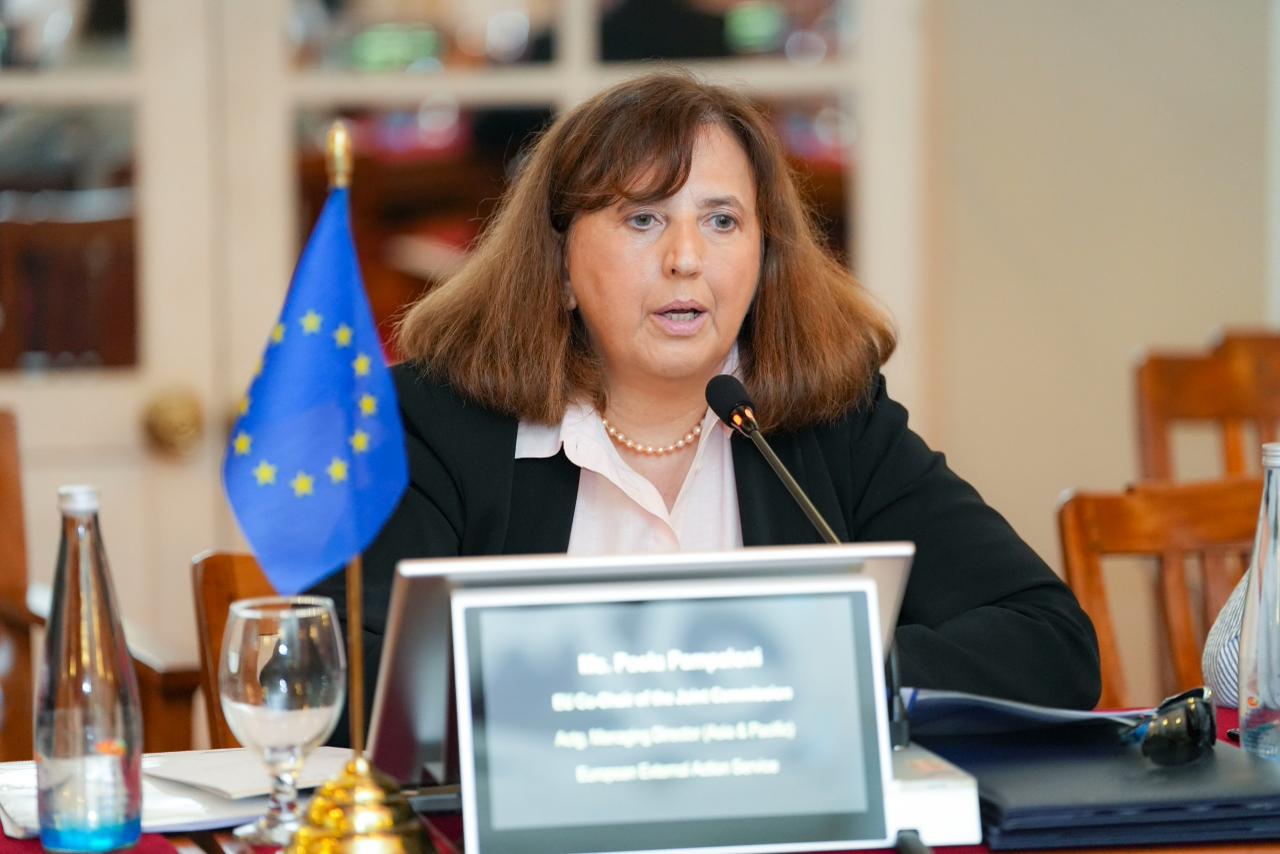
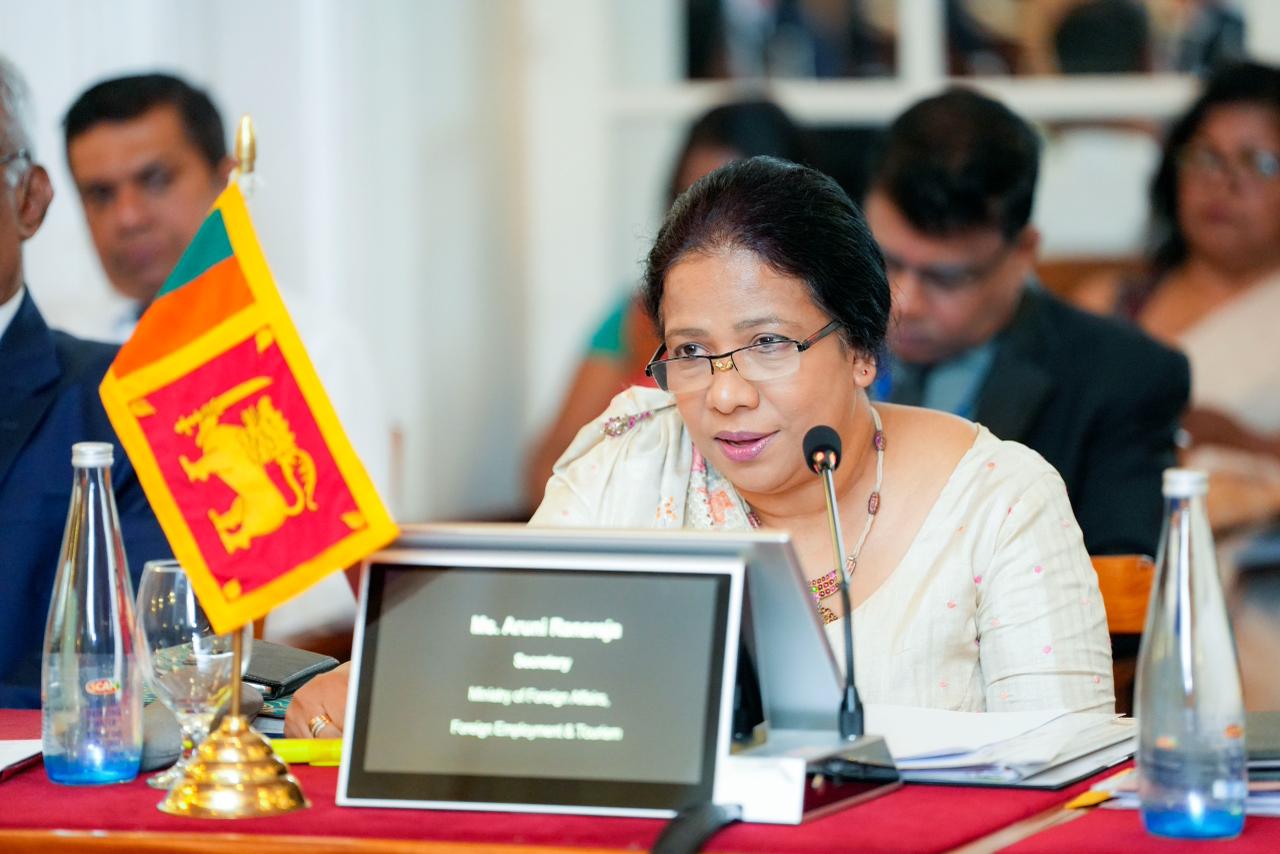
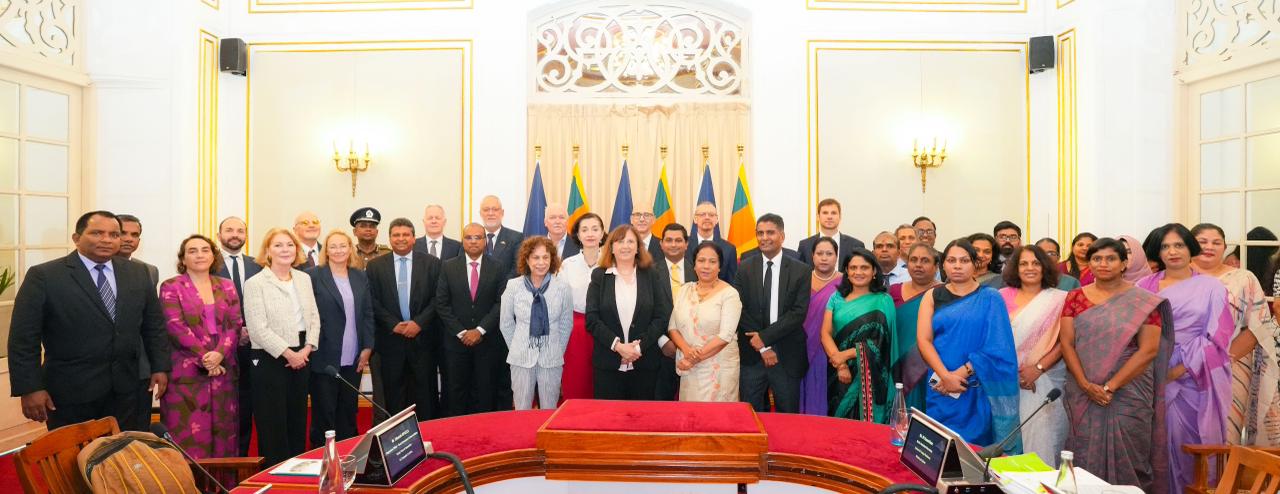
COLOMBO : On 12 February 2026, the European Union (EU) and Sri Lanka convened the 27th Session of
the EU-Sri Lanka Joint Commission meeting in Colombo.
The meeting, which was held in a friendly and open atmosphere, reviewed bilateral relations
and entailed an exchange of views and updates on a wide range of topics of bilateral interest,
ranging from governance, reconciliation and human rights, to trade, development cooperation,
education, fisheries, maritime cooperation, environment, climate change, security
cooperation, readmission, and regional and international cooperation.
The meeting provided an opportunity for both sides to discuss the current political and
economic developments in Sri Lanka and the European Union, emphasizing on updates on
policy reforms, procedural improvements and legislative initiatives taken by both sides on
matters of mutual interest.
The Joint Commission took stock of the work of the EU-Sri Lanka Working Group on
Governance, Human Rights and Rule of Law held on 5th May 2025, Working Group on Trade
and Economic Cooperation held virtually on 13th November 2025, and the Working Group
on Development Cooperation held on 11th February 2026.
The discussion of the Joint Commission focused on Sri Lanka’s recent developments in the
areas of democracy, governance, rule of law and human rights, including repeal of the
Prevention of Terrorism Act (PTA), amendments to the Online Safety Act (OSA), rights of
minorities, women, children and labour rights, steps taken to combat bribery and corruption
and freedom of expression and association.
Sri Lanka also informed the EU on steps being taken towards advancing reconciliation and
the strengthened role being played by independent national institutions, notably the Office on
Missing Persons (OMP), the Office for Reparations (OR) and the Office for National Unity
and Reconciliation.
The two sides agreed on the importance of continued cooperation in deterring and eliminating
IUU fishing practices and honoring commitments in the fisheries sector. Furthermore, both
parties discussed opportunities to deepen collaboration in higher education, research, and
technical cooperation through the Erasmus+ and Horizon Europe framework programs.
Productive exchanges also took place regarding environmental and climate cooperation, as
well as migration and readmission policies


