


RUZAIK FAROOK
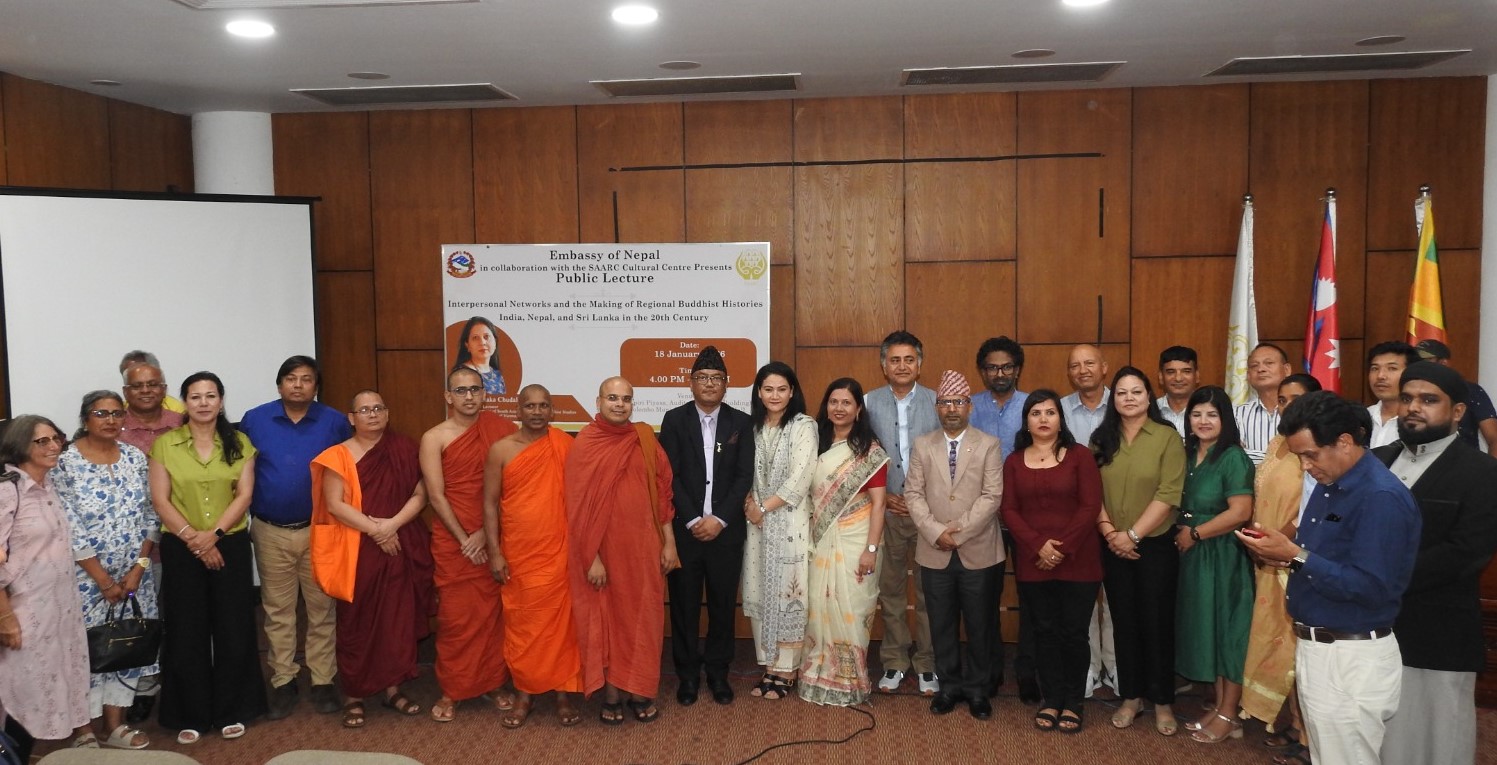
COLOMBO — The Embassy of Nepal in Colombo as part of Nepal Cultural and Heritage Centre (NCHC) initiatives, in collaboration with the SAARC Cultural Centre, successfully hosted a public lecture titled “Interpersonal Networks and the Making of Regional Buddhist Histories: India, Nepal and Sri Lanka in the 20th Century” on Sunday January 18, at the Sapiri Piyasa, Auditorium, Colombo Municipal Council.
The program commenced with the screening of the video documentary “Regional Buddhist Circuit: A Path for Global Peace,” highlighting the shared Buddhist heritage and civilizational linkages of South Asia.
Delivering the welcome remarks, Dr. Purna Bahadur Nepali, Ambassador of Nepal to Sri Lanka, underlined the deep-rooted spiritual and people-to-people ties between Nepal and Sri Lanka, founded on the teachings of Lord Buddha. The Ambassador recalled that while formal diplomatic relations between Nepal and Sri Lanka began in 1957, historical connections particularly through Buddhist learning date back much earlier, with Nepali monks travelling to Sri Lanka as early as 1928 for monastic education and higher studies in Theravāda Buddhism.
Dr. Kaushalya Kumarasinghe, Director of the SAARC Cultural Centre, in his remarks, warmly welcomed the distinguished gathering and expressed his pleasure at having Dr. Alaka Chudal in Colombo. Dr. Kumarasinghe further highlighted that her work opens pathways into historical areas where dominant narratives often provide no clear direction, citing the journeys of Rahul Sankrityayan as one such example. Emphasizing the importance of learning from hidden and undiscovered corners of the past, he stated that listening to Dr. Chudal is particularly meaningful at this moment. He also conveyed appreciation to Dr. Purna Bahadur Nepali for inviting the SAARC Cultural Centre to be a part of this important endeavour.
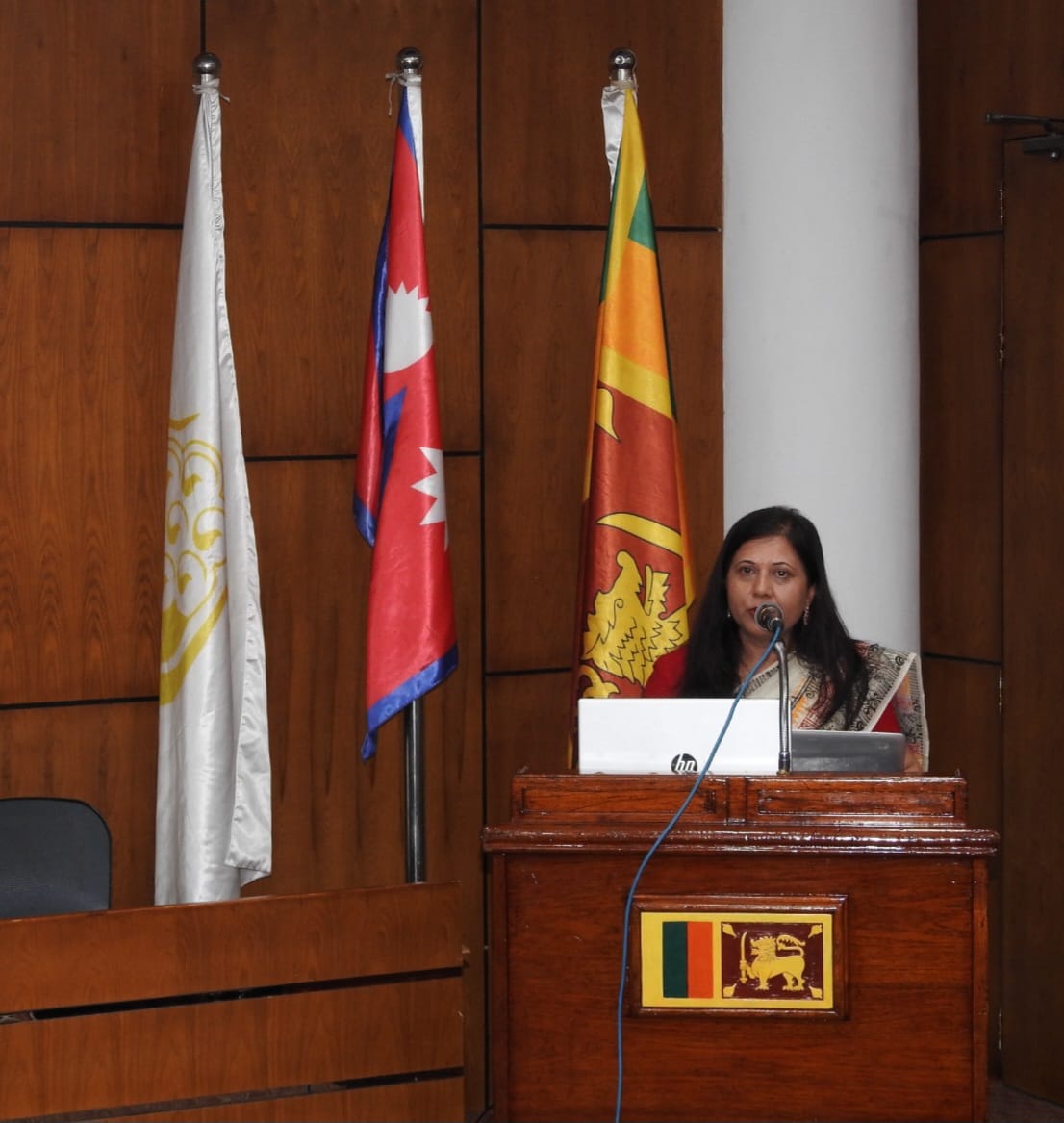
The keynote lecture was delivered by Dr. Alaka Chudal, Senior Lecturer at the Department of South Asian, Tibetan and Buddhist Studies, University of Vienna, who revisited South Asia’s political awakening and cultural revival during the late 19th and early 20th centuries. Dr. Chudal explored the formation of interpersonal relationships among Nepalis, Sri Lankans, and Indians within the context of the Theravāda movement and the Maha Bodhi Society, and examined how, influenced by Sri Lanka, Anagarika Dharmapala and the Maha Bodhi Society, Indians and Nepalis sought to restore dignity and pride in their cultural heritage while striving for freedom and independence.
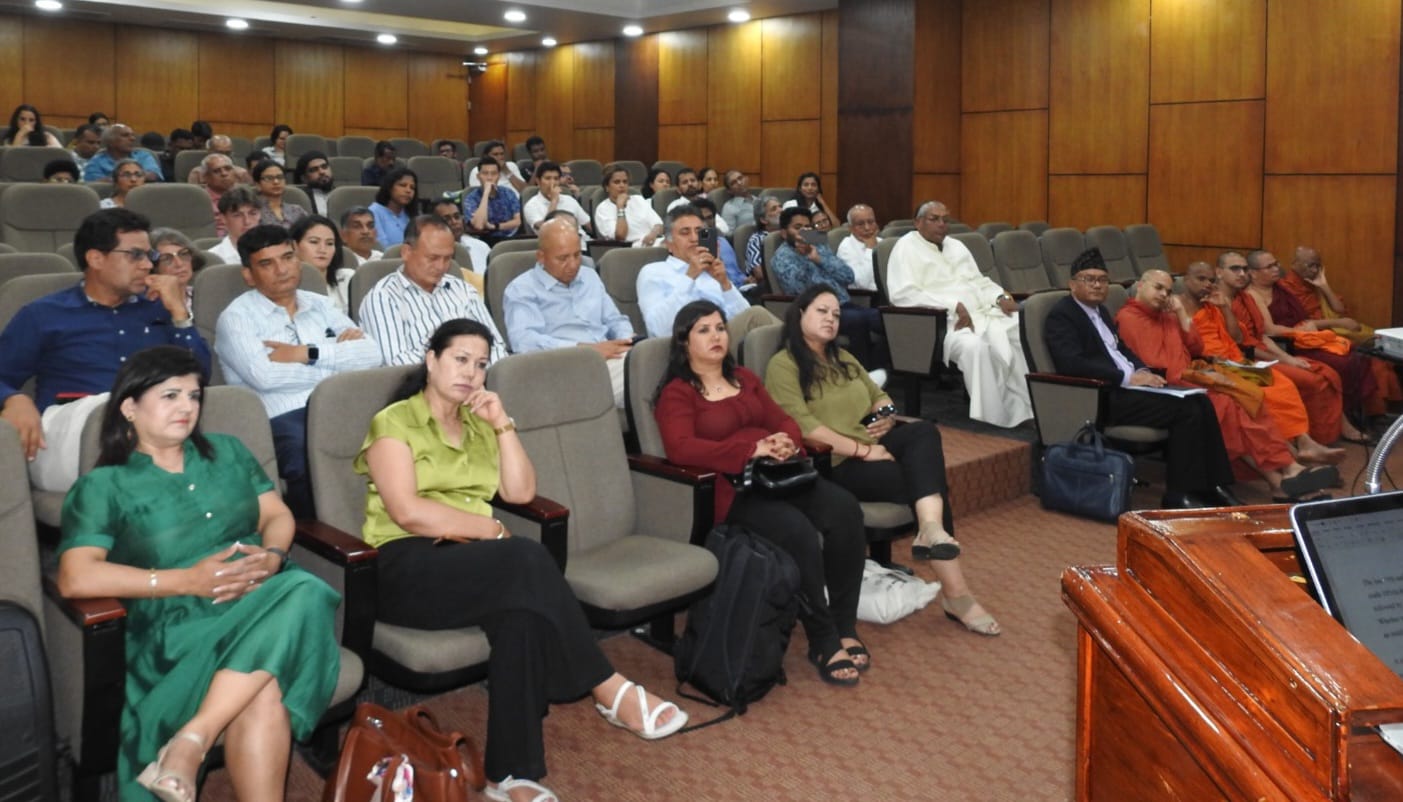
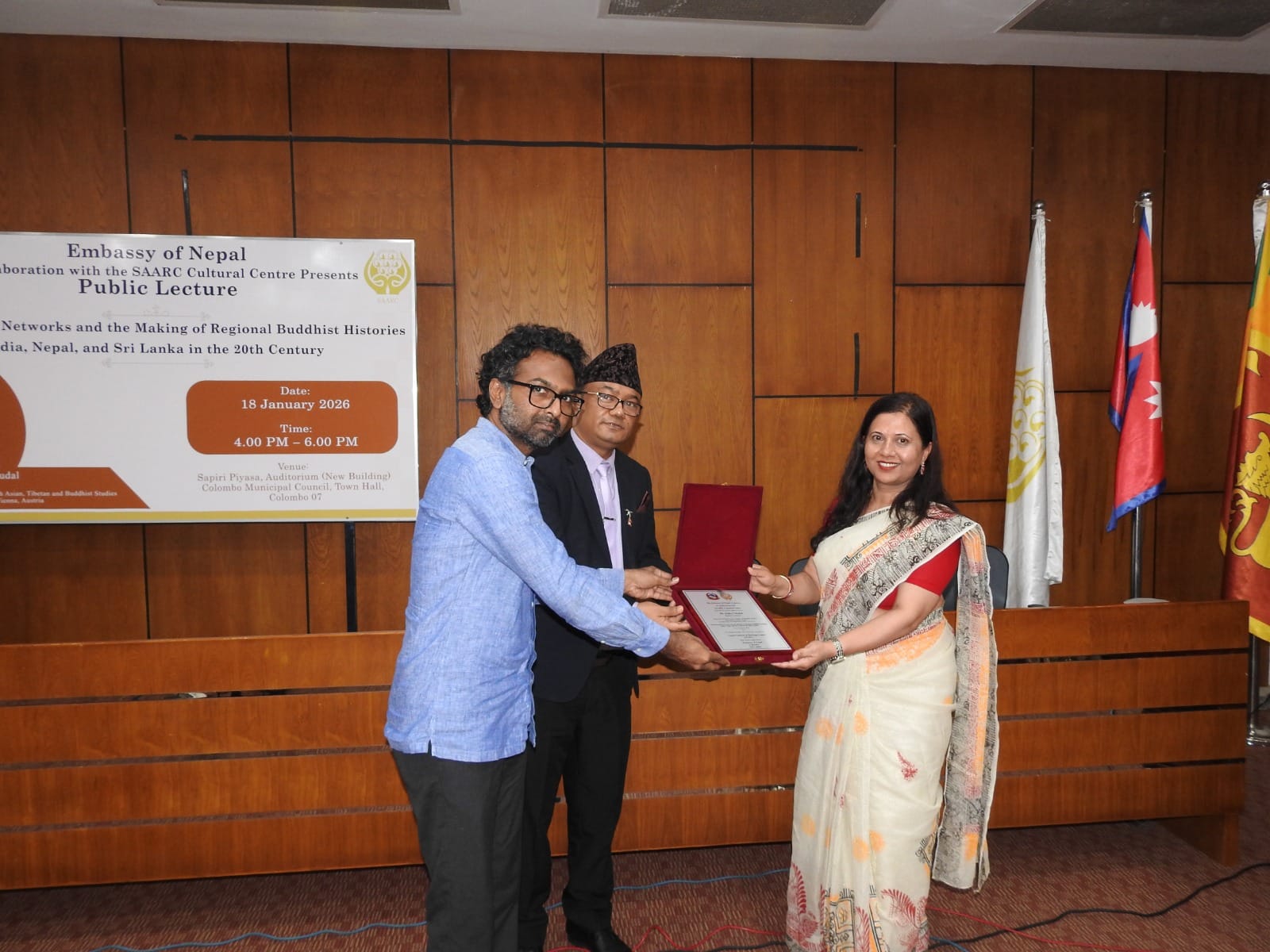
A lively Q & A session followed the lecture, with active participation from scholars, students, and invited guests, reflecting strong interest in the region’s shared intellectual and religious heritage. At the conclusion of the program, the Ambassador of Nepal and the Director of the SAARC Cultural Centre presented a token of appreciation to Dr. Chudal in recognition of her valuable contribution.
Delivering the vote of thanks, Vijay Kumar Raut, Deputy Chief of Mission, expressed sincere gratitude to Dr. Chudal for her insightful lecture and appreciated for her feedback and suggestions for the Nepal Culture and Heritage Centre. He also acknowledged the collaboration between the Embassy of Nepal and the SAARC Cultural Centre in organizing the event, thanked the Colombo Municipal Council for providing the venue, and expressed appreciation to dignitaries, scholars, students, media, and all attendees who contributed to the success of the program.


