


MUHSIN MEEDIN
COLOMBO The 2024 Census of Sri Lanka, conducted by the Department of Census and Statistics, reported a total population of 21,781,800 people. This census revealed significant demographic shifts: the median age rose to 35 years, fertility rates fell to 1.3, well below replacement level, and the elderly population reached 18 percent of the total. These findings underscore Sri Lanka’s transition into an aging society, with far-reaching implications for social policy, healthcare, and economic planning. Yet, despite the importance of these results, allegations have surfaced that certain minority groups, particularly the Malay community, were significantly undercounted.
In statistical terms, errors in census data are often classified as non-sampling errors, which include mistakes not related to the process of selecting a sample. Within this category, two types of errors are especially relevant to the Sri Lankan case: enumerator error, which refers to mistakes made by census officers in recording or classifying data, and systematic bias, which occurs when errors consistently misrepresent certain groups. If Malays were misclassified as “Moors” or overlooked entirely, this would constitute both enumerator error and systematic bias, undermining the reliability of census data and distorting the representation of minority communities.
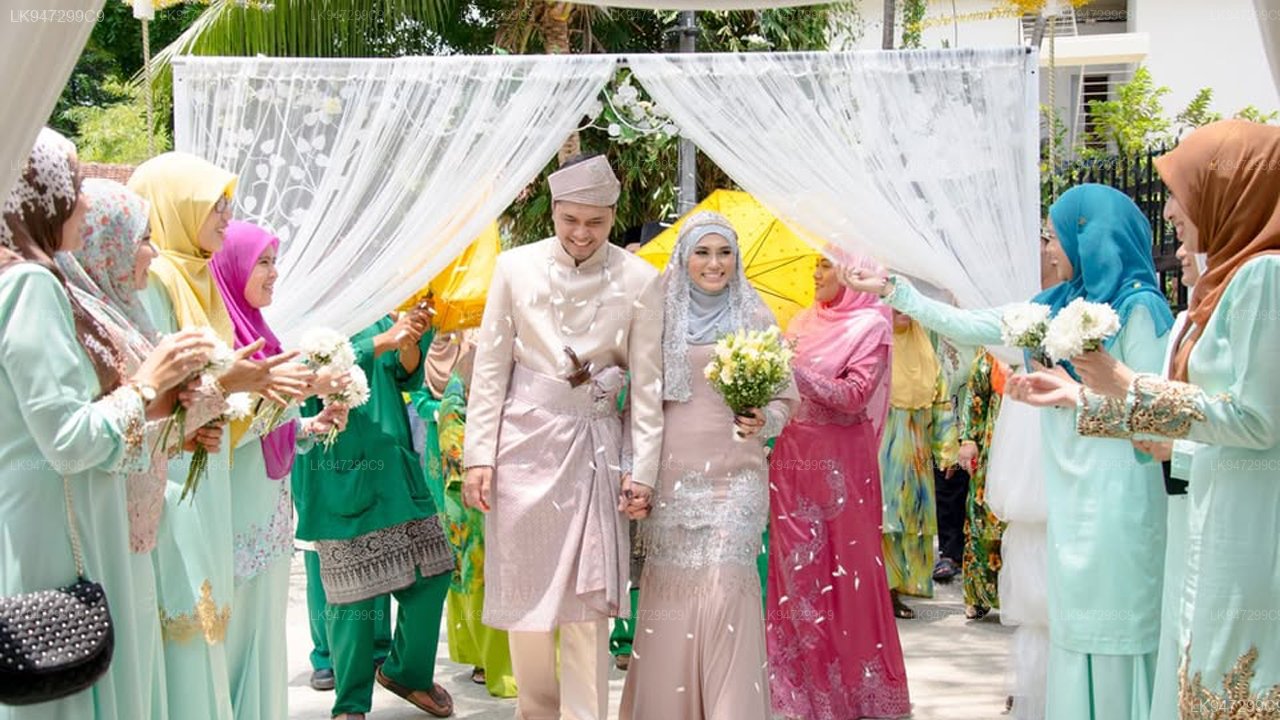
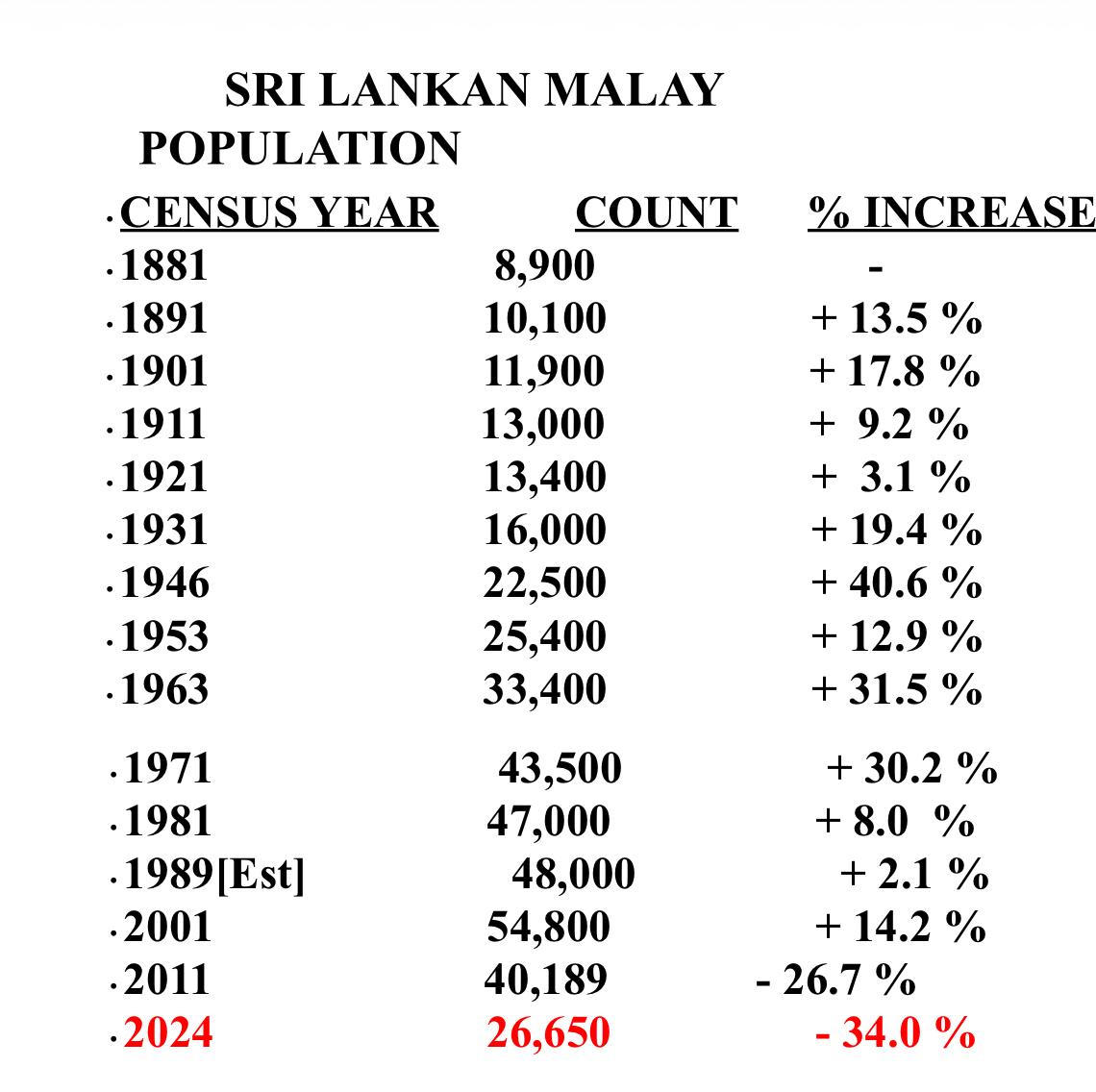
The Malay community has a long and distinguished history in Sri Lanka. Their presence dates back to Dutch and British colonial times, when Malays were brought from Indonesia and Malaysia. Today, estimates place their population at between 40,000 and 50,000, concentrated in Colombo, Kandy, Hambantota, and other urban centers. They are recognized as a distinct ethnic group, with their own language, Sri Lankan Malay, as well as unique cultural traditions and religious practices. Importantly, the Malays have contributed greatly to the protection of Sri Lanka’s sovereignty and territorial integrity. They have played a pivotal role in the nation’s defense, sacrificing life and limb in service to the country. Their contributions are further highlighted by the legacy of national hero T. B. Jayah, who fought assiduously in the independence struggle and remains a symbol of Malay commitment to Sri Lanka’s freedom. Given this history, information regarding the Malays should never have been gathered in a cold-shouldered manner, as their role in shaping the nation is both profound and enduring.
Community leaders have alleged that the Malay population was significantly undercounted in the 2024 Census. The primary concern is misclassification, where Malays may have been recorded under the broader category of Moors. This diminishes their visibility as a distinct group and affects their access to resources, cultural preservation programs, and political representation. In statistical terms, this is a clear example of systematic bias, as the error disproportionately affects one community. The consequences of such miscounts extend far beyond numbers. Census figures guide resource allocation, electoral boundaries, and development planning. Miscounts threaten the visibility of minority identities and erode public confidence in official statistics. For the Malay community, underrepresentation in census data could mean reduced access to funding for schools, cultural programs, and minority protections.
Statisticians and policymakers employ several methods to detect and correct census errors. Post-enumeration surveys are conducted after the census to estimate undercounts and overcounts. Administrative records such as electoral rolls, school registries, and community records can be cross-checked against census data to identify discrepancies. Minority groups often request independent audits of census data, and governments may issue corrections or supplementary reports if discrepancies are proven. These measures are essential to ensure that census data reflects the true diversity of Sri Lanka’s population.
The 2024 Census provides critical insights into Sri Lanka’s demographic transition, but allegations of undercounting the Malay community highlight the challenges of ensuring accuracy and fairness in data collection. Statistically, such issues fall under non-sampling errors, specifically enumerator error and systematic bias. Socially, they raise pressing questions about minority recognition, resource distribution, and trust in state institutions. Addressing these concerns transparently and rigorously is essential not only for statistical integrity but also for the preservation of Sri Lanka’s multicultural identity. Above all, it is a matter of justice and respect for a community that has given so much to the nation’s sovereignty, freedom, and unity.


